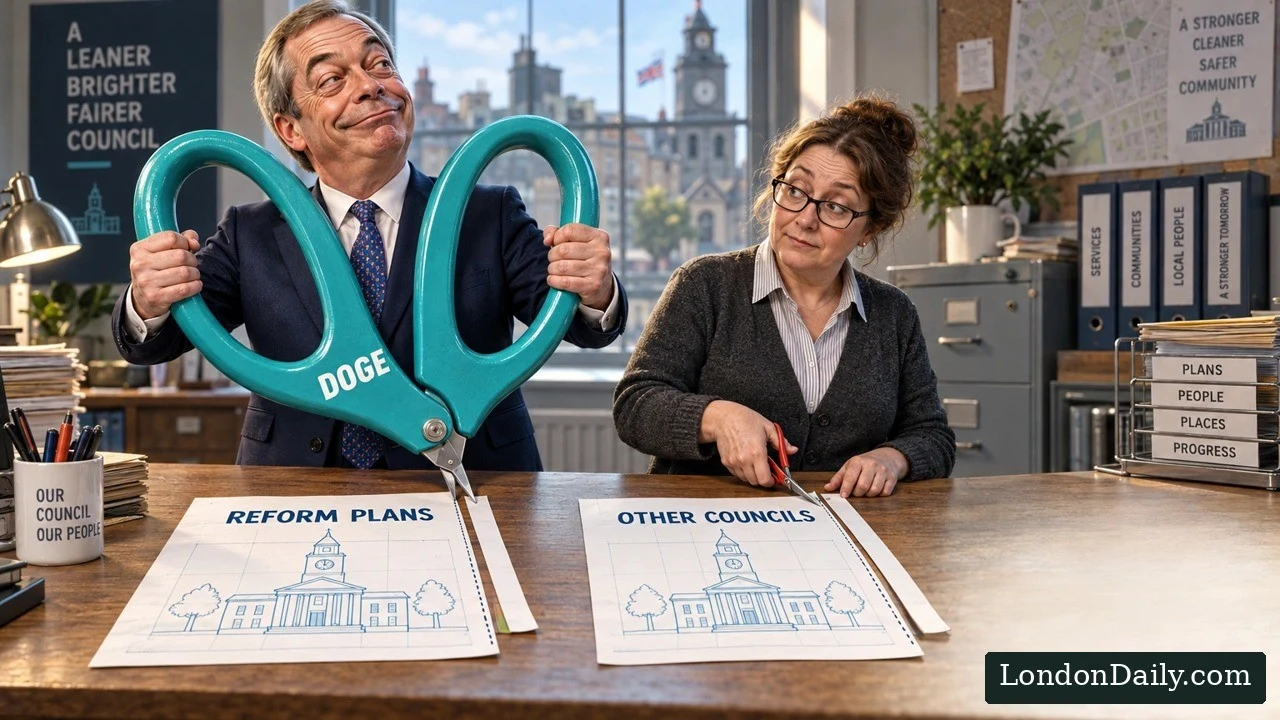
Reform UK’s promised Musk-inspired crackdown on council spending has produced no plans for deeper or faster cuts than comparable authorities, according to research examining six Reform-majority county councils.
Public First Global analysed budgets in Derbyshire, Kent, Lancashire, Lincolnshire, Nottinghamshire and Staffordshire. Of £254m in stated savings, it classified £30m–£44m as genuine discretionary cuts after excluding inherited savings, changes in statutory demand and income generation. That represents 12–17% of the headline total, much the same proportion as in comparable non-Reform councils.
The distinction matters: a savings total does not, by itself, measure what a new administration has chosen to cut. Despite Reform’s pledges to scrap diversity, equity and inclusion and net zero initiatives, the councils declared no savings in those areas, the analysis found. Instead, measures included conventional efficiency work, such as Lancashire’s £1.6m reduction in consultancy fees.
Nigel Farage promised the approach after Reform’s breakthrough in the May local elections, taking inspiration from Elon Musk’s US Department of Government Efficiency, known as Doge. In Worcestershire, David Taylor, elected deputy leader of the minority Reform administration, quit the party nine months later, criticising its proposed 9% council tax rise and lack of progress on spending reform.
“In the end, it just fell flat and nothing happened,” Taylor said. Now independent, he said the intentions had appeared genuine when he met Reform’s then Doge chief, Zia Yusuf, in June 2025. But data-protection restrictions obstructed access to sensitive information, and Taylor suggested the premise might have been unrealistic rather than blaming any individual.
Worcestershire opposition councillor Adam Kent argued that Reform underestimated an already tightly run council and rising demand for statutory services, including adult and children’s social care. Kent, now deputy leader, was suspended by the Conservatives after forming a coalition with the Greens to remove the minority administration.
Groundwork Research director Jack Shaw said targeting small spending areas with inexperienced outsiders was not credible. Former council chief executive and public finance institute head Rob Whiteman said there was neither widespread corruption nor inefficiency offering easy savings.
Reform’s local government head, Ben Bradley, denied overpromising, called the comparison “comparing apples and pears” and said councils faced severe financial pressures without US-style powers. Lancashire leader Stephen Atkinson credited efficiencies with keeping its tax increase to 3.8%, below the maximum.
Public First Global director Damayanti Chatterjee acknowledged that Reform-majority councils were raising council tax more slowly. Her findings concern spending intentions, not completed results: a definitive assessment must await final spending figures in late 2027.








Join the conversation