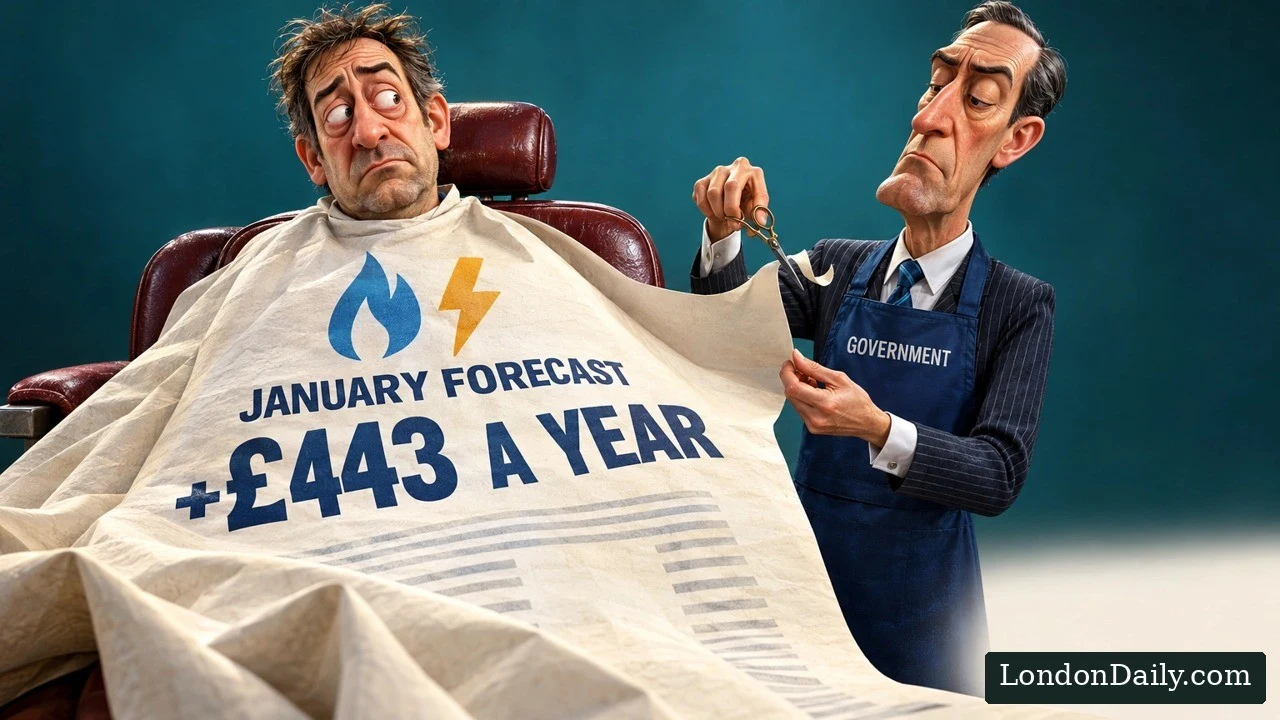
Annual household energy bills are forecast to rise by £443 from January to their highest level since 2023, as disruption to gas supplies caused by the Iran war pushes up costs despite government relief measures.
Cornwall Insight said on Wednesday that the average household’s annual gas and electricity bill would reach £2,166 at the start of next year. That is 26% above the current £1,723 level, announced in October. The consultancy previously predicted a 16% increase in January’s price cap, which would have left the average annual bill just below £2,000.
The forecast is not a confirmed increase. Ofgem, the energy regulator, is due to announce its cap next Wednesday.
Cornwall Insight attributes the worsening outlook to persistently high wholesale gas prices. Difficulties moving liquefied natural gas through the Strait of Hormuz have left European storage tanks at record early-winter lows, prompting competition for more expensive supplies.
Exporters have found alternative ways to move crude oil out of the Gulf, but there is no alternative route for its liquefied natural gas exports. Iran continues to attack vessels passing through the strait.
European gas prices have fallen from more than €100 per megawatt hour in late October to €83 (£69), but remain more than 160% above their pre-war level. The retreat has therefore left prices far above where they stood before the conflict.
Craig Lowrey, an analyst at Cornwall Insight, said: “Events beyond our control have a very real impact on our energy bills.”
The forecast threatens to undermine Chancellor John Healey’s pledge last month to bring energy costs down. Government initiatives include a £100 household energy payment and the removal of VAT from electricity charges.
Lowrey said those measures “can only chip away at the edges of a bill that continues to be pushed up by events in the Middle East”. He urged the Government to “control how exposed we are to these shocks in the future”, particularly by decoupling energy costs from global gas prices.
For poorer households, the pressure could extend beyond energy bills. A higher cap is also likely to accelerate inflation, putting pressure on interest rates. Inflation reached a one-year high of 3.6% in October, driven by higher petrol prices and the 4% increase in the energy price cap last month.








Join the conversation