British business leaders are pressing for urgent relief from Brexit work travel restrictions, saying negotiations have delivered almost nothing while permit requirements hamper trade, investment and the servicing of equipment worth millions.
The Confederation of British Industry, which represents some of Britain’s largest companies, wants commitments from Andy Burnham and European political leaders that business mobility will be a priority in 2027, following this week’s Brussels summit.
Its director of Europe and international, Sean McGuire, said the issue should already have been central to the talks. A UK-EU summit held by Keir Starmer in 2025 also referred to improving business mobility.
“Very little has been achieved. In fact, practically nothing has been achieved. The emphasis was put on youth mobility,” McGuire said.
The CBI welcomed the prime minister’s calls for a European reset intended to repair economic damage caused by Brexit. Its complaint is that practical barriers remain: executives face a 90-day travel limit, while workers must obtain separate permits for each country where they work.
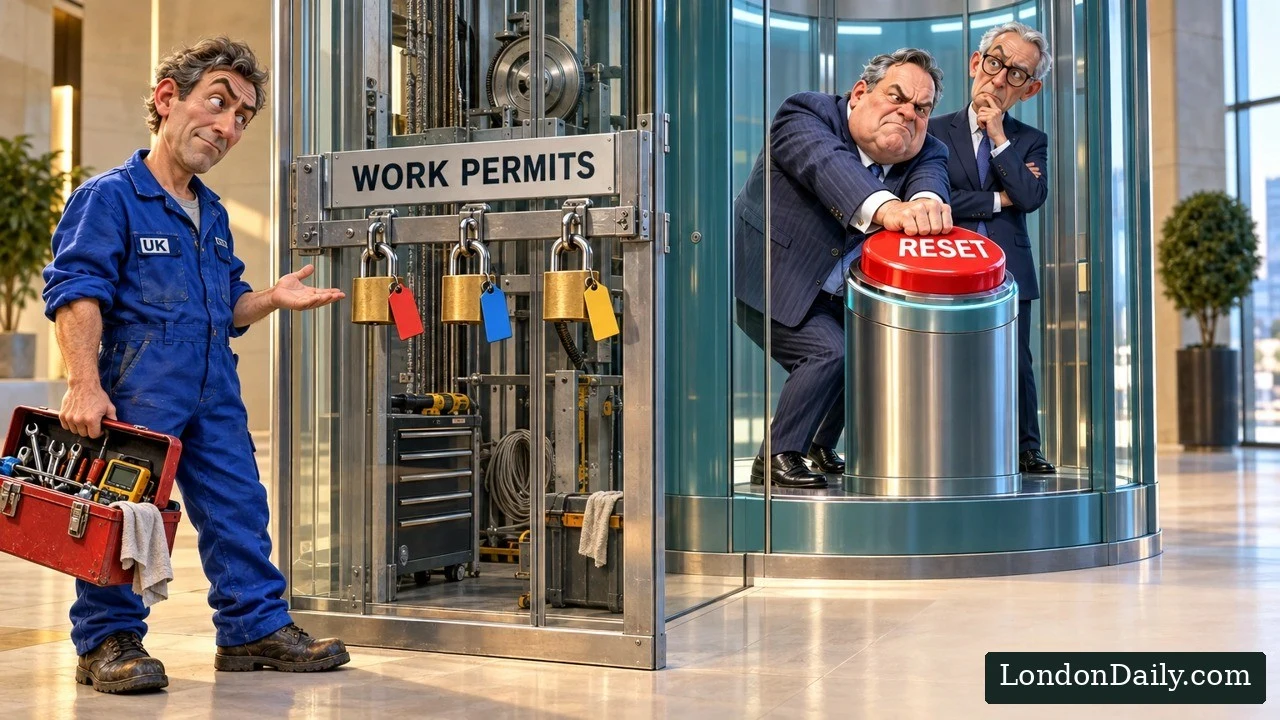
McGuire said energy, defence and car industry leaders were struggling to service or run multinational operations. Engineering illustrates the difficulty: lifts, escalators and factory machinery costing millions are sold with maintenance contracts, making access for engineers part of the continuing commercial obligation. The CBI says restrictions also limit employee promotion opportunities and deter cross-border investment.
Its wider argument is that easier movement would support both sides’ efforts to strengthen European supply chains and build resilience against China. McGuire distinguished business travel bringing investment from irregular migration, which he said needed tackling.
European resistance has a different commercial rationale. EU diplomats have previously said Britain pushed hard for easier business travel, but member states regarded British services, particularly financial services, as a competitive threat.
There is also a division of authority. An EU diplomat noted that Britain negotiates with Brussels while work permits remain a national responsibility. That complicates the prospective three-year scheme allowing under-30s to work, travel or study, with a youth mobility agreement close and potentially included in Friday’s deal.
McGuire nevertheless argues that business travel has a quicker route: amending an annex to the EU-UK trade and cooperation agreement to extend visa-free access across more industries without reopening the main treaty.
Professional qualifications remain another obstacle. The CBI expressed disappointment at the lack of progress towards mutual recognition, which would let professionals practise across borders as before Brexit. Sources described a view in Brussels that recognition would benefit Britain more, draining momentum from those talks.








Join the conversation