London Daily

Focus on the big picture.
Sunday, Jul 19, 2026

Covid vaccine: All over-50s and high risk groups offered first dose

Covid vaccine: All over-50s and high risk groups offered first dose

All over-50s and those in high-risk groups in the UK have now been offered a first dose of a coronavirus vaccine, the government has announced.

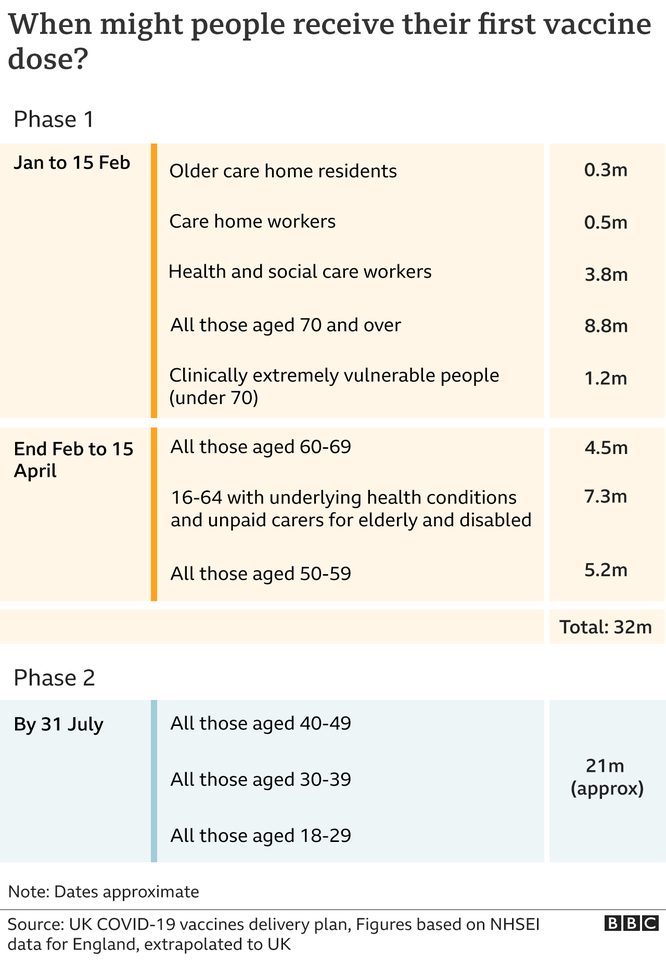
It means ministers have met their target of offering a first dose to the top nine priority groups by 15 April.

The government said it was on track to offer a first dose to all adults by the end of July, with those in their late 40s expected to be next in England.

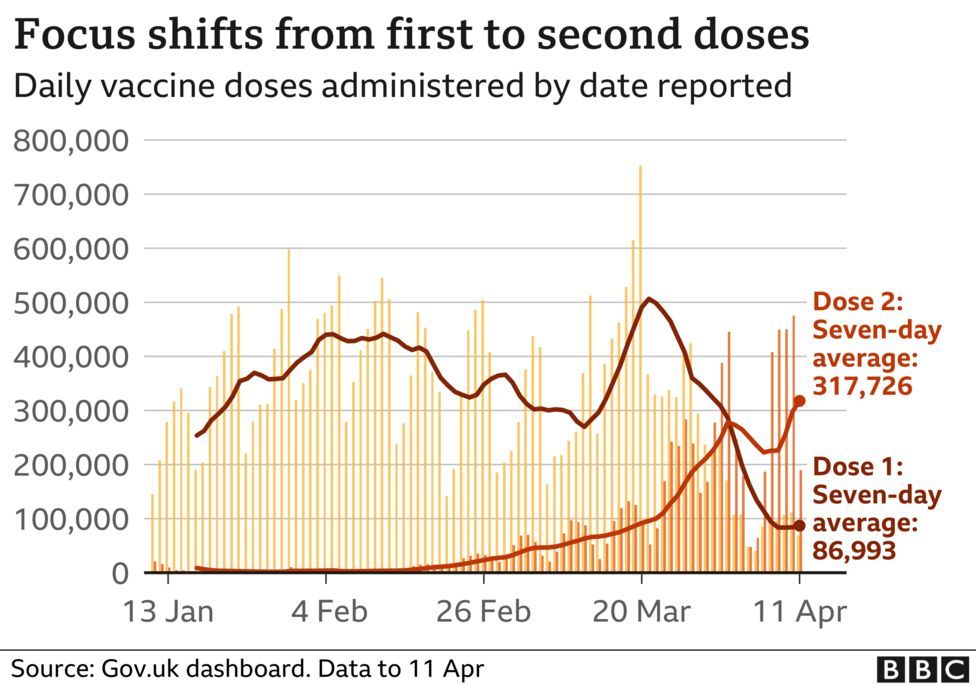
More than 32 million people in the UK have had their first dose.

And on Saturday a record 475,230 second doses were given out, with more than 7.6 million people now fully vaccinated.

Under-50s in Northern Ireland have already been asked to book appointments, and more people in the age group in other parts of the UK are now set to get their invitations.

Prime Minister Boris Johnson described the news the vaccination target had been reached as "another hugely significant milestone in our vaccine programme".

"We will now move forward with completing essential second doses and making progress towards our target of offering all adults a vaccine by the end of July."

Health Secretary Matt Hancock said: "I'm delighted the team have done such an amazing job to hit yet another target early.

"The tide of this pandemic is turning in every part of the UK, as every day more and more people are being given the safety of a Covid-19 vaccine."

Urging those who are eligible to come forward for the jab, he added: "Vaccines are safe and effective and have already saved more than 10,000 lives.

"The vaccine programme has had a significant impact on reducing the pressure on hospitals, helping us to gradually ease restrictions."

The announcement came on the day lockdown restrictions were further eased across the UK.

Chris Hopson, chief executive of NHS Providers, representing NHS Trusts, urged people offered a vaccine to take it up, saying: "As we return to pub gardens and sports activities and make our way back to non-essential shops, we must continue do all that we can to prevent the spread of infection and ensure this lockdown will be the last."

The top nine priority groups include all over-50s, over-16s with underlying health conditions, unpaid carers for the elderly and disabled and health and social care workers. It covers 99% of those at high risk of dying with Covid-19.

The vaccination roll-out will move on to focus on those aged 40-49.

The Joint Committee on Vaccination and Immunisation (JCVI), which advises UK health departments, is expected to publish its final advice on how the government should vaccinate under-50s, and the next phase of the programme is expected to begin this week.

NHS organisations in the four nations, in collaboration with devolved administrations, will decide how to carry out the JCVI advice.

Last week the Moderna vaccine became the third vaccine to be administered in the UK, alongside the Pfizer-BioNTech and the Oxford-AstraZeneca jabs. The roll-out began in Wales, followed by Scotland, and is expected to be delivered in England next.

All under-30s in the UK are to be offered an alternative Covid vaccine to the AstraZeneca jab due to the evidence linking it to rare blood clots.

On Monday, the UK recorded 3,568 new coronavirus cases and 13 deaths within 28 days of a positive test.

It comes after pub gardens, non-essential shops and hairdressers reopened in England.

Northern Ireland's "stay at home" order also ended on Monday, while in Wales non-essential shops and close-contact services reopened.

In Scotland, non-essential shops and hospitality are not due to open until 26 April.

Meanwhile, surge testing has been implemented in the Wandsworth and Lambeth areas of south London after a cluster of the South African Covid-19 variant was found.

The Department of Health and Social Care called it the "largest surge testing operation to date" following the identification of 44 confirmed and 30 probable cases.

Newsletter

Related Articles

0:00
0:00
Close
Brothers Andrew and Tristan Tate Who Turned "Toxic Masculinity" Into a Brand Arrested in Miami as Britain Seeks Their Extradition
Passenger Bound for Germany Refused to Sit Beside a Woman on a Plane — Then Slapped a Flight Attendant
Ukrainian Drone Barrage Kills Eight and Strikes Russian Logistics Network
Key Trends to Watch
Financial Conduct Authority Warns Cloud and Digital Risks Are Becoming a Financial Priority
Jeffrey Donaldson Appeals Sexual Abuse Conviction as Democratic Unionist Party Opens Review
Welsh Health Authorities Launch Emergency Meningitis Vaccination Programme for Students
Scottish Business Activity Falls for Third Month as Companies Face Rising Costs
Bank of England Regulators Demand Better Access to Digital Banking Services
United Kingdom Cuts Bilateral Aid to Several African Countries by Up to Ninety Per Cent
United Kingdom Introduces Tougher Deportation Rules After Rochdale Exploitation Scandal
NHS England Launches Wearable Technology Plan to Reduce Sepsis Deaths
Amazon Web Services Billing Error Sends Trillion-Dollar Invoices to British Companies
Bank of England Takes Direct Regulatory Role Over Major Global Cloud Providers
Extreme Summer Heat Drives Record Fire Risk and Rising Deaths Across Britain
United Kingdom Nationalisation of British Steel Sparks Diplomatic Dispute With China
United Kingdom Economy Shows Weak Growth Ahead of Major Autumn Budget
Andy Burnham Set to Become United Kingdom Prime Minister After Labour Leadership Victory
The Ten World Cup Finals That Defined Football History
Smartphones Are Getting More Expensive, Sales Are Collapsing, and Even Apple Admits: "Prices Will Rise"
The Monaco Bombing Has Become a Test of Ukraine’s Intelligence Accountability
Leadership Change and Strategic Rivalry Redraw the Political Map
Energy Risk, Uneven Growth and the New Geography of Global Capital
The AI Race Enters Its Infrastructure Era
Security and resilience remain long-term national priorities
Britain balances growth ambitions with public finance pressures
Regional devolution becomes a defining theme of the next Labour era
Industrial strategy returns to the centre of British economic policy
Political Instability Remains a Challenge for UK Investment Confidence
Brexit Economic Debate Continues as Public Concerns Over Long-Term Impact Remain
UK Climate Risks Rise as Met Office Warns Extreme Weather Is Becoming More Common
Housing Shortages and Regional Inequality Become Key Priorities Under Incoming Labour Leadership
National Health Service Reform Remains One of Britain’s Biggest Political Challenges
Bank of England Remains at Centre of UK Economic Debate Over Inflation and Growth
UK Economy Shows Recovery Signs but Households and Businesses Remain Under Pressure
Britain Deepens European Defence Cooperation as NATO Allies Seek Stronger Security Capabilities
United Kingdom Expands Sanctions Against Russian Cyber Networks Over Security Threats
UK Industrial Strategy Faces Test After Government Takes Control of British Steel
British Businesses Seek Policy Clarity as Andy Burnham Prepares to Lead Labour Government
Andy Burnham’s Labour Leadership Signals Major Shift Toward Regional Power and Devolution
British Steel Nationalisation Creates New UK-China Tensions Over Control of Strategic Industry
For 36 Years, He Scammed About 300 Luxury Hotels — Until He Was Caught
England's World Cup Exit Expected to Cost Hospitality and Retail £334 Million
Former ICC Prosecutor Aide Speaks Publicly About Allegations Against Karim Khan
Opposition Raises Questions Over June Heatwave Power Grid Pressures
Mastercard Explores Sale of Majority Stake in UK Payments Operator Vocalink
Boeing Forecasts Global Commercial Aircraft Fleet Will Double by 2045
London GP Surgeries Receive £18 Million to Expand Primary Care Capacity
Health Advisers Recommend Nationwide Meningitis B Vaccination for Teenagers
OECD Warns UK Economy Faces Slower Growth and Weak Productivity
×