0:00
0:00
Hundreds Gather in London Despite Ban on Annual Pro-Palestinian March
Demonstrators assemble for a restricted protest after the UK government blocks the Al-Quds Day march over fears of serious public disorder.
Hundreds of demonstrators gathered in central London after authorities banned the annual Al-Quds Day march, a pro-Palestinian event that officials said posed a risk of serious public disorder amid heightened tensions linked to the Middle East conflict.
The British government approved the rare prohibition following a request from the Metropolitan Police, who warned that the scale of the planned march and the likelihood of counter-demonstrations could lead to violence.
The ban marked the first time in more than a decade that such powers had been used to block a protest march in the capital.
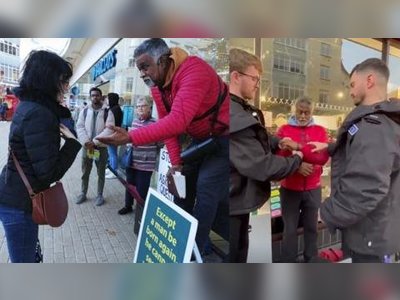
Despite the restriction on marching through the streets, several hundred participants assembled on the south bank of the River Thames for a demonstration held under strict police conditions.
Authorities deployed a large security presence to manage the gathering and keep demonstrators separated from counter-protesters who had assembled nearby.
The protest coincided with Al-Quds Day, an annual event established in 1979 that calls attention to the Palestinian cause and opposition to Israeli control of Jerusalem.
The London rally has been held for decades but has frequently generated controversy because of the presence in previous years of symbols and slogans associated with groups aligned with Iran.
Government ministers defended the decision to ban the march, arguing that it was necessary to prevent potential unrest at a time of heightened international tensions.
Officials said police retained the authority to impose strict conditions on any static demonstrations and warned that expressions of support for banned organisations or incitement to hatred would lead to arrests.
The Metropolitan Police maintained a heavy deployment throughout the day to prevent clashes between opposing groups and to enforce restrictions on the event.
Officers closed nearby roads and bridges while monitoring chants, banners and placards for possible breaches of public order laws.
Organisers of the rally criticised the government’s decision, describing it as an unnecessary limitation on protest rights and insisting the gathering was intended to highlight solidarity with Palestinians.
Authorities, however, stressed that the measures were temporary and aimed solely at reducing the risk of disorder during a particularly volatile moment.
The demonstration unfolded against the backdrop of the wider conflict involving Iran and Israel, which has intensified debate and protests in several countries and increased security concerns around politically charged public gatherings.
The British government approved the rare prohibition following a request from the Metropolitan Police, who warned that the scale of the planned march and the likelihood of counter-demonstrations could lead to violence.
The ban marked the first time in more than a decade that such powers had been used to block a protest march in the capital.
Despite the restriction on marching through the streets, several hundred participants assembled on the south bank of the River Thames for a demonstration held under strict police conditions.
Authorities deployed a large security presence to manage the gathering and keep demonstrators separated from counter-protesters who had assembled nearby.
The protest coincided with Al-Quds Day, an annual event established in 1979 that calls attention to the Palestinian cause and opposition to Israeli control of Jerusalem.
The London rally has been held for decades but has frequently generated controversy because of the presence in previous years of symbols and slogans associated with groups aligned with Iran.
Government ministers defended the decision to ban the march, arguing that it was necessary to prevent potential unrest at a time of heightened international tensions.
Officials said police retained the authority to impose strict conditions on any static demonstrations and warned that expressions of support for banned organisations or incitement to hatred would lead to arrests.
The Metropolitan Police maintained a heavy deployment throughout the day to prevent clashes between opposing groups and to enforce restrictions on the event.
Officers closed nearby roads and bridges while monitoring chants, banners and placards for possible breaches of public order laws.
Organisers of the rally criticised the government’s decision, describing it as an unnecessary limitation on protest rights and insisting the gathering was intended to highlight solidarity with Palestinians.
Authorities, however, stressed that the measures were temporary and aimed solely at reducing the risk of disorder during a particularly volatile moment.
The demonstration unfolded against the backdrop of the wider conflict involving Iran and Israel, which has intensified debate and protests in several countries and increased security concerns around politically charged public gatherings.