London Daily

Focus on the big picture.
Saturday, Jun 20, 2026

Work from home to beat Putin, says EU

Work from home to beat Putin, says EU

The EU is asking its citizens to drive less, turn down air conditioning and work from home three days a week, to reduce reliance on Russian energy.

The measures, drawn up with the International Energy Agency, would save a typical household €450 (£375) a year.

Buying energy from Russia helps to support its economy and finance the war in Ukraine.

But Europe has said it cannot find alternative supplies, so it is asking citizens to adjust their lifestyles.

The nine-point plan, entitled “Playing My Part”, urges citizens to drive less, by using public transport, or working from home three days a week.

It also calls on citizens to:

*  Heat their homes less in winter, and turn the air conditioning down in summer.

*  Drive more slowly on highways, with the car air conditioning turned down, which uses less fuel

*  Use the train instead of flying

*  Travel by public transport, walk, or cycle

It also calls on cities to promote car-free Sundays, as some already do.

“Faced with the horrendous scenes of human suffering that we’ve seen following Russia’s invasion of Ukraine, people in Europe want to take action,” said Fatih Birol, executive director of the IEA.

“This guide has easy-to-follow steps that with little or no discomfort on our part can reduce the flow of money to Russia’s military and help put us on a path to a cleaner and more sustainable planet.”

The IEA calculates that if every citizen followed its recommendations, it could save 220 million barrels of oil every year, enough to fill 120 supertankers. It would also save 17bn cubic metres of gas, enough to heat nearly 20 million homes.

In March, the EU announced a plan to make the bloc independent of Russian energy imports by 2030.

But the German energy minister Christian Lindner told the BBC on Wednesday it would be impossible to stop oil imports immediately.

The report also recommends that citizens consider investing in home insulation, smart digital thermostats, and digital cars, which can all help to reduce fossil fuel use.

"All these measures, they can be voluntary contributions," said Leonore Gewessler, Austria's environment minister. "But they need political action to underpin them."

Austria has cut all fares on public transport to three euros per day, she said, and is introducing a programme to help low-income households replace old, inefficient appliances.

Eamon Ryan, Ireland's environment minister said by acting at a European level, it was easier to get the political messaging right.

"It is very difficult not to come across as someone who is telling the citizen what to do, or is being seen as a mean, Scrooge-like character," he said.
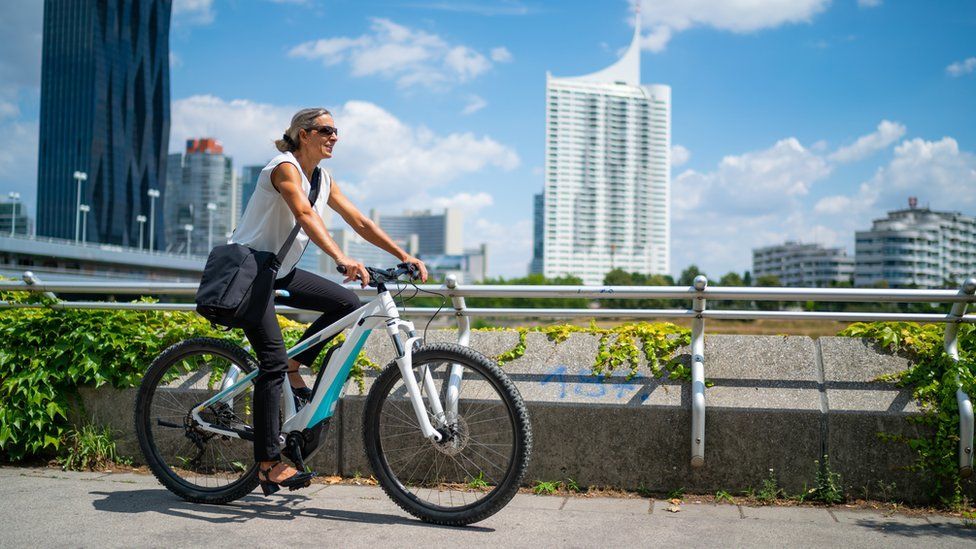
EU countries are calling on citizens to walk, cycle or take public transport to reduce reliance on Russian oil


Separately, the UK announced it was tightening sanctions on non-energy goods exported from Russia, including a ban on caviar, silver and wood products.

The Department for International Trade said it was also ramping up taxes on some other exports from Russia and Belarus, covering goods worth a total of £130m.

The products facing higher import duties include diamonds, rubber, pharmaceuticals, meat, coffee, tobacco and other products.

International Trade Secretary, Anne-Marie Trevelyan, said the UK was taking every opportunity to "ratchet the pressure to isolate the Russian economy".

"These further measures will tighten the screws, shutting down lucrative avenues of funding for Putin's war machine," she said.

Comments

Oh ya 4 year ago
Yes you idiots in Europe do that for your US puppet masters and Russia will just sell the energy you don't use to China, Iran, Turkey etc. I never realized that the people in Europe were that stupid. Do you people think that Americans are doing any of what they are telling you to do? Oh and 0nly bath once a month also sheeple

Newsletter

Related Articles

0:00
0:00
Close
Long-Term Economic and Political Effects of Brexit Continue to Shape UK Policymaking
Digital Disinformation Emerges as a Growing National Security Challenge in the United Kingdom
Britain's Dependence on Global Energy Routes Drives Push for More Resilient Supply Chains
Rising Energy Costs Continue to Threaten Britain's Cost-of-Living Recovery
Concerns Grow Over Far-Right Organizing and AI-Driven Online Radicalization in Britain
UK-Led Global Partnerships Conference Calls for Reform of International Development Finance
Middle East Tensions Continue to Weigh on UK Business Confidence
Reports of Middle East Peace Deal Ease Pressure on UK Energy Prices
UK Warns Middle East Conflict Could Worsen Global Food Insecurity
UK Economy Loses Momentum After Strong Start to 2026
Bank of England Holds Interest Rates at 3.75% Despite Easing Inflation
Brexit's Legacy Remains Deeply Divisive Ten Years After the UK Voted to Leave the European Union
International Anti-War Conference Opens in London as Debate Over European Rearmament Intensifies
UK Health Authorities Introduce Drug Price Concessions Amid Record NHS Medicine Shortages
Sir David Attenborough Supports Sherwood Forest Conservation Efforts After Loss of Major Oak
Aardman Animations Marks 50 Years With Major Exhibition in Bristol
Drax Cleared After Investigation Into Wood Pellet Sourcing Practices
Jaguar Land Rover Shifts Toward Hybrid Vehicle Production for US Export Strategy
UK Police Arrest Liberal Democrat MP Cameron Thomas on Suspicion of Assault
Health Concerns Grow Over Elevated Kidney Cancer Rates Near Lancashire PFAS Factory
Royal Navy F-35 Jets Conduct First NATO Air Warfare Exercise from Finnish Airspace
UK NHS Issues Price Concessions for Medicines Amid Severe Drug Shortages
Heathrow Third Runway Project Faces Sharp Downward Revision in Expected Economic Benefits
Amber Heat Warning Issued Across Parts of England and Wales as Temperatures Rise
Train Collision Near Bedford Disrupts UK Rail Network and Leaves Multiple Injured
Bank of England Data Suggests Brexit Has Reduced UK Economic Output by Around Six Percent
UK Borrowing Costs Hold Near 4.8 Percent as Political Uncertainty Fuels Market Pressure
Andy Burnham Emerges as Front-Runner to Succeed Keir Starmer After Landslide Makerfield Victory
Prime Minister Keir Starmer Faces Mounting Pressure to Resign After Labour By-Election Defeat in Makerfield
Payment Fraud Losses Reach £1.28 Billion and Raise National Security Concerns
Lending to Small Businesses Climbs to Highest Level Since Late 2024
Middle East Conflict Clouds UK Economic Recovery Despite Strong First-Quarter Growth
Bank of England Moves to Simplify Capital Rules for Smaller Lenders
UK Government Fast-Tracks National Security and Cyber Resilience Legislation
Ofcom Investigates Telegram Over Alleged Role in Organising Arson Attacks
MPs Press Fujitsu to Speed Compensation for Post Office Horizon Victims
Bank of England Delays Final Basel III Implementation Changes to Support UK Banking Competitiveness
Pound Falls as Political Uncertainty and Bank of England Signals Weigh on Markets
0Andy Burnham Wins Makerfield By-Election and Emerges as Main Challenger to Keir Starmer
Dorset Council Tests AI Tools to Streamline Local Planning Applications
UK Researchers at Kew Gardens Use AI to Speed Up Identification of Threatened Plant Species
UK Gilt Yields Ease Toward 4.8% as Inflation and Labour Market Data Weigh on Bonds
Bank of England Data Shows Resilient SME Lending Despite Economic Slowdown
UK Finance Reports Weakening Services Activity as Business Confidence Softens
UK Introduces Mandatory Internal Complaints Process Under Data Use and Access Act
Bank of England Governor Andrew Bailey Flags Geopolitical Uncertainty as Key Risk to Inflation Outlook
Bank of England Holds Interest Rates at 3.75% as Policymakers Signal Cautious Stance on Inflation Risks
Cornwall Clergy Raise £40,000 for Church Repairs Through Everest-Themed Charity Challenge
UK Business and Social Landscape Reflects Strain From Geopolitical and Domestic Pressures
Tensions Grow in UK Over Sikh Kirpan and Religious Symbolism in Public Debate
×