London Daily

Focus on the big picture.
Friday, Oct 16, 2026

US financial sanctions against China ‘suicidal’ for Washington, scholar says
US financial sanctions against China ‘suicidal’ for Washington, scholar says

The Trump administration must issue a report to the US Congress on Monday in a follow up to July’s Hong Kong Autonomy Act, but former Chongqing mayor Huang Qifan believes the economic and financial links between China and the US are too valuable.


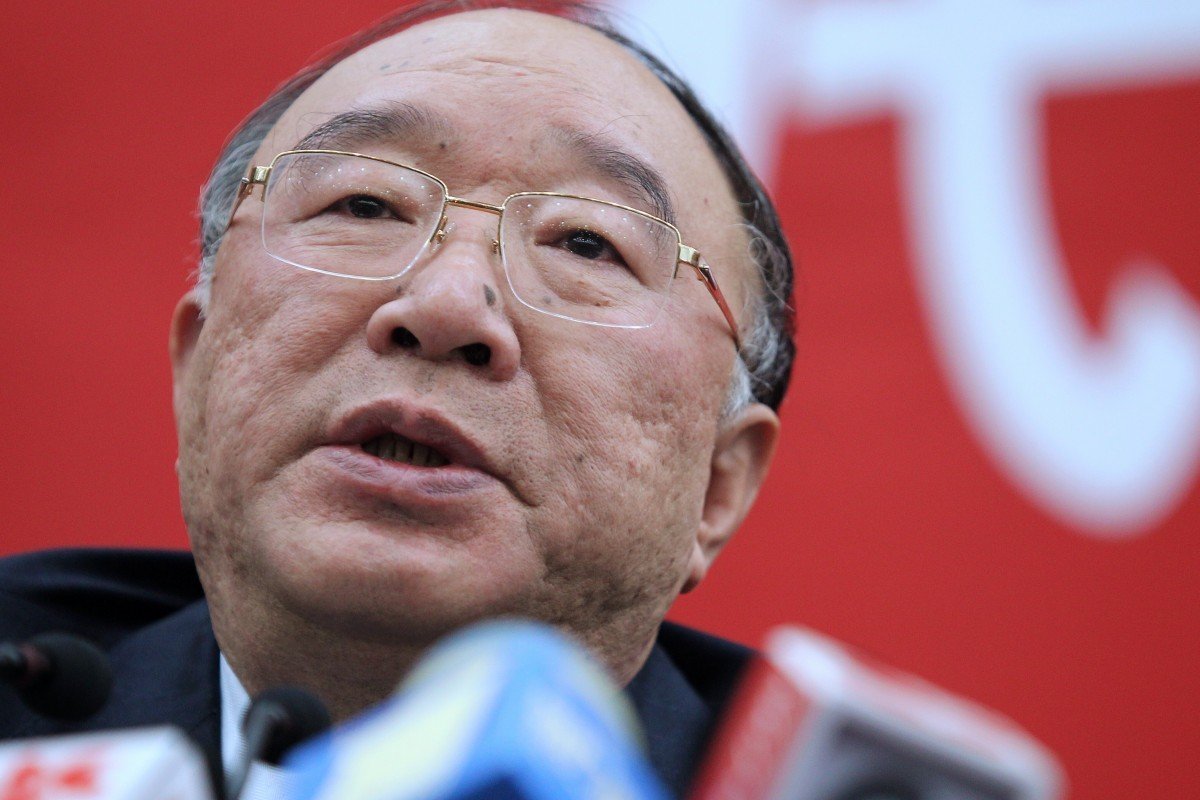
Former Chongqing mayor Huang Qifan is now a deputy head of the China Centre for International Economic Exchanges, a Beijing-based think tank.

The United States is unlikely to launch a financial war against China as it would hurt itself more, outspoken former Chongqing mayor Huang Qifan said.

“Don’t worry, everybody. If the US really decouples from us in the financial realm, it will hurt us by 1,000 but hurt themselves by 2,000, which equals a suicidal attempt and the US will die even before we do,” Huang said in comments published at the weekend.

His comments came as the Trump administration is facing a deadline on Monday to identify individuals who facilitated the “erosion” of Hong Kong’s autonomy, with a report due to be issued to the US Congress 90 days after the Hong Kong Autonomy Act was passed in July.

There are also concerns that the US may resort to broad financial sanctions against China by cutting its access to US dollars, which remains the dominant currency in international trade and payments.

The US has, according to Huang, succeeded in bullying economies like Russia,Southeast Asia and South Korea by wielding its financial power stemming from the anchor currency role of the US dollar, but he believes that this tactic “will not work for China”.

China has three “magic weapons” to shield itself from any potential financial sanctions by the US, namely that capital flows into and out of China are highly restricted, that foreign ownership of assets in China’s financial system remains small, as well as Beijing’s extensive oversight of financial operations, Huang explained.

“If the three areas are fully open, they will be controlled by the US, which will make it easy for the US to subvert us. These three areas of China are not open, or there is limited access under the jurisdiction of our system, and that makes it hard for the US to subvert us,” added Huang, who is now a deputy head of the China Centre for International Economic Exchanges, a Beijing-based think tank.

China’s economic and financial links with the US are, therefore, too valuable for the US business community and investment banks for Washington to cut despite attempts by politicians to decouple the world’s two largest economies.

“The king for Wall Street is the market. Wall Street listens to the capital and financial market, not [US President Donald] Trump. Trump has no rights or authority to order Wall Street or the US business community to go against China. He just creates noises,” Huang told a conference organised by the Chinese Association of Small and Medium Enterprises on Friday.

Guan Tao, a former official with the State Administration of Foreign Exchange, previously said that it was an “extremely small probability event” that the US would kick China out of the SWIFT international payments messaging system.

“The United States cannot ultimately decide whether a country can use SWIFT or not unless there is consensus by other members for a joint sanction, and that will depend on the extent of the country’s economic and trade links with the world. The US attempt to block Russia from SWIFT has been unsuccessful,” Guan, who is now the chief economist for the brokerage arm of the Bank of China, said in a recent interview with Chinese media.

He added that it was unlikely that the US would cut all Chinese institutions from the US dollar payment system, namely the Clearing House Interbank Payments System (CHIPS), with the probability for the US to block China from SWIFT even smaller.

But Guan added that it was still possible that the US would pick a few individual Chinese institutions to punish by limiting their access to CHIPS or SWIFT.

Newsletter

Related Articles

0:00
0:00
Close
MI5 Warns of Growing Russian Sabotage and Espionage Threats Across Britain
UK Prime Minister Andy Burnham Plans Brussels Talks to Renegotiate Post-Brexit Trade Deal
MI5 Warns of Rising Russian and Iranian Sabotage Threats to British Military Facilities
UK Prime Minister Andy Burnham Pledges Closer EU Ties as MI5 Reveals Russian Brexit Interference
UK Orders Security Review Following Reported Killing of Former Politician Ann Widdecombe
UK Prime Minister Andy Burnham Meets German Chancellor Merz to Strengthen European Security Ties
Nearly 100,000 NHS Patients Treated in Hospital Corridors as England Braces for Winter Pressures
UK Government Rejects US-Russia Diesel Agreement and Reaffirms Sanctions Against Moscow
UK and Germany Agree to Deepen Security and Economic Cooperation Following Berlin Talks
British Prime Minister Burnham Pledges Closer EU Ties During Visit to Germany
UK Announces New Sanctions on 17 Russia-Linked Entities During Foreign Secretary's Ukraine Visit
UK and Germany Finalize Kensington Treaty to Strengthen Defense and Technology Cooperation
Britain Maintains Diplomatic Mission in East Jerusalem Despite Israeli Closure Deadline
English Councils Push Government to Rethink Proposed Funding Cuts
Scottish Homebuilding Falls to Lowest Level in 11 Years
BBC Chief Matt Brittin Defends Restructuring as Staff Challenge Job Cuts
UK Finance Warns High Energy Costs and Bond Yields Are Complicating Fiscal Outlook
UK Adopts All 44 Recommendations on Regulating AI in Healthcare
Chancellor John Healey Prepares Autumn Budget as Borrowing Costs Strain Public Finances
UK Investigators See Strong Indications of Iranian Link After RAF Fairford Security Operation
Laura Trott Pledges Tighter Controls on Political Activism in UK Classrooms
Welsh Ministers Launch Long-Term Review of North Wales and Anglesey Crossings
Welsh Government Orders 18-Month Study of Road Solutions Around Newport
Reform UK MP Sarah Pochin Faces Scrutiny Over £800,000 Second Home Purchase
British Households Grow More Concerned About Fuel and Energy Prices
NHS Leaders Warn of Rising Winter Pressure on Emergency Departments
Kemi Badenoch Proposes £2.3 Billion Employer National Insurance Cut for Young Workers
Middle East Conflict Could Erase UK Fiscal Headroom, Economists Warn
Manchester City Found Guilty of Multiple Premier League Financial Rule Breaches
UK Security Services Find Strong Indications of Iranian Role in RAF Fairford Incident
Costa Coffee Returns to Operating Profit on Iced Drinks and Menu Changes
Asos Warns Customers After Unauthorized Access to Retail App and Data
Kemi Badenoch Puts Growth and Deregulation at Center of Conservative Conference
Campaigners Warn of Deepening Social Care Crisis for Disabled Adults
Study Finds Rising Early-Onset Cancer Rates Among Adults Under 50 in Britain
UK Coach Operators Warn High Diesel Prices Could Force Route Cuts
FCA Opens Independent Review Into Handling of Epstein-Linked Whistleblower Case
Argentina Vows to Block Falkland Islands Offshore Oil Development
UK Chancellor Prepares Fiscal Measures and Welfare Reforms Ahead of Autumn Budget
Sainsbury’s and Morrisons Explore Potential Multi-Billion-Pound Merger
UK Weighs Tariffs on Chinese Electric Vehicles to Align With European Union
UK Threatens Diplomatic Expulsions Over Planned Closure of East Jerusalem Consulate
UK Energy Price Cap Hits Three-Year High as Middle East Conflict Raises Costs
Seventh Arrest Made in Suspected Terror Plot at RAF Fairford
Systemic Education Collapse Sparks Mass Student Uprisings in France
Green Party Faces Backlash Over Resolution Equating Zionism With Racism
Conservatives Debate Scrapping Environmental Rules for New Homes
Cornwall Insight Warns UK Energy Bills Could Approach £2,000 This Winter
UK Coach Operators Warn of Service Cuts as Diesel Prices Exceed £2
Scottish Parliament Approves £68 Billion Budget With New Tax and Property Measures
×