London Daily

Focus on the big picture.
Friday, Jan 23, 2026

UK visas: How does the points-based immigration system work?

UK visas: How does the points-based immigration system work?

Immigration is needed to solve worker shortages and boost economic growth, says the head of the CBI - the UK's biggest business group.

With UK job vacancies near record levels, Tony Danker says "we don't have the people we need".


What are the visa rules for skilled workers?


Access to most UK visas is via the points-based system adopted after the UK left the European Union.

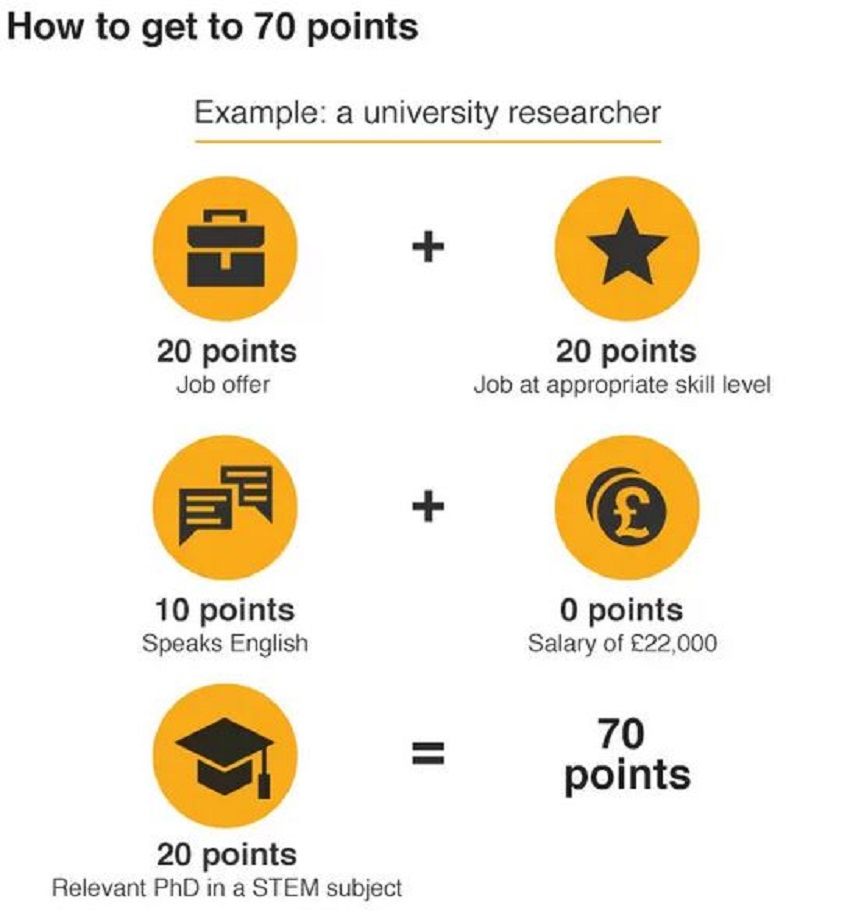
To secure a skilled worker visa, people need 70 points.

Having an offer of a skilled job from an approved employer and being able to speak English will give 50 points.

The applicant can achieve the remaining 20 points if they will be paid at least £25,600 a year.

They can also gain extra points for having better qualifications. There are 10 points for a relevant PhD, or 20 points for a PhD in science, technology, engineering or maths.

An offer of a job in which the UK has a shortage is worth 20 points, even if it doesn't pay as much money.

Certain jobs in health or education still merit 20 points even if the salary is less than £25,600. The applicant must be paid at least £20,480, and in line with set amounts for particular jobs in the UK's four nations.

The exception to this is Irish citizens, who are still able to live and work in the UK as part of the Common Travel Area.

How much does it cost to apply?


The application fee depends on how many years the job seeker plans to work in the UK, and whether their job is on a list of skills that the UK has shortages of - for instance, vets and web designers.

If their skills are not on that list then the standard fee is between £625 and £1,423.

Jobseekers also have to pay the health surcharge, which is £624 per year when they apply. That money is refunded if they don't get a visa.

They also need to show they can support themselves in the UK, which usually involves having a total of at least £1,270 available.


How does the graduate system work?


The High Potential Individual scheme is open to people who graduated from top non-UK universities in the past five years.

The government has published lists of which universities are eligible.

Successful applicants will be given a work visa lasting two years if they hold a bachelor's or master's degree, and three years if they hold a PhD.

They will then be able to switch to other long-term employment visas if they meet certain requirements.

The visa costs £715 plus the immigration health surcharge.

Graduates will be able to bring their families, although they must also have maintenance funds of at least £1,270.


What about healthcare workers?


Health and Care Worker Visas are available for doctors, nurses and other healthcare professionals.

Those eligible pay reduced fees and can be supported through the application process.

Successful applicants will be exempt from the immigration health surcharge.

Applicants via this route still have to meet salary thresholds depending on the type of work they do.

Many care workers will not be covered by the scheme though, because applicants need to be paid at least £10.10 per hour.


Can people come to the UK to study?


There is no limit on the number of international students who can study in the UK.

The student visa application system allows them to apply six months before they are due to start a course if they are applying from outside the UK.

The government has also launched a graduate visa to allow students who have completed a degree to stay in the UK for two years. This will rise to three years for those who have done a PhD.

Newsletter

Related Articles

0:00
0:00
Close
Starmer Breaks Diplomatic Restraint With Firm Rebuke of Trump, Seizing Chance to Advocate for Europe
UK Finance Minister Reeves to Join Starmer on China Visit to Bolster Trade and Economic Ties
Prince Harry Says Sacrifices of NATO Forces in Afghanistan Deserve ‘Respect’ After Trump Remarks
Barron Trump Emerges as Key Remote Witness in UK Assault and Rape Trial
Trump Administration’s Iran Military Buildup and Sanctions Campaign Puts Deterrence Credibility on the Line
Apple and OpenAI Chase Screenless AI Wearables as the Post-iPhone Interface Battle Heats Up
Tech Brief: AI Compute, Chips, and Platform Power Moves Driving Today’s Market Narrative
NATO’s Stress Test Under Trump: Alliance Credibility, Burden-Sharing, and the Fight Over Strategic Territory
OpenAI’s Money Problem: Explosive Growth, Even Faster Costs, and a Race to Stay Ahead
Trump Reverses Course and Criticises UK-Mauritius Chagos Islands Agreement
Elizabeth Hurley Tells UK Court of ‘Brutal’ Invasion of Privacy in Phone Hacking Case
UK Bond Yields Climb as Report Fuels Speculation Over Andy Burnham’s Return to Parliament
America’s Venezuela Oil Grip Meets China’s Demand: Market Power, Legal Shockwaves, and the New Rules of Energy Leverage
TikTok’s U.S. Escape Plan: National Security Firewall or Political Theater With a Price Tag?
Trump’s Board of Peace: Breakthrough Diplomacy or a Hostile Takeover of Global Order?
The Greenland Gambit: Economic Genius or Political Farce?
Will AI Finally Make Blue-Collar Workers Rich—or Is This Just Elite Tech Spin?
Prince William to Make Official Visit to Saudi Arabia in February
Prince Harry Breaks Down in London Court, Says UK Tabloids Have Made Meghan Markle’s Life ‘Absolute Misery’
Malin + Goetz UK Business Enters Administration, All Stores Close
EU and UK Reject Trump’s Greenland-Linked Tariff Threats and Pledge Unified Response
UK Deepfake Crackdown Puts Intense Pressure on Musk’s Grok AI After Surge in Non-Consensual Explicit Images
Prince Harry Becomes Emotional in London Court, Invokes Memory of Princess Diana in Testimony Against UK Tabloids
UK Inflation Rises Unexpectedly but Interest Rate Cuts Still Seen as Likely
AI vs Work: The Battle Over Who Controls the Future of Labor
Buying an Ally’s Territory: Strategic Genius or Geopolitical Breakdown?
AI Everywhere: Power, Money, War, and the Race to Control the Future
Trump vs the World Order: Disruption Genius or Global Arsonist?
Arctic Power Grab: Security Chessboard or Climate Crime Scene?
Starmer Steps Back from Trump’s ‘Board of Peace’ Amid Strained US–UK Relations
Prince Harry’s Lawyer Tells UK Court Daily Mail Was Complicit in Unlawful Privacy Invasions
UK Government Approves China’s ‘Mega Embassy’ in London Amid Debate Over Security and Diplomacy
Trump Cites UK’s Chagos Islands Sovereignty Shift as Justification for Pursuing Greenland Acquisition
UK Government Weighs Australia-Style Social Media Ban for Under-Sixteens Amid Rising Concern Over Online Harm
Trump Aides Say U.S. Has Discussed Offering Asylum to British Jews Amid Growing Antisemitism Concerns
UK Seeks Diplomatic De-escalation with Trump Over Greenland Tariff Threat
Prince Harry Returns to London as High Court Trial Begins Over Alleged Illegal Tabloid Snooping
High-Speed Train Collision in Southern Spain Kills at Least Twenty-One and Injures Scores
Meghan Markle May Return to the U.K. This Summer as Security Review Advances
Trump’s Greenland Tariff Threat Sparks EU Response and Risks Deep Transatlantic Rift
Prince Harry’s High Court Battle With Daily Mail Publisher Begins in London
Trump’s Tariff Escalation Presents Complex Challenges for the UK Economy
UK Prime Minister Starmer Rebukes Trump’s Greenland Tariff Strategy as Transatlantic Tensions Rise
Prince Harry’s Last Press Case in UK Court Signals Potential Turning Point in Media and Royal Relations
×