
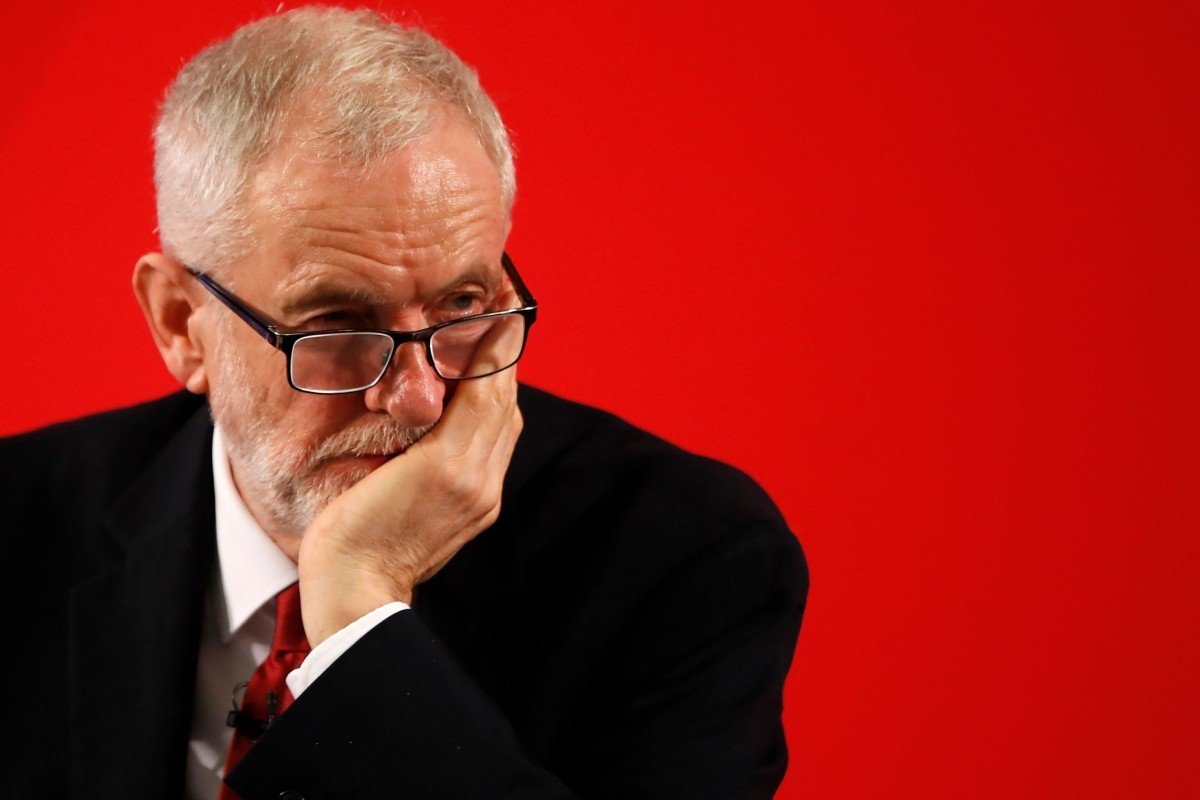
Former Labour Party leader Jeremy Corbyn pictured while still in post in November last year.

UK opposition party suspends former leader over anti-Semitism
The shock development came after Jeremy Corbyn said he refused to accept all the findings of a government watchdog’s report that found his office broke equality law.
Britain’s main opposition Labour Party on Thursday suspended its former leader Jeremy Corbyn, after a government watchdog found his office broke equality law through its “inexcusable” handling of anti-Semitism complaints.
The shock development came after Corbyn said he refused to accept all the findings of the Equality and Human Rights Commission (EHRC) report, in defiance of the party’s new leadership under Keir Starmer.
“In the light of his comments made today and his failure to retract them subsequently, the Labour Party has suspended Jeremy Corbyn pending investigation,” a spokesman said.
He said that Corbyn, who has continued to sit as a member of parliament after stepping down as leader, will also no longer count in the ranks of Labour MPs.
The EHRC found damning instances where Corbyn’s leadership team underplayed, belittled or ignored complaints by Jewish members, and sometimes actively interfered to support favoured allies, after a deluge of anti-Semitic abuse online and in party meetings.
Luciana Berger, a former Labour MP who was one of many Jewish members to quit the party under Corbyn, said the report was vindication as she described being threatened by his supporters with acid attack, stabbing and rape.
“The party facilitated a culture of bullying, bigotry and intimidation against Jewish people from within its ranks. At every step of the way, Jeremy Corbyn enabled this to happen,” she wrote in a blog.
In one of his first acts after replacing Corbyn in April, Starmer apologised to Britain’s Jewish community, and on Thursday he vowed to accept the entirety of the findings from the EHRC’s two-year investigation.
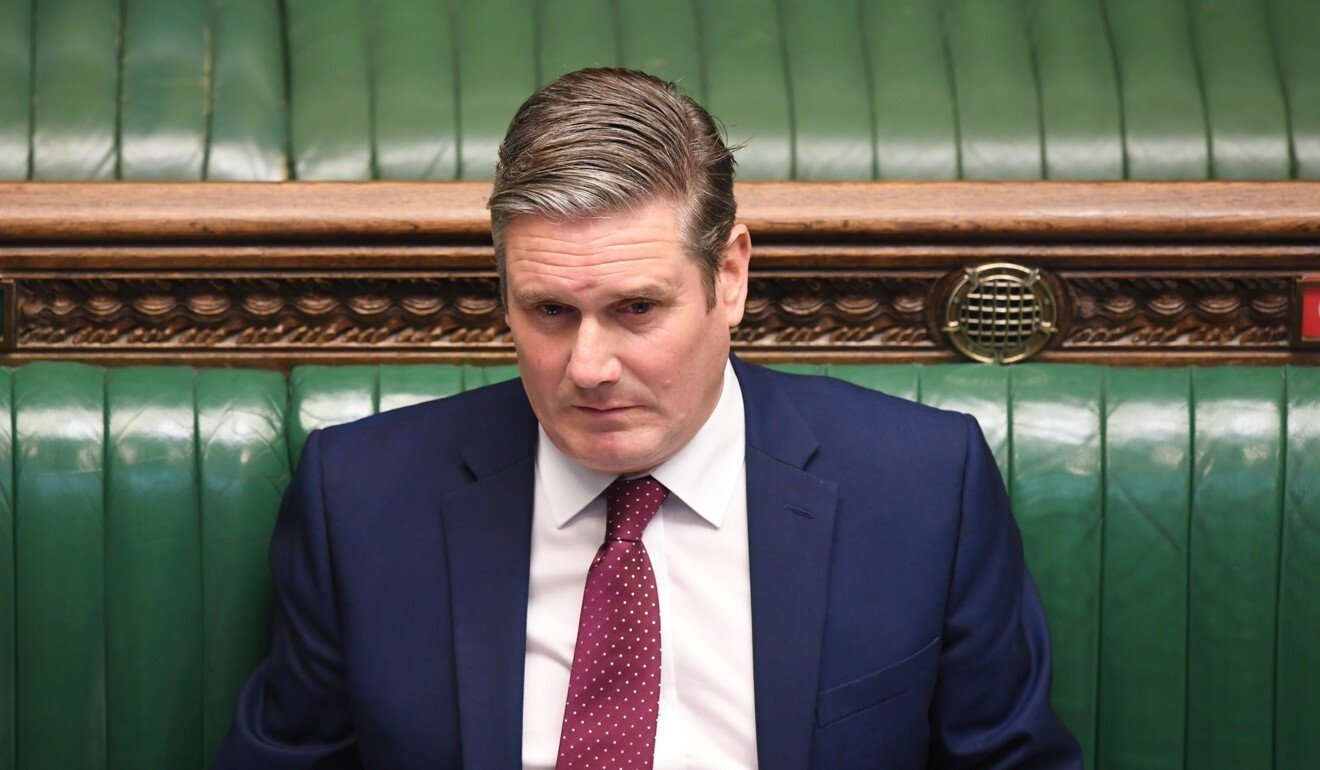
Labour leader Keir Starmer pictured in the House of Commons earlier this month.
“I found this report hard to read and it is a day of shame for the Labour Party,” Starmer told a news conference, renewing apologies also to Berger and other Jewish members who left the party in droves.
“I can promise you this: I will act. Never again will Labour let you down. Never again will we fail to tackle anti-Semitism,” he said.
“The Labour Party accepts this report in full and without equivocation,” he added, vowing implementation immediately and “in full”.
Responding to the report, Corbyn said anti-Semitism was “absolutely abhorrent” and insisted his team had launched internal changes to tackle the problem from 2018. But he said he did “not accept all of its findings”.
“One anti-Semite is one too many, but the scale of the problem was also dramatically overstated for political reasons by our opponents inside and outside the party, as well as by much of the media,” he added.
Starmer refused to say whether he would now expel Corbyn and his allies from the party but said Labour had suffered a “collective failure of leadership”. “Those who deny the problem are part of the problem,” he added.
Corbyn was propelled from the backbenches to become Labour leader in 2015 after decades of socialist activism, including for Palestinian causes.
Among his supporters, criticism of Israel veered often into anti-Semitic tropes and anti-Jewish conspiracies.
“Our investigation has highlighted multiple areas where [Labour’s] approach and leadership to tackling anti-Semitism was insufficient,” the EHRC’s interim chair, Caroline Waters, said in presenting the 129-page report.
“This is inexcusable and appeared to be a result of a lack of willingness to tackle anti-Semitism rather than an inability to do so,” she said.
The commission said that under Corbyn, Labour was guilty of three breaches of Britain’s 2010 Equality Act for political interference in complaints, failure to provide adequate training to those handling anti-Semitism cases and harassment of complainants.
But it stopped short of launching legal proceedings, instead ordering Labour to draft an action plan by December 10 to remedy its failures.
Corbyn triggered a leadership election after Labour suffered a hammering in a general election last December, which returned the Conservatives to power under Prime Minister Boris Johnson.
The Board of Deputies of British Jews and two other Jewish organisations said the report was a “damning verdict on what Labour did to Jews under Jeremy Corbyn and his allies”.
“We welcome the start that Keir Starmer has made, but the scale of the challenge that lies ahead should not be underestimated,” they said.

