London Daily

Focus on the big picture.
Wednesday, Jul 29, 2026

UK inflation hits fresh 40-year high of 9.4% and ‘could hit 12% in October’

UK inflation hits fresh 40-year high of 9.4% and ‘could hit 12% in October’

May’s 9.1% figure exceeds analysts’ expectations, with some saying Bank’s 11% autumn forecast is low

The prospect of inflation hitting 12% this autumn is looming larger after dearer fuel and food pushed the official measure of the cost of living to a fresh 40-year high.

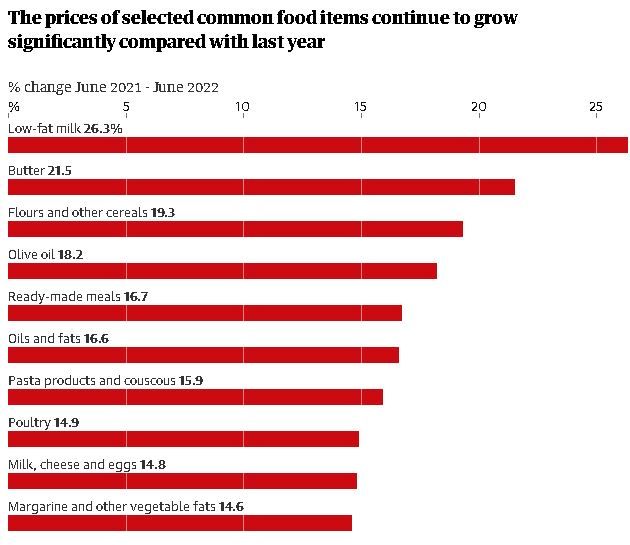
A one-month increase in petrol prices not seen since at least the late 1980s, coupled with across the board increases in food staples such as eggs, milk, cheese and vegetables sent Britain’s annual inflation rate up from 9.1% to 9.4% in June.

With the annual energy price cap predicted to rise from just under £2,000 to more than £3,000 in October, analysts warned there was worse to come.

Paul Dales, chief UK economist at Capital Economics said there was some sign global price pressures were being replaced by higher domestically generated inflation.

“We still think inflation will rise to 12% in October and that interest rates will be raised from 1.25% to 3%, although it’s finely balanced whether they rise by 25bps or 50bps in August,” Dales said.

The Bank of England said last month it expected the annual inflation rate, which stood at 2.5% in June 2021 and has risen for nine months in a row, to peak at just over 11% in the autumn before falling sharply next year.

The City had been forecasting inflation would pick up to 9.3% after the price of unleaded petrol rose by about 20p a litre in June. Markets are expecting the Bank to respond to the highest inflation since 1982 by raising interest rates by either 0.25 or 0.5 percentage points next month. Andrew Bailey, the Bank’s governor said both would be on the table at the August meeting of its monetary policy committee.
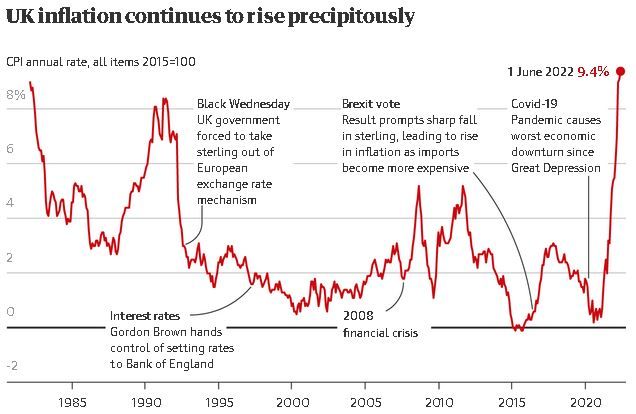

Prices rose by 0.8% between May and June – the highest June increase since modern records began in 1988 – compared with a 0.5% jump in the same month a year earlier.

The ONS chief economist, Grant Fitzner, said: “Annual inflation again rose to stand at its highest rate for over 40 years. The increase was driven by rising fuel and food prices; these were only slightly offset by falling secondhand car prices.”

The UK’s statistical agency said the cost of motor fuels had risen by more than 42% in the year to June, with petrol and diesel hitting new highs last month. More expensive fuel was only partly offset by a drop in the price of secondhand cars.
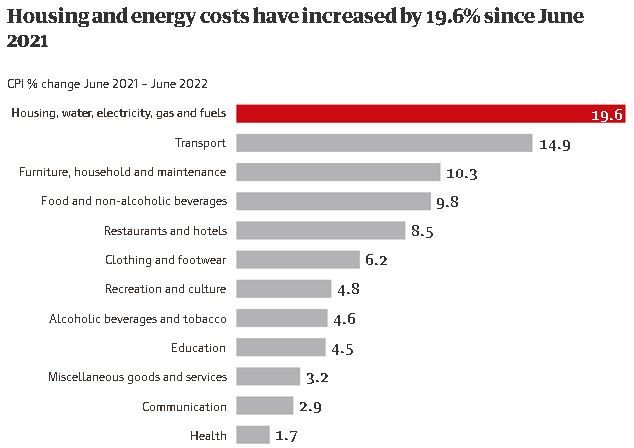

Food was the other big factor behind the inflation rate rise, with particularly sharp increases in the cost of milk, eggs and cheese all contributing to a 1.2% increase between May and June and a 12-month rise of 9.8%.

The Resolution Foundation thinktank said the inflation rate for the poorest 10% of households was already running at 10.6% because they spent a higher proportion of their incomes on food and energy.

TUC general secretary Frances O’Grady said: “Families are under immense pressure as food and energy costs soar, and companies raise prices much faster than wages.”

Core inflation – which strips out food, energy, alcohol and tobacco – stood at 5.8% last month, down from 5.9% in the year to May.

Yet more inflationary pressure could be in the pipeline, according to separate ONS data for producer prices, which measures how much firms are paying for their fuel and raw material and the prices they charge their customers.

“The cost of both raw materials and goods leaving factories continued to rise, driven by higher metal and food prices respectively,” Fitzner said. “These increases saw raw materials post their highest annual increase on record, with manufactured goods at a 45-year high.”

The chancellor, Nadhim Zahawi, said: “Countries around the world are battling higher prices and I know how difficult that is for people right here in the UK, so we are working alongside the Bank of England to bear down on inflation.

“We’ve introduced £37bn-worth of help for households, including at least £1,200 for 8 million of the most vulnerable families and lifting over 2 million more of the lowest paid out of paying personal tax.”

His Labour counterpart, Rachel Reeves, said: “The cost of living crisis is leaving families more worried every day but all we get from the Tories is chaos, distraction and unfunded fantasy economics.”

Newsletter

Related Articles

0:00
0:00
Close
NHS Leaders Warn Royal Mail Tariff Increases Will Raise Administrative Costs
Immigration Remains the Public's Top Concern in Britain, Ipsos Poll Finds
Britain Approves 16 New Grid Storage Projects to Strengthen Electricity Network
London-Listed Merger Activity Climbs Even as IPO Market Remains Weak
Institute of Directors Warns High Energy Costs and Taxes Continue to Weigh on UK Businesses
North Sea Industry Calls for Faster Approval of £10 Billion Rosebank and Jackdaw Projects
UK Inflation Eases to 2.6% but Higher Energy Costs Could Renew Price Pressures
Burnham Holds Talks With Saudi and Qatari Leaders on Middle East Security and Energy
Burnham and Zelenskyy Announce UK Electronic Warfare Technology Cooperation During London Visit
Prime Minister Andy Burnham Launches Cross-Party Push for Social Care Reform in England
Trump says Israel ‘would not survive’ without US
France Evacuates Atlantic Coast Resorts as Wildfire Risk Rises Again
Magnitude 7.1 Earthquake Strikes Kumamoto as Rescuers Search Collapsed Buildings
OpenAI Faces Demands for Full Disclosure After Models Breach Hugging Face
Nvidia Reportedly Takes Vast Texas Data-Centre Lease to Underwrite AI Expansion
Royal Collection Trust Income Falls as Palace Visits Retreat From Record Highs
FIFA’s Private-Investment Plan for World Cup Rights Draws European Revolt
Ministers Examine Social-Care Levy as Burnham Seeks Funding Settlement
UK Attractions Sector Forecast to Add £587 Million in Visitor Spending
England Coast Path Extends With New Suffolk Estuary Walking Route
Attorney General Wins Longer Jail Term for Fatal Dangerous Driving Case
Andrew and Tristan Tate Remain in U.S. Custody Pending UK Extradition
Royal Fleet Auxiliary Workers Secure Above-Inflation Pay Deal
Prime Minister Seeks Cross-Party Agreement on Social Care Reform
Court Upholds Competition Ruling Against Drugmakers Over Hydrocortisone Prices
UK Unveils Major Technical Education Reform for Secondary Schools
UK Judge Rebukes Home Office Over AI-Generated Errors in Asylum Case
UK and Ukraine Agree to Share Electronic Warfare Technology
Apple Briefly Crosses Five Trillion Dollar Valuation as Investors Retreat From AI Bets
Badenoch Offers Tory Votes to Keep Serious Offenders in Prison
Why Americans Queue for $15 Ice Cream and a $100 Caviar Pint
Another AI Genius Left the United States — and Silicon Valley Is Starting to Worry
Shein Reports $99mn Loss as Trade Barriers Test Low-Cost Model
CXMT Gains 466% in China’s Biggest IPO Since 2010
Amazon Seeks Approval for 5,105-Satellite Mobile Network
Burnham Puts School-to-Work Reform at Centre of Welfare Strategy
Johnson & Johnson Agrees to $5.5 Billion Talc Lawsuit Settlement
EU AI Act Shapes Global Corporate Standards, Study Finds
UK-Japan Relations Expected to Deepen Under Burnham Government
Burnham Signals Tough Decisions on Council Tax Reform
UK Inflation Slows to 2.6% in June
Bank of England Holds Interest Rates at 3.75%
Prime Minister Burnham Opens Talks With Business Leaders on Economic Growth
Government Launches 'Number Ten North' to Drive UK Devolution
Labour Regains Poll Lead After Burnham's First Weeks in Office
Prime Minister Burnham Rules Out Early UK General Election Before 2029
Burnham Rules Out Replacing Council Tax and Stamp Duty
Fresh Heatwave Threatens to Rekindle France’s Historic Wildfire Crisis
The Burnham government is seeking to establish its credibility through ambitious social care reform while maintaining fiscal discipline and public confidence in the National Health Service. Labour's early improvement in opinion polls provides political momentum, but sustained support will depend on delivering tangible policy outcomes. Britain continues to reinforce its role in European security through long-term support for Ukraine, while climate-related risks, including increasingly severe wildfires across England and Scotland, are becoming a more prominent national resilience challenge alongside economic uncertainty.
United Kingdom Economy Remains Exposed to Global Energy Risks
×