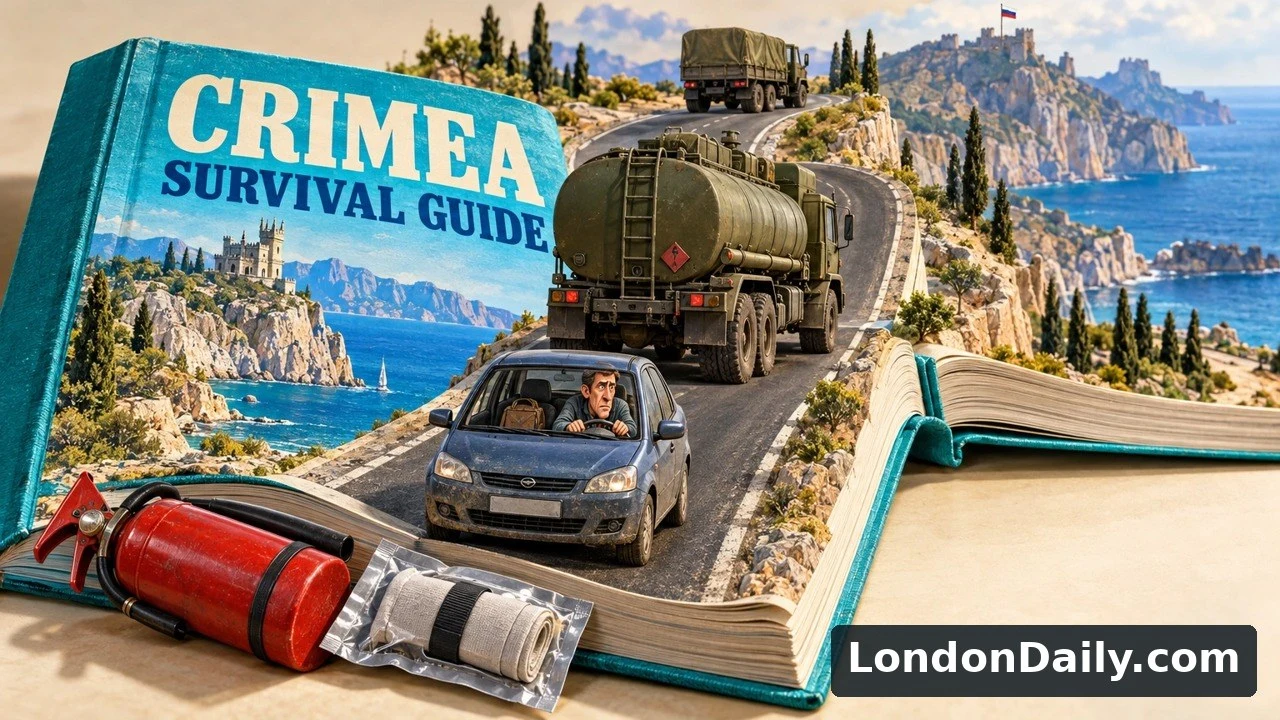
Russian motorists are compiling survival guides for journeys to Crimea after Ukraine destroyed the Crimean Bridge’s road section, leaving drivers reliant on a 390-mile corridor through occupied southern Ukraine used by Russian military supplies.
One Telegram guide opens: “Unless it’s a matter of life and death, don’t go.” Anatoly, who travelled to visit his parents and asked for his surname to be withheld, described burning lorries and drones overhead. “What we saw was pretty apocalyptic,” he said.
Moscow calls the roughly 630km highway the Novorossiya route. It runs from Rostov-on-Don through Mariupol, Berdiansk and Melitopol into Crimea. Russia’s occupation of southern Ukrainian territory in 2022 opened the corridor, reducing its military’s dependence on the bridge but making the road a significant target.
Kyiv says its strikes target military logistics rather than civilian vehicles. The drivers’ guides acknowledge that ordinary cars are rarely hit. Nevertheless, sharing a road with military traffic and fuel lorries exposes civilians to attacks on those supplies.
The independent Armed Conflict Location and Event Data Project recorded an average of two Ukrainian strikes daily along the corridor in the first six months of 2026; about 90% involved drones. Russian state television’s Vesti programme acknowledged that the highway crosses three frontline regions and comes under attack, saying it carries up to 20,000 vehicles daily.
Unofficial guides advise avoiding night travel, keeping 50–100 metres between vehicles and stopping only in designated areas. They warn against sheltering behind lorries, particularly tankers, and recommend carrying up to 240 litres of spare fuel, two fire extinguishers, tourniquets and haemostatic dressings. Drivers are told to monitor local radio for drone warnings; roadside flags signal changing threats.
Russian officials have given no timetable for restoring road traffic across the bridge, opened by Vladimir Putin in 2018, four years after Russia illegally annexed Crimea. Passenger trains still cross, although Kyiv has vowed further strikes. The Kerch strait ferry carries passengers, not cars, and winter storms frequently disrupt it.
Crimea’s tourism authorities put annual Russian visitor numbers at about five million, but have not published this year’s figures. Residents also used the bridge to reach cheaper mainland groceries and petrol. Ukraine’s campaign to isolate the peninsula has already caused fuel shortages and disrupted water and electricity, prompting several states of emergency over the summer.
For those earning a living on the road, avoiding the journey is not straightforward. Dmitry, a lorry driver from Rostov, said he had considered quitting because of the danger but struggled to find other work and still had a mortgage to pay.








Join the conversation