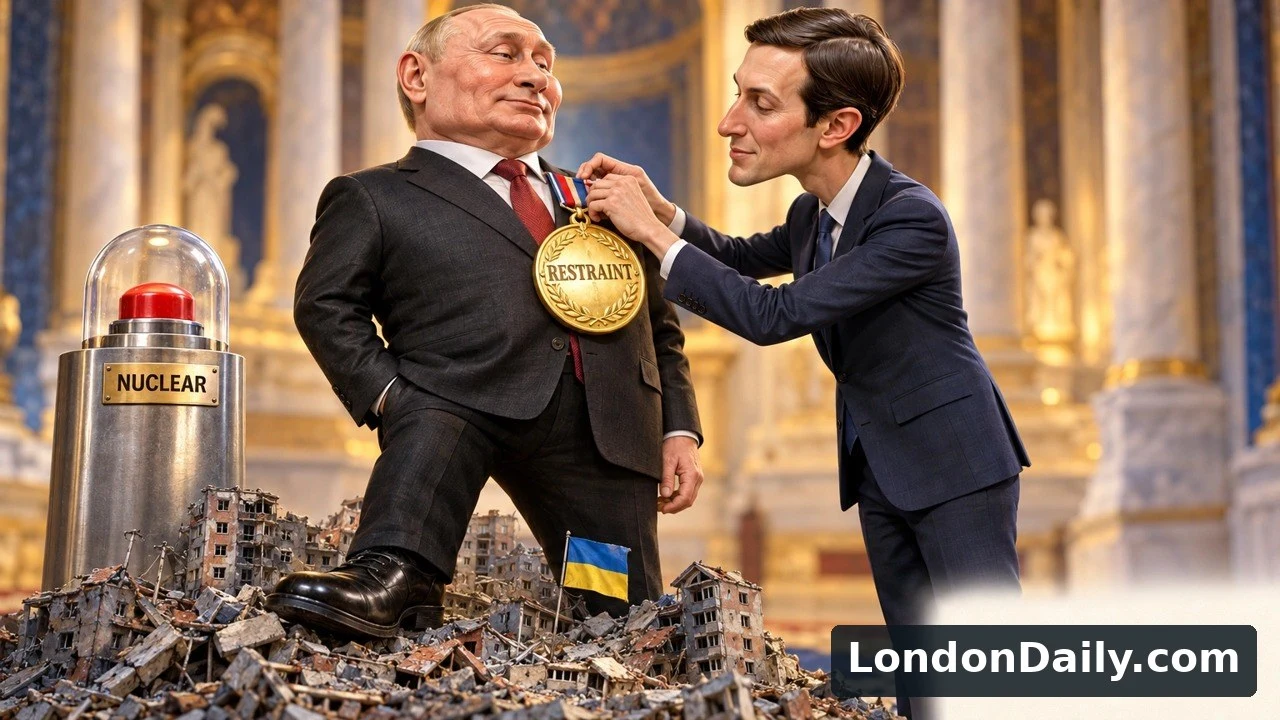
Jared Kushner, Donald Trump’s son-in-law and a White House envoy, has praised Vladimir Putin as a ‘grand man of politics’, citing the Russian president’s assurances that he would not use nuclear weapons in the war in Ukraine.
Speaking on Mathias Döpfner’s podcast, Kushner said Putin wanted peace and a ‘new beginning’ with the United States. His remarks presented nuclear restraint and personal diplomacy as grounds for engagement, even as Russia’s war continues.
‘So far Putin has shown restraint; he’s agreed not to use nuclear weapons, which obviously is a big thing, and he’s reassured us that that’s not his intention,’ Kushner said.
‘He’s definitely a grand man of politics; he’s a historic figure,’ he added.
Kushner, who has met Putin on numerous occasions, credited him with a ‘deep understanding’ of the issues surrounding the war and Russia’s relationship with Washington. He also said a Russia–Ukraine peace agreement was not about ‘fairness or who’s right or wrong’, framing a settlement separately from judgements about responsibility.
That favourable assessment sits alongside a more guarded statement from Jay Clayton, the US director of National Intelligence, who said Putin was ‘not America’s friend in Ukraine.’ The distinction matters: a willingness to negotiate does not necessarily mean the countries’ interests align.
Trump has nevertheless publicly emphasised friendship. He shared a photograph from his meeting with Putin in China last week, captioned ‘My Friend,’ showing the two shaking hands as Trump whispered into Putin’s ear. They greeted one another on Wednesday before a 40-minute meeting. His description attracted criticism while the Kremlin continued its war.
During the Asia summit, Trump, Putin and Chinese president Xi Jinping also held a rare joint encounter and issued a ‘peace declaration’, although Ukraine and Iran were barely mentioned. Trump discussed the conversations at a press conference after returning to the United States on Friday.
The nuclear assurances Kushner described concern the risk of escalation; they do not themselves amount to an agreement to end the war.








Join the conversation