London Daily

Focus on the big picture.
Thursday, Oct 01, 2026

Myanmar coup: What is happening and why?

Myanmar coup: What is happening and why?

Myanmar hit headlines around the world on Monday when its military seized control.

The country's leader, Aung San Suu Kyi, and members of her party are thought to be under house arrest.


Where is Myanmar?


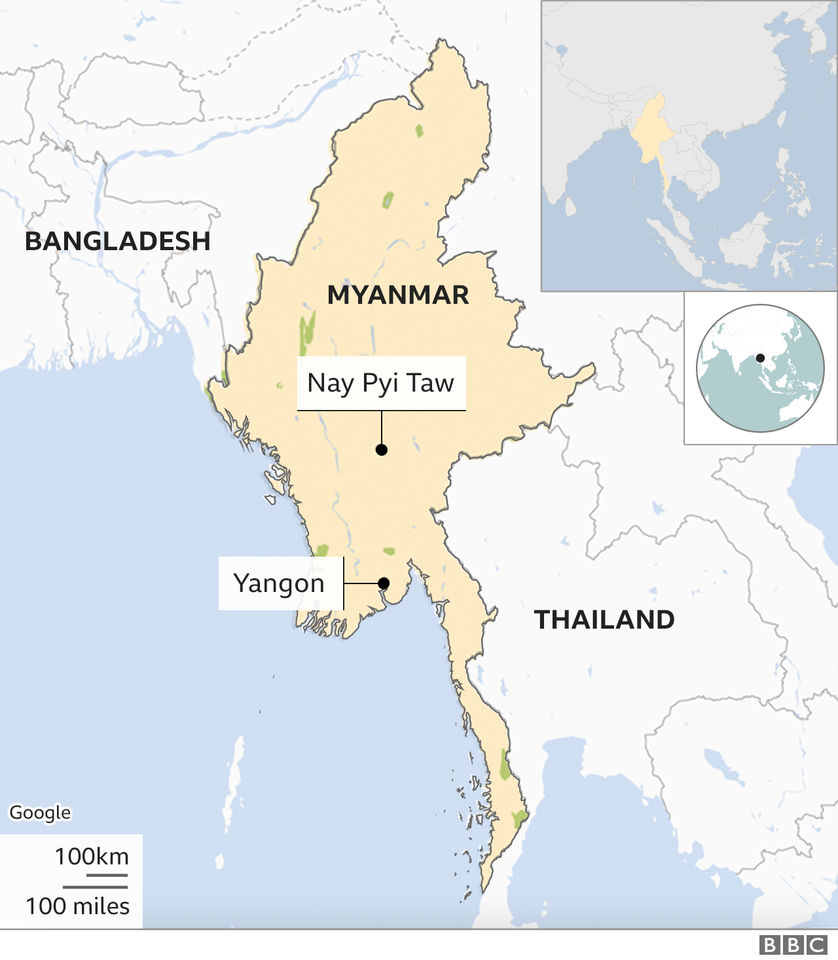
Myanmar, also known as Burma, is in Southeast Asia and neighbours Thailand, Laos, Bangladesh, China and India.

It has a population of about 54 million, most of whom speak Burmese, although other languages are also spoken. The biggest city is Yangon (Rangoon) but the capital is Nay Pyi Taw.

The main religion is Buddhism. There are many ethnic groups in the country, including the Rohingya Muslims.

The ruling military changed the country's name from Burma to Myanmar in 1989, a year after thousands of people were killed in a crackdown on a popular uprising.

The country was ruled by the armed forces from 1962 until 2011, when a new government began ushering in a return to civilian rule.

What has happened now, and why?


The military has once more taken over the country, declaring a year-long state of emergency.

It seized control following a general election which Ms Suu Kyi's National League for Democracy (NLD) party won by a landslide.

The armed forces had backed the opposition, who were demanding a re-run of the vote, claiming widespread fraud.

The election commission said there was no evidence to support these claims.

The coup was staged as a new session of parliament was set to open.


Who is in charge now?


The military says that power has been handed over to commander-in-chief Min Aung Hlaing.

He has long wielded significant political influence, successfully maintaining the power of the Tatmadaw - Myanmar's military - even as the country transitioned towards democracy.

Min Aung Hlaing is the leader of the coup


He has received international condemnation and sanctions for his alleged role in the military's attacks on ethnic minorities.

The military has already replaced numerous ministers and deputies, including in finance, health, the interior and foreign affairs.


Who is Aung San Suu Kyi?


Aung San Suu Kyi became world-famous in the 1990s for campaigning to restore democracy in Myanmar.

She spent nearly 15 years in detention between 1989 and 2010 after organising rallies calling for peaceful democratic reform and free elections.

She was awarded the Nobel Peace Prize while under house arrest in 1991.

In 2015, she led her NLD party to victory in Myanmar's first openly contested election in 25 years.
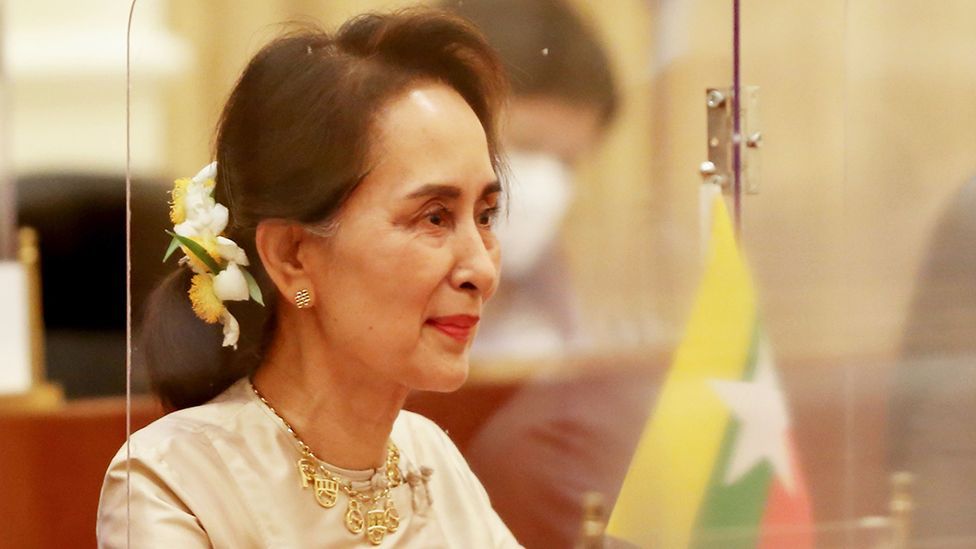
Aung San Suu Kyi, pictured in September 2020


What about the crackdown on Rohingya?


Ms Suu Kyi's international reputation has suffered greatly as a result of Myanmar's treatment of the Rohingya minority group.

Myanmar considers them illegal immigrants and denies them citizenship.

Over decades, many have fled to escape persecution.

Thousands of Rohingyas were killed and more than 700,000 fled to Bangladesh following an army crackdown in 2017.

Ms Suu Kyi appeared before the International Court of Justice in 2019, where she denied the military had committed genocide.


What has the international reaction been?


The EU, UK and United Nations are among those to have condemned the military takeover.

UK Prime Minister Boris Johnson said the "vote of the people must be respected".

US President Joe Biden has threatened to reinstate sanctions on Myanmar.

But not everyone has reacted in this way.

China, which has previously opposed international intervention in Myanmar, urged all sides in the country to "resolve differences". Its Xinhua news agency described the changes as a "cabinet reshuffle".

Other countries in the region, including Cambodia, Thailand and the Philippines, have said it is an "internal matter".


What could happen now?


Ms Suu Kyi has urged her supporters to "protest against the coup", but the streets of Myanmar are quiet.
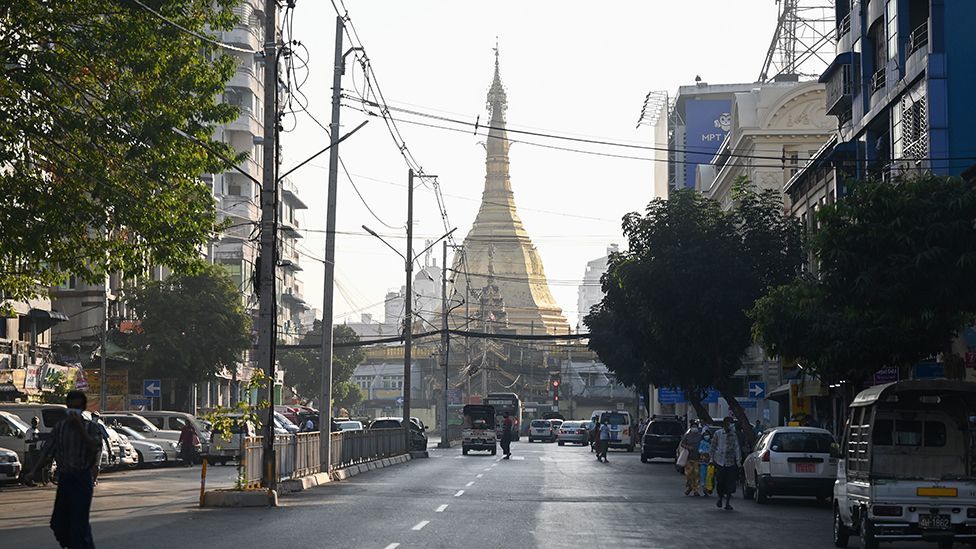
Streets in Yangon are empty following the coup


An NLD politician told the AP news agency the party was not planning street protests, but working to "settle the problem peacefully".

Medics working in government hospitals are reported as saying they will stop work this week to push for the release of Ms Suu Kyi. Pictures on social media show some wearing black ribbons in protest.

Newsletter

Related Articles

0:00
0:00
Close
Southwest England Faces Flood Alerts After Heavy Autumn Storms
UK Expands Funding for Rapid Electric Vehicle Charging Infrastructure
Welsh Government Approves Funding to Upgrade South Wales Transport
Northern Ireland Tensions Rise as Orange Order Rejects Drumcree Compromise
NHS Leaders Back Early Design of Proposed National Care Service
More Than One-Third of Regional UK Universities Face Financial Deficits
UK Current Account Deficit Narrows as Cross-Border Financial Flows Remain Strong
Bank of England and FCA Issue New Rules for Stablecoins and Digital Assets
MI5 Warns UK Universities Over Research Links With Chinese Institutions
UK Energy Price Cap Rises 4% as Electricity VAT Is Temporarily Suspended
Equity Calls for UK Personality Rights to Protect Performers From AI Replication
OpenAI Pauses Advanced Model Training Following Safety Concerns
Scottish Government Proposes Replacing 32 Councils With Larger Regional Authorities
Ofgem Raises UK Household Energy Price Cap by 4% From October
UK Counter-Terrorism Police Continue Investigation After Five Arrests Near RAF Fairford
OECD Cuts UK 2027 Growth Forecast to 1%
Labour Says State Pension Triple Lock Remains Protected Through Current Parliament
Andy Burnham Pledges National Care Service With Free Social Care in England
Six Flags Permanently Shuts Landmark X2 Roller Coaster Following Safety Scandals
Metropolitan Police Rule Out Terrorism in Golders Green Stabbing Investigation
Lithium-Ion Battery Identified as Cause of Fatal Merseyside House Fire
UK Department Rejects New Sea Use Framework Due to Stakeholder Fatigue
Major Thames Water Pipe Burst Causes School Closures in London
Aldi Commits £900 Million to Expand UK Supermarket Network
Scottish Affairs Committee Warns Skills Shortages Threaten Defence Sector Expansion
Parliamentary Committee Warns Northern Ireland Budget Deadlock is Stalling Economic Growth
NHS Hospitals in England Face Severe Shortages of Essential Medications
Home Secretary Signals Major Overhaul of UK Immigration and Leave to Remain Policies
Chancellor Promises New Job Schemes Alongside Strict Fiscal Discipline
Energy Secretary Proposes Taxpayer-Funded Green Transition and National Electricity Grid
UK Government to Renationalise Avanti West Coast Railway Franchise in March
Prime Minister Andy Burnham Pledges Major Social Care and Infrastructure Reforms
Five Suspects Released on Bail Following Alleged Bomb Plot Near RAF Fairford
UK Diesel Prices Hit Record High of 199p Per Litre
Transport for Wales and Network Rail Complete Electrification of South Wales Metro
Defra Expands Incentives for Sustainable Farming and Biodiversity in England
Northern Ireland Executive Approves Funding Package to Resolve Public Sector Pay Disputes
Universities UK Warns of Financial Insolvency Risks for Higher Education Institutions
UK Prisons Activate Emergency Protocols to Manage Capacity Pressures
UK Government Establishes New Safety Standards for Frontier AI Models
Home Office Tightens Skilled Worker Visa Requirements and Dependent Rules
Ministry of Defence Restructures Royal Navy Frigate Procurement to Prevent Overruns
UK Government Mandates New Housing Targets to Address National Shortage
UK and Scottish Governments Reach Agreement on North Sea Energy Transition
NHS Launches Digital Overhaul to Reduce Surgical Backlogs in England
Bank of England Holds Interest Rates as Service Sector Inflation Persists
UK Chancellor Announces Fiscal Consolidation Measures to Stabilize National Debt
RNLI Chief Executive Condemns Misinformation and Abuse Targeting Volunteer Crews
Metropolitan Police Charge Swindon Man with Assisting Foreign Intelligence Services
British Intelligence Report Warns Environmental Collapse Threatens Global Defense Infrastructure
×