London Daily

Focus on the big picture.
Monday, Jul 13, 2026

Hong Kong Democratic Party vice-chief leaves for London

Hong Kong Democratic Party vice-chief leaves for London

Lee Wing-tat’s departure is the latest blow to the city’s largest opposition party, coming less than two months after taking up a core leadership role.

The vice-chairman of Hong Kong’s largest opposition party has left for London for unspecified reasons and will not return “within a short period of time”, sources have confirmed to the Post.

The departure of Lee Wing-tat on Friday night marked the latest blow to the Democratic Party, coming less than two months after the 65-year-old succeeded former lawmaker Lam Cheuk-ting – currently remanded in jail under the national security law – to take up a core leadership role in the political group.

Pro-Beijing newspaper Wen Wei Po first reported the departure, publishing photos at 4am on Saturday showing Lee and his wife Josephine Chan Shu-ying at Hong Kong’s airport on Friday night. Lee walked into the departure hall after hugging his wife.

Speaking on condition of anonymity, a core member of the party confirmed Lee’s departure without specifying reasons.

“[Lee] will not return to Hong Kong within a short period of time,” the source said.

The Post could not reach either Lee or Chan, also a veteran democrat.

According to sources, Chan, a former Tuen Mun district councillor, had told some of her party colleagues via WhatsApp: “I won’t speak for him even though I am his family member … Tat will respond by himself if necessary.”

Party chairman Lo Kin-hei said he would try to touch base with Lee, adding the latter had not resigned from the party.
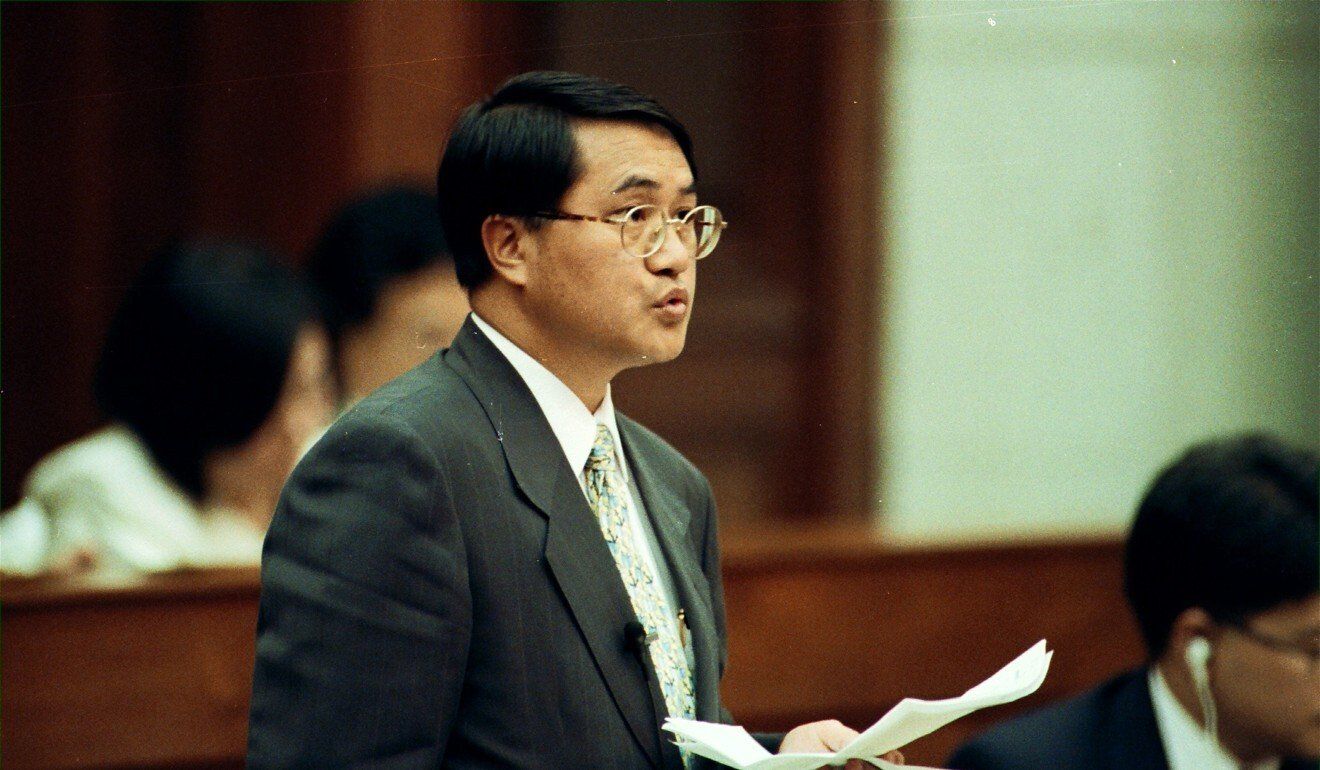
Lee Wing-tat was elected as a lawmaker in 1991 and was the Democratic Party’s chairman from 2004 to 2006.


Former party chairwoman Emily Lau Wai-hing had posted on Facebook a photo of her having dinner with Lee on Wednesday. She said Lee had not mentioned any plans to leave the city that night.

A former district councillor of the party, who hoped to remain anonymous, said Lee had been exploring ways over the past month to help councillors who had resigned maintain their connections to the communities. He was concerned that Lee’s departure would affect party morale.

“He was among the few veteran members who had already settled all the lawsuits. I think no one in the party expected him to leave his role that soon and suddenly,” he said.

Two of the party’s former chairmen – Albert Ho Chun-yan and Yeung Sum – are also currently behind bars.

Lee entered politics in the 1980s as a Kwai Tsing district councillor and formed the United Democrats of Hong Kong, which became the Democratic Party in 1994. He was elected as a lawmaker in 1991, and had been the group’s chairman from 2004 to 2006.

In 2019, he, together with other opposition activists, was convicted of public nuisance charges over the Occupy protests in 2014. Lee’s eight-month term was suspended for two years in light of his public service contributions.

In June this year, he returned to the party’s core leadership to overwhelming support from his members, and vowed to maintain party morale.

A pressing task for Lee then was to decide if members should run in the Legislative Council elections scheduled in December.

He had cited letters from three colleagues being held in custody for months – former chairman Wu Chi-wai, former vice-chairman Andrew Wan Siu-kin and Lam – as saying that the party should not join the race they regarded as “unjust”.

Since the enactment of the Beijing-imposed national security law, at least 20 prominent figures in the opposition camp have fled Hong Kong for London, Australia and Canada, including former lawmakers Ted Hui Chi-fung and Dennis Kwok.

Newsletter

Related Articles

0:00
0:00
Close
World Cup Visitors Turn American Big-Box Stores Into Souvenir Stops
Netflix Weighs Always-On Channels, Bundles and Short-Form Video
Passenger Is Pulled Partly Outside Ryanair Jet After Window Fails Mid-Flight
Innovation-led growth strategy
Public service reform pressure
Defence and industrial security
Labour leadership transition and economic reset
Northern England Pushes for Greater Influence in Britain’s Future Economic Model
UK Technology Strategy Focuses on Life Sciences, Digital Innovation and Research Investment
Britain and United States Maintain Focus on Pharmaceuticals Cooperation and Industrial Growth
UK Public Services Face Continued Pressure as Government Promises Visible Improvements
Regional Economic Power Becomes Key Theme in Britain’s Next Political Phase
Britain Expands Support for Small Businesses as Firms Seek Better Access to Finance
UK Economy Remains Central Political Challenge as Cost of Living and Growth Concerns Persist
National Health Service Introduces New Workplace Reviews to Improve Conditions for Healthcare Staff
UK Life Sciences Sector Secures More Than Three Billion Pounds in Investment to Support Innovation
Britain Strengthens Defence Strategy as Security Concerns Reshape Military and Industrial Policy
Andy Burnham Promises Stronger UK Defence Industry and Expanded Domestic Production
UK Government Faces Difficult Spending Choices as Labour Leadership Transition Approaches
Rachel Reeves Warns Andy Burnham of Immediate Economic Challenges After Expected Leadership Change
Andy Burnham Prepares to Lead UK Government With Plans for Regional Power Shift and Economic Reset
Government Creates Emergency Support Scheme for Financially Struggling Universities
United Kingdom Replaces Traditional Farm Subsidies With Payments Linked to Environmental Performance
National Grid Reports First Week of Electricity Generation Without Fossil Fuels
United Kingdom Financial Regulator Introduces Tougher Capital Rules for Cryptocurrency Exchanges
Belfast Harbour Expands Operations to Attract Investment Through United Kingdom and European Union Market Access
Scottish Government Threatens Legal Challenge Over Westminster Cuts to North Sea Transition Funding
United Kingdom Accelerates Trans-Pennine High-Speed Rail Project Linking Northern Cities
United Kingdom Secures Ten Billion Pound Investment for Cambridge Quantum Computing Campus
Port Talbot Steelworks Wins Support for Green Hydrogen Transition and Protection of Industrial Jobs
United Kingdom Sends Royal Navy Carrier Strike Group to Indo-Pacific as Regional Security Focus Expands
National Health Service Expands Artificial Intelligence Diagnostics Across England to Reduce Screening Backlogs
United Kingdom Launches Fifty Billion Pound Infrastructure Fund to Accelerate Housing and Construction
UK Medical Chiefs Update Health Guidance to Promote Everyday Physical Activity
Office of Communications Keeps Wikipedia Under Review Under UK Online Safety Rules
UK Defence Ministry Expands Deep-Strike Capability Through Precision Missile Programme
Russell Group Universities Warn Funding Cuts Could Damage NHS Workforce Training
UK Parliament Calls for National Emergency Broadcast as Heatwave Conditions Intensify
UK and Netherlands Strengthen Naval Cooperation With New Amphibious Defence Partnership
UK Defence Ministry Joins International Missile Programme With One Hundred and Ninety Million Pound Investment
Bank of England Warns Middle East Conflict and AI Risks Could Pressure UK Economy
UK Government Introduces New Rules to Limit Foreign Influence in Political Donations
UK and France Prepare Naval Mission to Protect Shipping Through Strait of Hormuz
United States Pressures UK to Increase Defence Spending at NATO Summit
Bank of England Warns Artificial Intelligence Investment Boom Could Create Financial Stability Risks
Bank of England Begins Direct Oversight of Critical Technology Providers Supporting UK Finance
Andy Burnham Set to Become UK Prime Minister After Labour Leadership Race Clears Path to Downing Street
Scottish Fishing Industry Calls for Emergency Support Amid Rising Costs
UK Supports Stronger European Response to Russian Actions in Ukraine
Devon and Cornwall Police Release Suspect in Ann Widdecombe Murder Investigation
×