London Daily

Focus on the big picture.
Sunday, Jul 19, 2026

Harley-Davidson to exit world's biggest bike market

Harley-Davidson to exit world's biggest bike market

Harley-Davidson is pulling out of India, the world's biggest motorcycle market.

The iconic US motorcycle brand is stopping manufacturing and massively scaling back its sales operations.

Harley's decision comes weeks after Toyota said it wouldn't expand further in India due to the country's high tax regime.

The exit is a blow for Indian Prime Minister Narendra Modi's efforts to lure or retain foreign manufacturers.

Harley's departure involves $75m (£59m) in restructuring costs, around 70 redundancies and the closure of its Bawal plant in northern India.

The plant was opened in 2011 but Harley-Davidson has struggled to compete with local brand Hero as well as Japan's Honda.

About 17 million motorcycles and scooters are sold each year in India.

More setbacks


While it is cheaper than many other developing economies, India has proven a tough market to crack for foreign automakers.

General Motors pulled out of the country in 2017 while Ford agreed last year to move most of its assets into a joint venture with Indian vehicle giant Mahindra & Mahindra.

US President Donald Trump has previously complained about India's high taxes, specifically mentioning the levies placed on Harley-Davidson bikes.

India's import tariffs were slashed by 50% but the brand has still struggled in the competitive market.

Harley has also been suffering its own problems and recorded its first quarterly loss in more than a decade between April and June this year.

It has been cutting hundreds of jobs under its new chief executive Jochen Zeitz and focusing on core markets and models.

Harley couldn't play the game


By Nikhil Inamdar, BBC News' India business correspondent

Harley Davidson came into India with much fanfare a decade ago. But it has since, struggled to find a foothold in one of the world's most lucrative two-wheeler markets.

With sales averaging under 3,000 units every year, the iconic American brand simply couldn't capitalize on the big Asia opportunity it was betting on.

Auto experts put the blame on the brand's failure to drive up volumes and derive cost efficiencies by leveraging local tie-ups.

This, coupled with prohibitively high taxes, a slowdown in discretionary spending and an inability to compete with Indian brands may have prompted the decision to call it quits.

"India is a high volume, low margin market. They weren't structured to play that game, being at the very pointy end of the pyramid," Hormazd Sorabjee, Editor of Autocar India told the BBC.

"The lifestyle element that goes with owning a Harley bike is also not fully developed in India yet."

Incidentally the bike maker has had a better run in other Asian markets like Thailand and Korea, precisely because the market and cost structures are more favourable.

Harley's exit may not have a significant economic impact, but is bad optics for the Modi government, which is preparing to roll out a $23bn package to lure global manufacturers to set up base in India as part of the country's 'Make In India' policy.

High import tariffs on Harley have also been a flashpoint in India's trade negotiations with the US.

Mr Trump has previously cited the example of Harley to call India a "tariff king", and its decision to exit the Indian market could well set off another diplomatic tussle with the US with whom India is negotiating a free trade agreement.
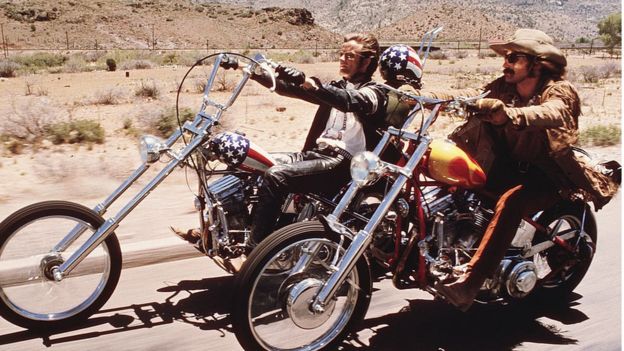

Dennis Hopper and Peter Fonda ride Harley-Davidsons in a scene from the film Easy Rider.


Harley History


The iconic US motorcycle brand was founded in 1903 and has built a very loyal customer base. It has owners' clubs all over the world.

It hit the global stage in 1969 thanks to the classic road movie Easy Rider starring Dennis Hopper, Peter Fonda and Jack Nicholson.

Its bikes, nicknamed "hogs", are also made in factories in the US, Brazil and Thailand.

Harley has been looking to grow the brand beyond baby boomers in the US, with smaller models and all-electric versions.

Newsletter

Related Articles

0:00
0:00
Close
Brothers Andrew and Tristan Tate Who Turned "Toxic Masculinity" Into a Brand Arrested in Miami as Britain Seeks Their Extradition
Trump Administration Pressures Banks to Restrict Financial Access for Undocumented Immigrants
Passenger Bound for Germany Refused to Sit Beside a Woman on a Plane — Then Slapped a Flight Attendant
Ukraine’s Leadership Rift Spills Into the Streets as Protesters Target Army Chief
Ukrainian Drone Barrage Kills Eight and Strikes Russian Logistics Network
Key Trends to Watch
Financial Conduct Authority Warns Cloud and Digital Risks Are Becoming a Financial Priority
Jeffrey Donaldson Appeals Sexual Abuse Conviction as Democratic Unionist Party Opens Review
Welsh Health Authorities Launch Emergency Meningitis Vaccination Programme for Students
Scottish Business Activity Falls for Third Month as Companies Face Rising Costs
Bank of England Regulators Demand Better Access to Digital Banking Services
United Kingdom Cuts Bilateral Aid to Several African Countries by Up to Ninety Per Cent
United Kingdom Introduces Tougher Deportation Rules After Rochdale Exploitation Scandal
NHS England Launches Wearable Technology Plan to Reduce Sepsis Deaths
Amazon Web Services Billing Error Sends Trillion-Dollar Invoices to British Companies
Bank of England Takes Direct Regulatory Role Over Major Global Cloud Providers
Extreme Summer Heat Drives Record Fire Risk and Rising Deaths Across Britain
United Kingdom Nationalisation of British Steel Sparks Diplomatic Dispute With China
United Kingdom Economy Shows Weak Growth Ahead of Major Autumn Budget
Andy Burnham Set to Become United Kingdom Prime Minister After Labour Leadership Victory
The Ten World Cup Finals That Defined Football History
Smartphones Are Getting More Expensive, Sales Are Collapsing, and Even Apple Admits: "Prices Will Rise"
The Monaco Bombing Has Become a Test of Ukraine’s Intelligence Accountability
Leadership Change and Strategic Rivalry Redraw the Political Map
Energy Risk, Uneven Growth and the New Geography of Global Capital
The AI Race Enters Its Infrastructure Era
Security and resilience remain long-term national priorities
Britain balances growth ambitions with public finance pressures
Regional devolution becomes a defining theme of the next Labour era
Industrial strategy returns to the centre of British economic policy
Political Instability Remains a Challenge for UK Investment Confidence
Brexit Economic Debate Continues as Public Concerns Over Long-Term Impact Remain
UK Climate Risks Rise as Met Office Warns Extreme Weather Is Becoming More Common
Housing Shortages and Regional Inequality Become Key Priorities Under Incoming Labour Leadership
National Health Service Reform Remains One of Britain’s Biggest Political Challenges
Bank of England Remains at Centre of UK Economic Debate Over Inflation and Growth
UK Economy Shows Recovery Signs but Households and Businesses Remain Under Pressure
Britain Deepens European Defence Cooperation as NATO Allies Seek Stronger Security Capabilities
United Kingdom Expands Sanctions Against Russian Cyber Networks Over Security Threats
UK Industrial Strategy Faces Test After Government Takes Control of British Steel
British Businesses Seek Policy Clarity as Andy Burnham Prepares to Lead Labour Government
Andy Burnham’s Labour Leadership Signals Major Shift Toward Regional Power and Devolution
British Steel Nationalisation Creates New UK-China Tensions Over Control of Strategic Industry
For 36 Years, He Scammed About 300 Luxury Hotels — Until He Was Caught
England's World Cup Exit Expected to Cost Hospitality and Retail £334 Million
Former ICC Prosecutor Aide Speaks Publicly About Allegations Against Karim Khan
Opposition Raises Questions Over June Heatwave Power Grid Pressures
Mastercard Explores Sale of Majority Stake in UK Payments Operator Vocalink
Boeing Forecasts Global Commercial Aircraft Fleet Will Double by 2045
London GP Surgeries Receive £18 Million to Expand Primary Care Capacity
×