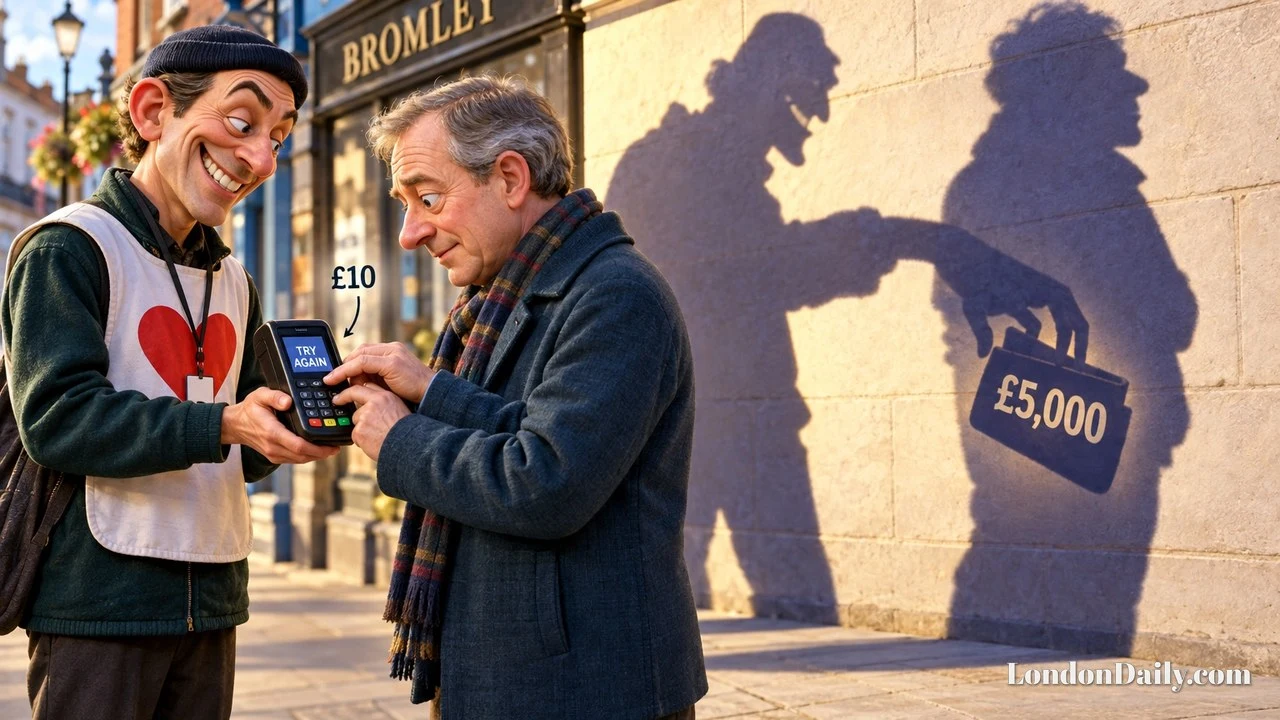
A man who agreed to give £10 to a supposed charity fundraiser in Bromley lost £5,000 after being asked to enter his PIN a second time, prompting a council warning about street donation scams.
The resident was approached on a high street in the south-east London borough by someone claiming to represent a charity. His first payment appeared to be declined. After entering his PIN again, the transaction appeared to succeed, but he later checked his banking app and discovered that £5,000 had left his account, Bromley Council’s Trading Standards team said.
The Conservative-led council has urged shoppers, workers and residents to check that collectors genuinely represent the charities they name. The account describes the apparent failed-payment sequence but does not explain precisely how the larger sum was taken.
The warning distinguishes fraudulent approaches from legitimate fundraising, which charities depend upon. A council spokesman said: “While many charities rely on public generosity, this goodwill can potentially be exploited to obtain money or personal and financial information.”
The Fundraising Regulator sets rules for legitimate fundraising, including permits and identification badges at least the size of a credit card. It says door-to-door, private-site and street fundraisers should wear clothing clearly displaying the charity’s branding. Its guidance also says fundraisers should not cause a nuisance or annoy the public.
Bromley Council advises asking for identification and details of the charity, and being particularly cautious if a collector accepts only cash or becomes pushy when questioned. Nobody should feel obliged to donate immediately or disclose a card PIN or other sensitive banking information.
The authority also recommends checking paperwork before agreeing to regular payments, remaining alert to approaches online or by telephone, and never clicking links in unexpected messages.
If there is any doubt about a street collector, the council’s advice is to donate through the charity’s official website instead: giving need not depend on making a decision on the pavement.








Join the conversation