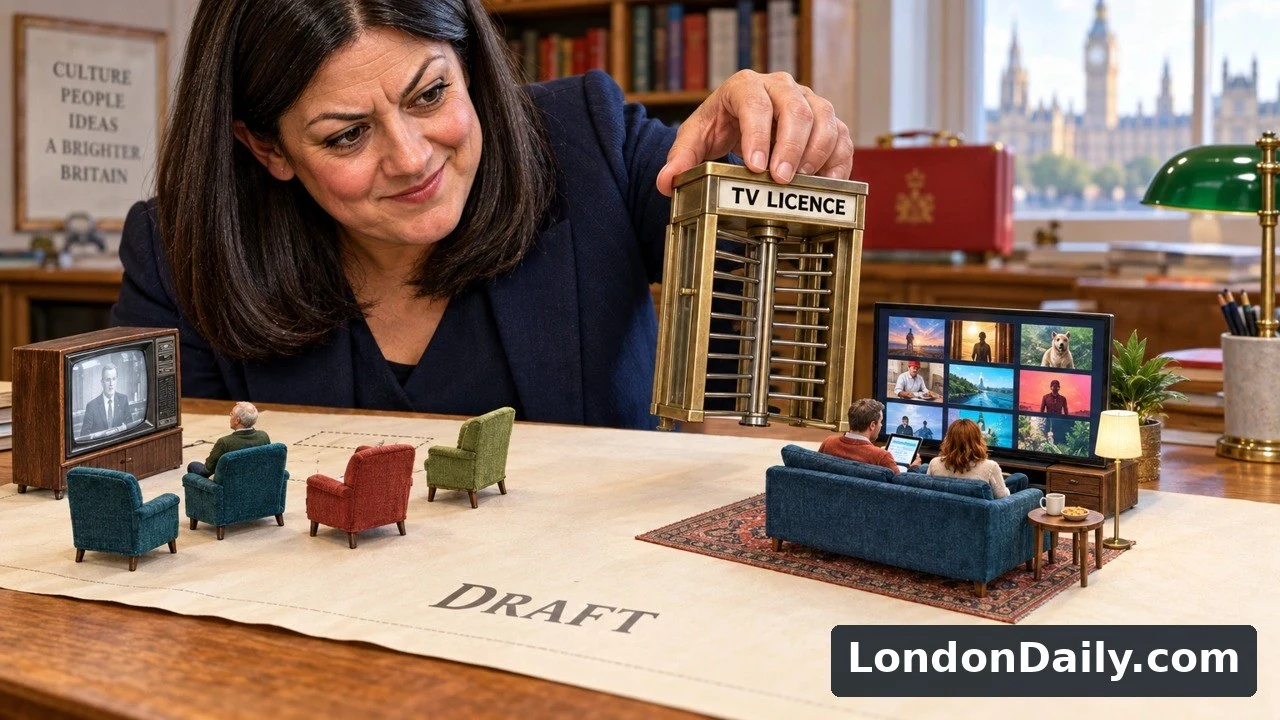
Fewer than half of British households are projected to pay the BBC licence fee by 2034, down from 77 per cent today, as audiences shift towards streaming services and social platforms.
Media consultancy Oliver & Ohlbaum Associates warns that the broadcaster’s funding is in a “spiral of decline”. It forecasts that the proportion of households paying will fall below a third by 2038, with revenue shrinking from £3.8bn to £1.6bn in real terms by then.
Its projections also suggest that the time each television is tuned to the BBC will halve, from 46 minutes a day in 2024-25 to 23 minutes by 2037. These are forecasts, rather than losses already incurred, but they point to a funding problem extending beyond the price of an individual licence: fewer households paying at all.
Lisa Nandy, the Culture Secretary, is reportedly preparing proposals requiring anyone watching a streaming service to pay the levy. A government white paper is expected before Christmas. Nandy has said she wants a more permanent financial settlement for the corporation, including new revenues.
Viewers can currently watch services including Netflix, Amazon, Disney+ and YouTube without paying the £180 annual fee. Extending the levy would therefore seek contributions from streaming audiences rather than relying solely on the existing pool of licence-fee payers. The reported proposal is not an agreed change.
The Office for Budget Responsibility warned last month that the licence fee was on course to exceed £200 by 2031 under the current model.
The BBC is also pursuing audiences on the platforms drawing them away. Younger viewers increasingly use YouTube and TikTok, while Netflix and Disney compete for viewing time. Last month, the corporation announced that its 24-hour news channel would begin broadcasting on YouTube. Director-general Matt Brittin also wants BBC news content on other streaming services, including Netflix.
The pressures follow cuts to flagship programmes including Newsnight and controversies including the doctoring of a Donald Trump speech, which led to Tim Davie’s resignation as director-general this year.
A BBC spokesman said: “We have consistently argued that the current funding model is not sustainable and needs reform.” The corporation wants a new charter providing sufficient, sustainable and universal funding.
Reaching younger audiences and securing their financial support remain distinct tasks: putting BBC journalism on streaming platforms does not itself settle who should pay for it.








Join the conversation