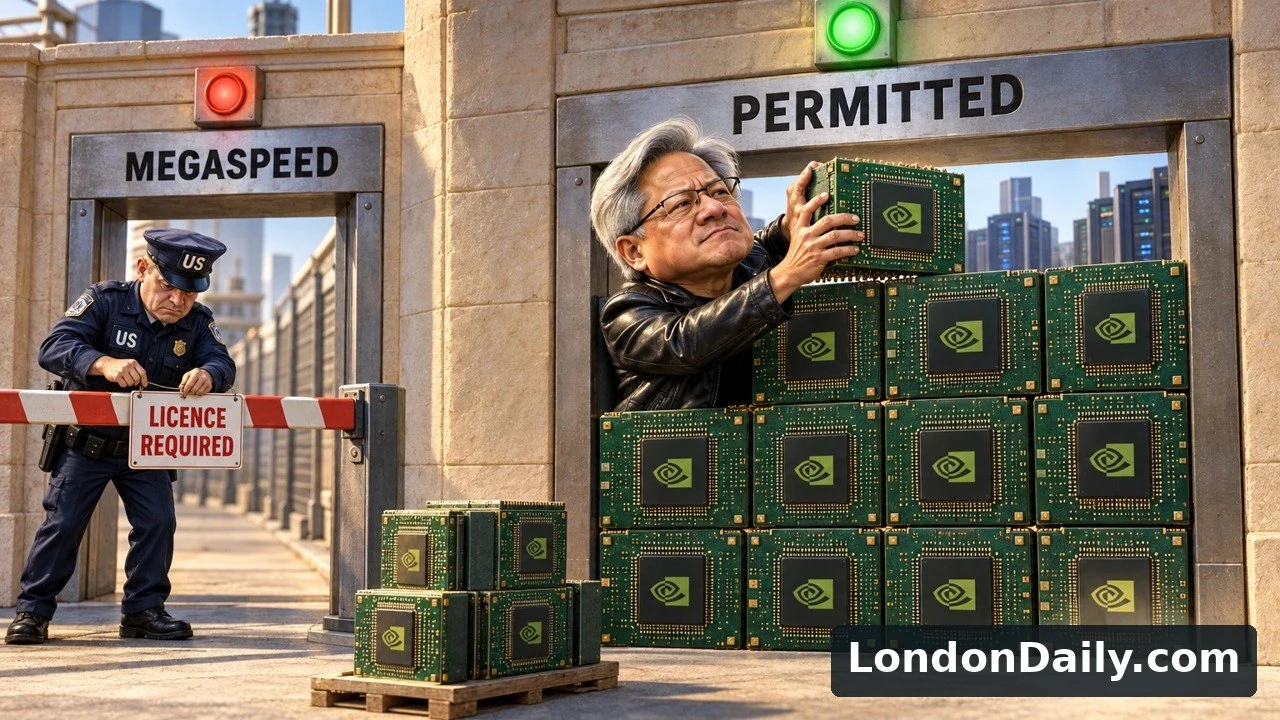
The United States has blacklisted Megaspeed over allegations that it provided a route for advanced Nvidia chips to Chinese companies, tightening restrictions on a Singapore-based business formerly run by Alice Huang, who is reported to have had an affair with Nvidia chief Jensen Huang.
American accusations that Megaspeed served Chinese technology firms, or Asian data centres they use, followed allegations of Alice Huang’s ties to the Chinese state. Megaspeed denies wrongdoing. The listing means it needs US government licences to buy AI chips and other advanced technology.
The decision reverses an apparent earlier accommodation: commerce secretary Howard Lutnick appears to have approved Nvidia’s request to export billions of dollars’ worth of chips to Megaspeed.
Alibaba’s Singapore subsidiary, Apex Enterprise Solutions, was also blacklisted. The commerce department accused it of using the Megaspeed route. Alibaba said Apex had “never diverted advanced computing chips subject to US export restrictions” and raised the possibility of a legal challenge.
Washington announced last week that advanced-chip shipments to Singapore, Thailand, Malaysia, Indonesia and Brazil would require export licences. Malaysia’s investment ministry on Tuesday instructed data centres to stop dealing with newly blacklisted companies. Singapore’s prime minister, Lawrence Wong, said his country should not be “used and abused as a conduit by companies to circumvent America’s export controls”.
Nvidia has gone further, announcing that it will stop selling even legally permitted H20 and H200 chips to China. Its profit forecast no longer includes revenue from China-related AI data centres. Jensen Huang, restored to Nvidia’s leadership after being ousted, is due before the Senate banking committee next week.
The political balance is shifting too. Following the midterm elections, Democrats favouring tougher restrictions on China will control Congress from January, narrowing Donald Trump’s room to pursue closer trade relations. Huang had sought greater Chinese sales; Washington’s hardliners favour constraints on technology exports to limit China’s rise.
Beijing retains leverage through supplies of critical minerals, including gallium, germanium and antimony, needed by American technology, defence and car manufacturers. On Tuesday, China postponed planned rare-earth export controls for at least two more months, while Trump initiated tariffs on more than a dozen countries, including China.
Trump’s Shenzhen visit last week produced no anticipated Boeing or soybean agreements. China Southern Airlines subsequently announced that subsidiary Xiamen Airlines would buy 50 Boeing 737-8 jets for $7.4bn.
For Beijing, tighter chip access strengthens the practical case for self-reliance. State-funded data centres already have to use Chinese-made chips, and Nvidia imports have often been blocked or delayed. The constraint is production: domestic suppliers cannot always provide the quantity or quality required for China’s AI and robotics ambitions.








Join the conversation