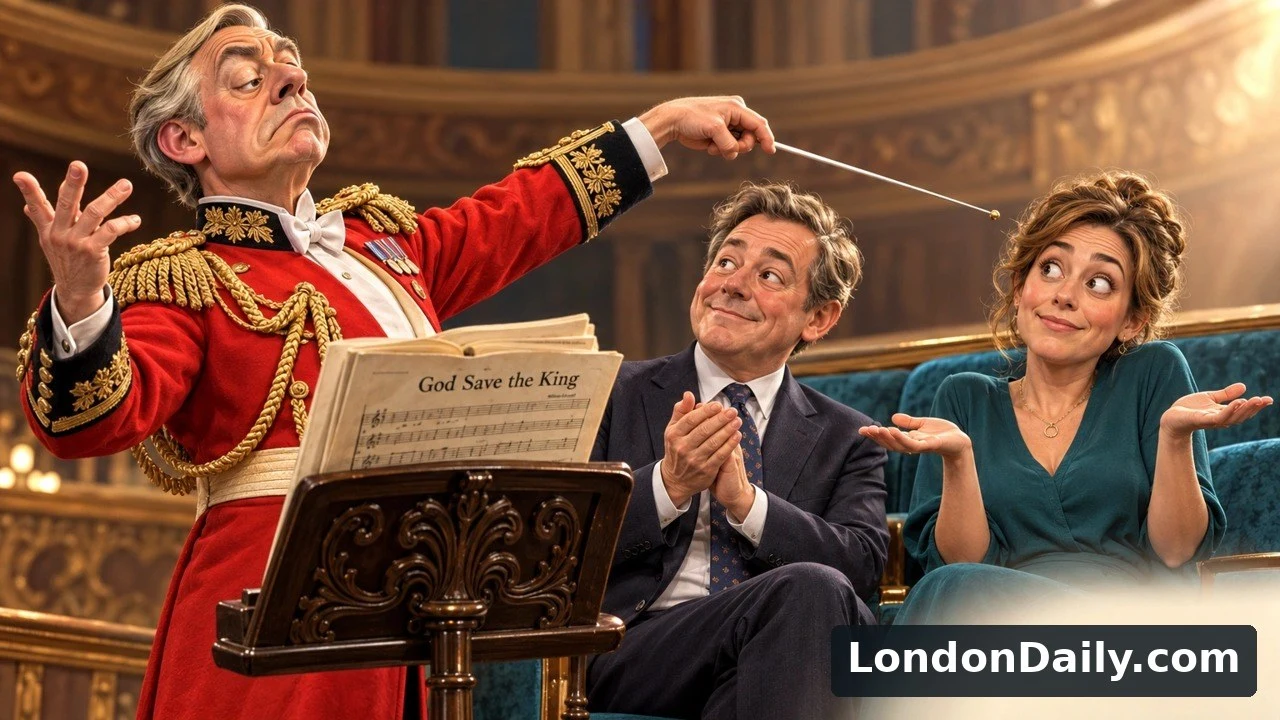
Only 34 per cent of respondents in a YouGov poll said they liked God Save the King, with indifference matching support for Britain’s national anthem. Yet those expressing approval still outnumbered those who actively disliked it.
The online survey questioned 3,987 residents of Great Britain aged over 18. Twenty-eight per cent said they disliked the anthem, while another 34 per cent had no strong feelings either way. That distinction matters: a lack of enthusiasm is not the same as a demand for replacement.
The musical disagreement turns partly on how listeners interpret the same qualities. Critics describe the anthem as “plodding”, “dull” and “dirge-like”. The case for retaining it treats its measured pace and simplicity as stately restraint rather than a failure to stir emotion.
First performed in 1745, it inspired Joseph Haydn to compose the melody now used for Germany’s national anthem. Its musical defence rests on that elegance and economy, and on the argument that a national anthem need not be an expansive celebration of national achievement.
The words present a separate question. The first verse is a prayer for the Sovereign; later verses invoke the defeat of enemies through “confounding the politics” and “frustrating the knavish tricks”. Those additional verses are usually omitted today. Appreciating the opening verse therefore need not imply approval of everything that follows.
Frequently suggested alternatives include Jerusalem, I Vow to Thee, My Country and Rule Britannia. The objections to them are different: William Blake’s unusual sequence of questions in Jerusalem; the explicitly heavenly destination of I Vow to Thee, My Country; and what critics regard as the boastfulness of Rule Britannia’s declaration that Britons will never be slaves. None offers an uncomplicated escape from arguments about religion or national self-image.
The defence of God Save the King ultimately values a brief moment of perspective centred on the Sovereign and God. Its critics need not share that response. The poll measures affection, dislike and indifference; it does not establish which musical, religious or royal considerations produced them.








Join the conversation