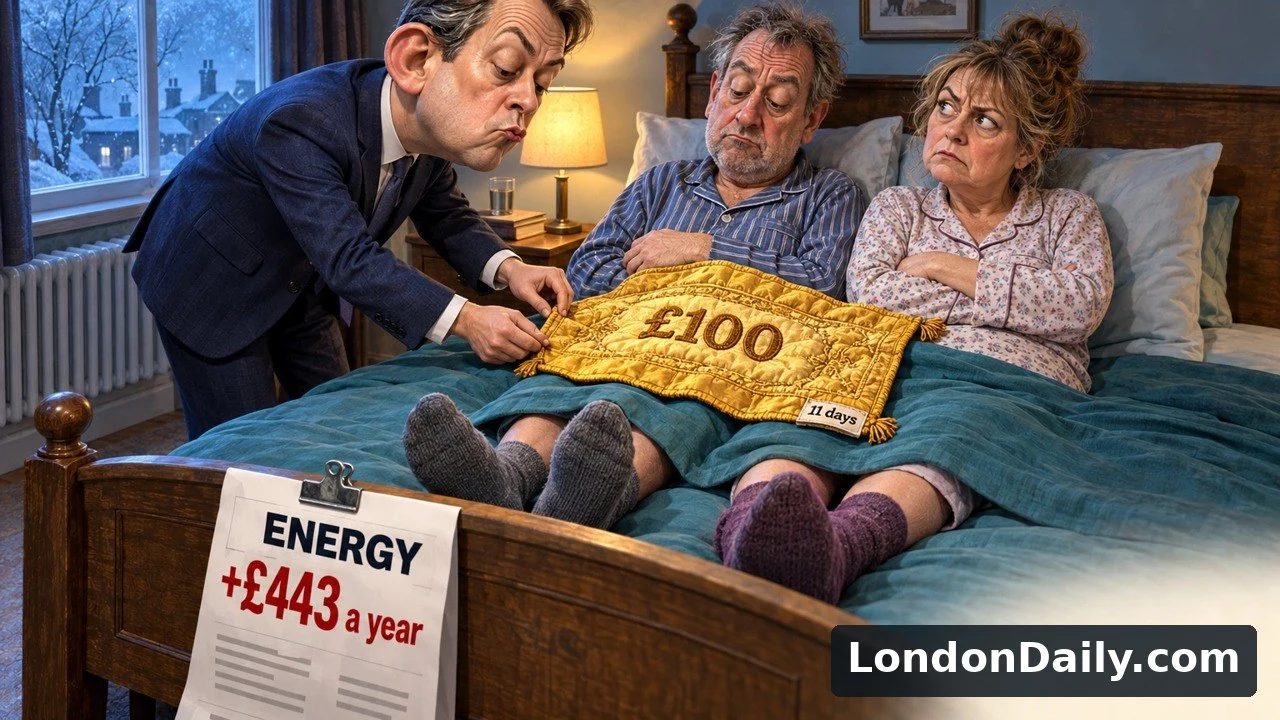
Typical annual household energy bills will rise by £443 in January after Ofgem increased its price cap by 26%, adding about £37 a month for customers facing the change.
The annual figure rises from £1,723 to £2,166, its highest since June 2023. Around 20 million households on standard variable tariffs will be affected; roughly 10 million on fixed-price deals are shielded from an immediate increase.
The Government has announced a £100 payment for millions of households and cut VAT on energy. But the Left-leaning Resolution Foundation estimates that the payment will cover only the first 11 days of energy costs after the rise.
Women and equalities minister Bridget Phillipson acknowledged that the increase would wipe out the support’s value, saying the Chancellor would consider whether more was needed beyond January. The increase also puts pressure on Andy Burnham’s pledge to tackle the cost-of-living crisis.
Ofgem’s Neil Kenward blamed conflict in the Middle East for driving energy costs higher. Soaring oil and gas prices linked to the Iran war underpin the latest increase, the largest since the energy shock following Russia’s invasion of Ukraine.
During that earlier crisis, government support capped annual bills at £2,500. Standing charges are now higher than four years ago, and households will pay more per unit of gas from January than during the Ukraine energy crisis.
Centrica chief executive Chris O’Shea said he was “hugely concerned”, describing a “massive problem” with people unable or unwilling to pay. Centrica owns British Gas.
Citizens Advice chief executive Dame Clare Moriarty wants a £150 top-up to the warm home discount and additional emergency credit for vulnerable prepayment customers. She warned that low-income households risk deeper debt, while those unable to top up could lose heat and power during winter. Ofgem says suppliers must offer appropriate support and advice and is reminding them of their obligations.
Energy Secretary Miatta Fahnbulleh said immediate help provided breathing space, but argued that lasting reductions required clean energy and public control. Shadow energy secretary Andrew Bowie instead advocated the Conservatives’ Cheap Power Plan and renewed drilling. He also argued that joining an EU scheme risked increasing bills further.
Energy prices have helped push inflation to 3.6%, a one-year high. The Bank of England raised interest rates earlier this month for the first time in three years; markets expect another increase in December.
EDF forecasts that the annual dual-fuel bill could reach £2,389 in April. That remains a prediction, but leaves ministers facing a further decision over support beyond January.








Join the conversation