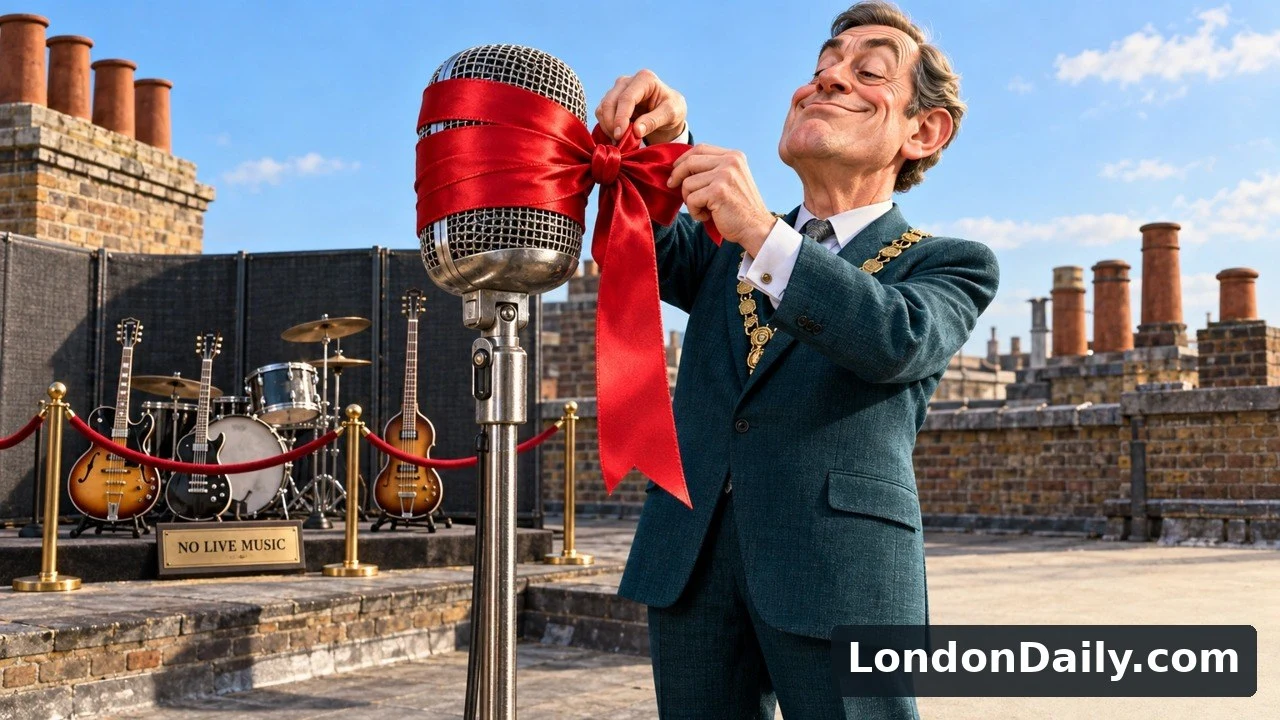
A Beatles museum has won planning permission on condition that no live music is played on the rooftop where the band gave their final live performance, itself stopped after a noise complaint.
Westminster city council unanimously approved Apple Corps’ application on Tuesday to convert its Savile Row headquarters in Mayfair into a seven-floor cultural attraction and exhibition. The scheme will open the historic building to fans while placing strict limits on activity above its neighbours.
Only 20 visitors will be allowed on the roof at once. The council also requires a two-metre acoustic barrier to prevent disturbance from amplified music, which will be capped at 55 decibels.
On 30 January 1969, John Lennon, Sir Paul McCartney, Ringo Starr and George Harrison performed there for 42 minutes before police halted the concert following a noise complaint. The building has since become a destination for Beatles fans.
Tom Greene, Apple Corps’ chief executive, told councillors that visitors would watch a film of the performance before stepping onto the terrace.
“On the roof, visitors will feel they are sitting behind the Beatles as they watch that famous rooftop performance,” he said.
Greene said an operational management plan agreed with council officers would allow the attraction to integrate into the area. The plans include bookable evening events and a ticket-only basement café-bar, built around a recreation of the original recording studio, which will open until midnight.
Sir Paul announced the museum plans in May. Up to 1,140 visitors a day are expected, a prospect that prompted objections from local organisations.
The Savile Row Bespoke Association, representing the street’s bespoke tailors, warned of “dangerous congestion”. The Mayfair Neighbourhood Forum said predicted visitor numbers were too high and should be “greatly reduced”.
The concert appeared in Let It Be and, more recently, Peter Jackson’s Get Back. Lennon closed it with: “I’d like to say thank you on behalf of the group and ourselves, and I hope we’ve passed the audition.”
The council’s conditions address the noise that ended that performance. Managing the crowds drawn by its legacy will be a separate practical test.








Join the conversation