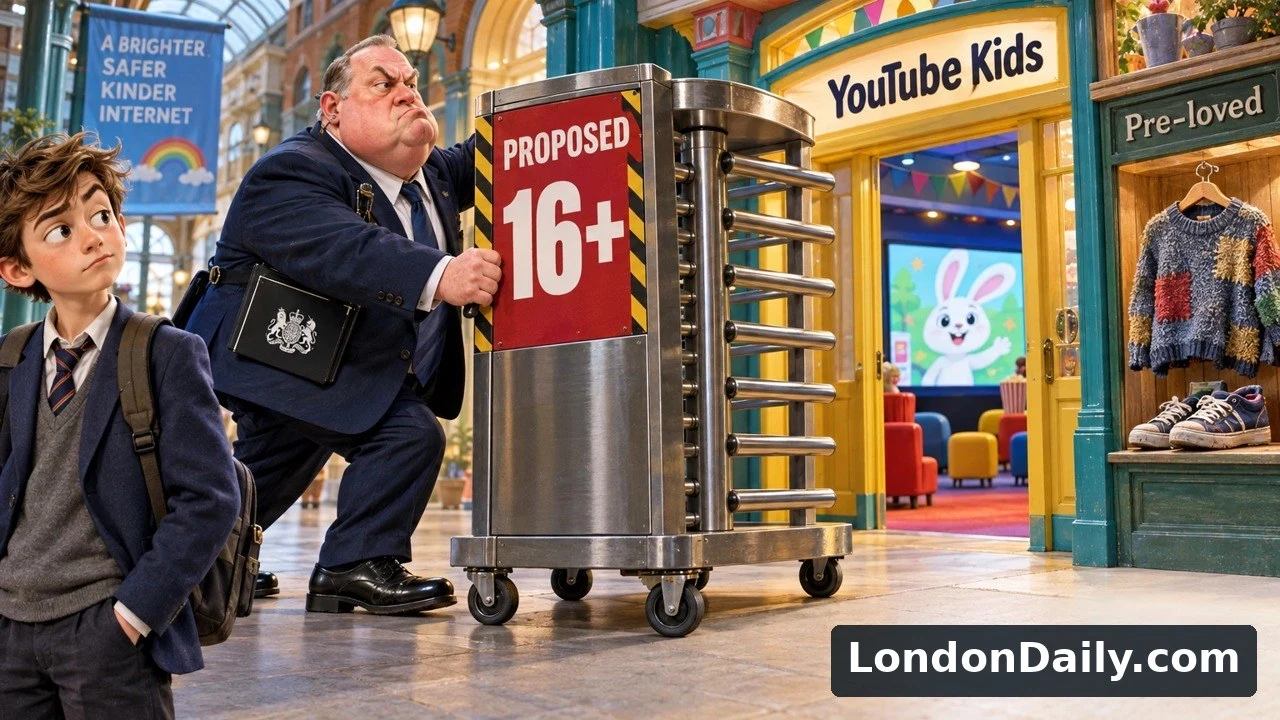
Britain’s proposed social media ban for under-16s could extend to shopping platforms and YouTube Kids, prompting warnings from TechUK that ministers risk restricting services that pose little danger while leaving companies unclear about how to comply.
Culture secretary Lisa Nandy has confirmed that Vinted, Depop and eBay are under consideration because their messaging functions allow strangers to contact teenagers. YouTube Kids could also fall within the expanded rules.
That represents a substantial widening of the policy announced by Keir Starmer in June, when the government said educational services, e-commerce and music streaming would be excluded through a narrowly defined list of exemptions kept under review.
Ministers want to prevent “displacement”: teenagers leaving services such as Instagram and Snapchat only to encounter similar features elsewhere. Companies, industry groups and MPs have been briefed that the working proposal focuses on recommender systems and user-to-user content. Experts have warned that, in theory, this could bring even supermarket websites’ customer reviews within restrictions requiring age verification.
Antony Walker, TechUK’s deputy chief executive, said industry leaders wanted the ban to succeed and understood parental pressure for action. His objection concerned its expanding reach and implementation.
“I think this risks chasing children and young people around the internet in a way that over time significantly restricts their access to services that probably aren’t that problematic,” he said.
Walker said previously unaffected businesses had been caught off-guard and were likely to receive only a few months to redesign systems, without sufficient technical engagement from ministers.
There is also uncertainty over how platforms could regain access for younger users. Digital minister Ian Murray has said services removing harmful or addictive functions would have a route off the banned list. Walker said companies lacked guidance, potentially forcing them to implement restrictions before undertaking a second redesign. Some affected functions, he argued, might be too integral to remove practically.
The first regulations are expected to be tabled, probably in early December, under the Children’s Wellbeing and Schools Act, without requiring fresh primary legislation in the Commons.
The Department for Culture, Media and Sport defended a proportionate approach to online harm. Citing a consultation involving more than 116,000 parents, carers, experts and young people, it said nine in 10 parents backed action to keep under-16s off social media.
The unresolved implementation question is where ministers will draw the boundary between preventing harmful displacement and restricting access to services they had initially promised to exempt.








Join the conversation