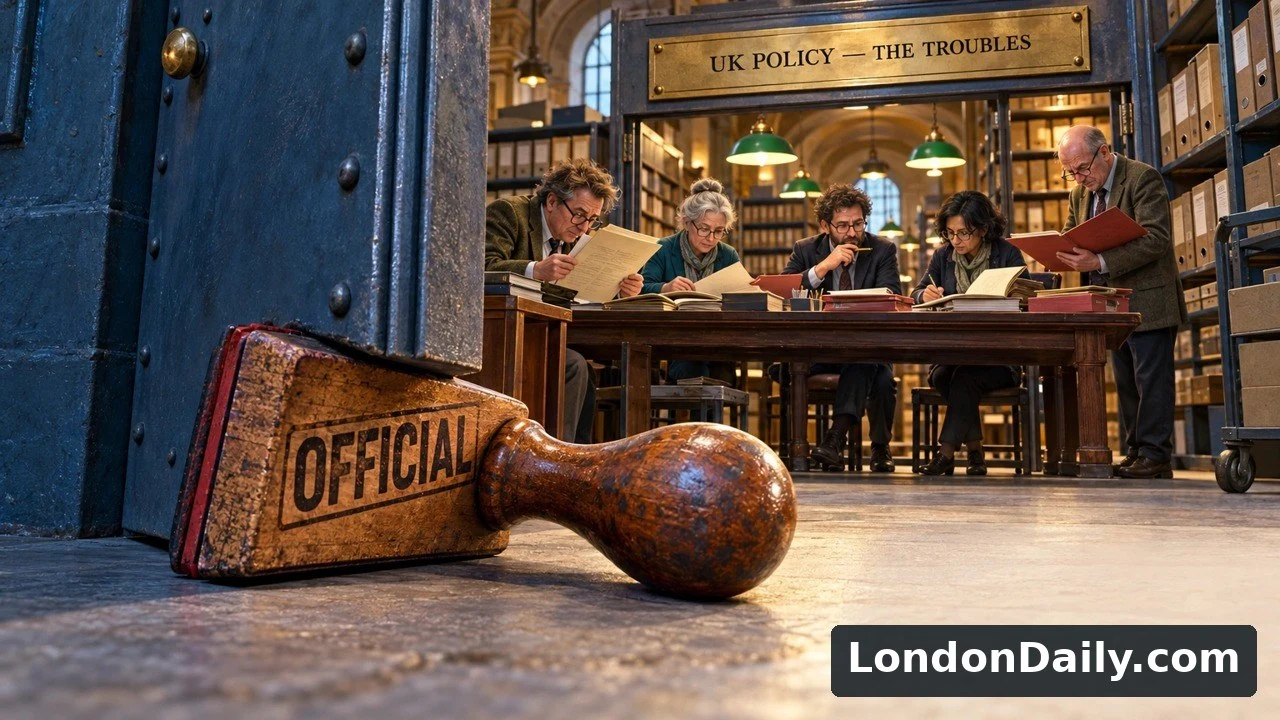
Five independent historians will receive privileged access to closed and redacted state files for a £3.6 million study of UK government decision-making during the Troubles, with freedom to publish their own conclusions.
The five-year project, titled Official History Of UK Government Policy During The Northern Ireland Conflict, brings together four academics from UK universities and one from University College Dublin. Its remit is specific: to examine government policy, rather than produce a comprehensive history of the conflict.
Northern Ireland Secretary Sir Chris Bryant said unfettered archive access was essential to a meaningful examination of that policy. He linked the project to addressing the conflict’s legacy and establishing a stable foundation for the future.
“As a published historian, it is really important to me that the historians we have appointed are totally independent and can carry out their work without fear or favour,” he said.
The distinction between an official commission and independent conclusions is central to the project’s design. The historians will have access beyond the publicly available record, while retaining freedom over their findings.
The launch follows the release by The National Archives of a further batch of nearly 5,000 digitised UK government records, available online free of charge. This second tranche covers the early stages of the Troubles, security responses, the Sunningdale Agreement and the collapse of the 1974 Executive. Further batches are scheduled twice a year over the next four years.
Professor Caoimhe Nic Dháibhéid, joint chair of the project’s expert advisory panel, said the historians had been selected through an open, transparent and rigorous competition. The panel would support access to relevant material and help share findings with public and academic audiences.
Fellow joint chair Lord Paul Bew said the five came from very different backgrounds but shared a determination to uncover historical truth in the archives. Northern Ireland minister Baroness Ruth Anderson said independent historical examination and wider digital access would provide context for reflection and reconciliation.
The two initiatives offer different forms of scrutiny: specialist access for the appointed historians, and a growing public archive that students, researchers and the wider public can examine themselves.








Join the conversation