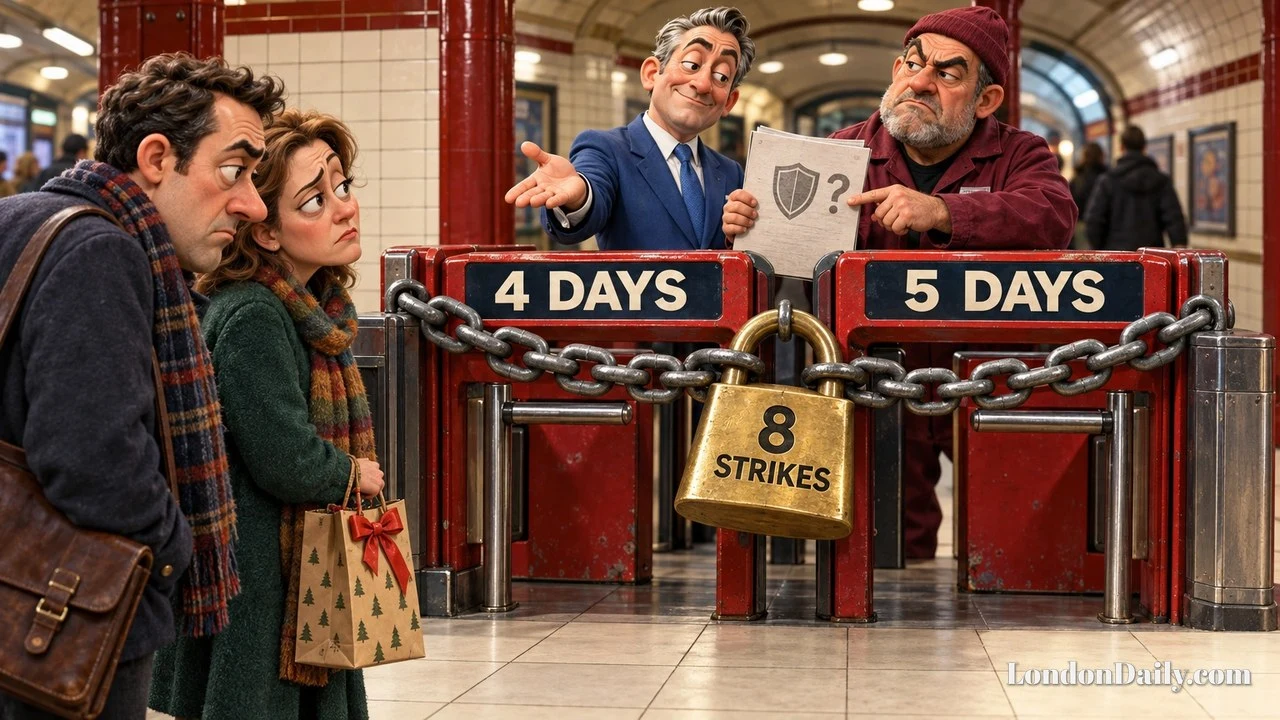
RMT Tube drivers are to stage eight 24-hour strikes between November 2026 and February 2027 over a proposed four-day week, in a dispute about whether drivers can reject the arrangement without losing existing protections.
London Underground says drivers can retain a five-day week and are guaranteed to remain at their current depot. The RMT argues that protections would be lost whichever working pattern drivers choose, and that those who refuse the change risk being moved.
Announcing the strikes on Friday, RMT general secretary Eddie Dempsey accused London Underground of presenting an attack on working conditions as a voluntary arrangement. He said: “But there is nothing voluntary about a scheme that forces drivers to give up existing protections whether they work four days or five, and threatens those who refuse with displacement from their depots.”
London Underground rejected his claims, saying engagement had secured the option of a five-day week without a depot move. Its assurance directly contradicts the union’s warning about displacement, but leaves the broader disagreement over existing protections unresolved.
The walkouts are each due to begin at noon on 26 November, 17 December and 19 December 2026, then on 4 January, 6 January, 17 February, 23 February and 25 February 2027.
The proposed arrangement has also divided the unions. Finn Brennan, Aslef’s full-time organiser on London Underground, expressed surprise at action intended to prevent a voluntary change. He said the deal offered drivers an additional 35 days off a year, with rosters based on a 34-hour week, in exchange for changes to working conditions and a switch from paper-based to electronic booking-on systems.
Business groups focused their warnings on the two December strikes. Karim Fatehi, chief executive of the London Chamber of Commerce and Industry, said the period immediately before Christmas was vital for thousands of businesses and drew hundreds of thousands of visitors. He warned that strikes could cost businesses revenue, deter visitors and make journeys difficult for staff and customers.
UKHospitality chief executive Allen Simpson urged all parties to reach a resolution. Hospitality businesses already faced substantial cost and tax pressures, he said, which would be compounded by fewer visitors, lost sales and difficulties getting staff to work.
Shadow transport secretary Richard Holden condemned the RMT, accusing it of bankrolling selected Labour MPs and seeking money from the Labour Mayor and Government rather than better services.








Join the conversation