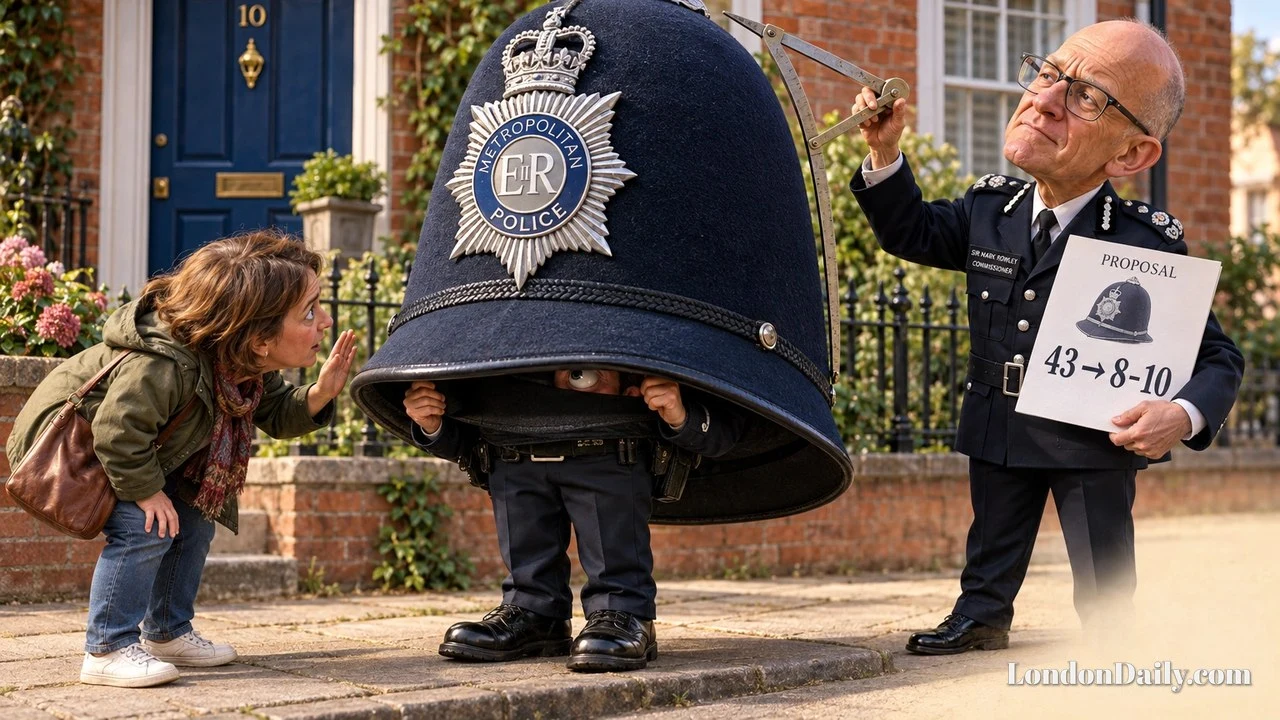
Sir Mark Rowley has called for England and Wales’s 43 police forces to be replaced by eight to 10 regional forces, warning that the existing system is “heading for failure”. Opponents fear the overhaul could draw resources away from neighbourhoods rather than strengthen them.
The Metropolitan Police Commissioner’s proposals would create three tiers: hundreds of local commands handling neighbourhood issues, regional forces sharing specialist resources, and a National Police Service tackling the most serious crimes. It would be the biggest restructuring since the 1960s.
In a speech on Friday, Rowley argued that geographically organised forces cannot keep pace with organised crime, fraud, cyber-crime and online child abuse operating across regional and international borders. “The victim remains local but increasingly the threat does not,” he said, citing children groomed from another continent.
He believes mergers would reduce duplication and release thousands of roles for front-line policing. Without reform, he warned, police risk solving fewer crimes, losing local presence and struggling with exceptional disorder. He cited Hampshire; in September, police clashed with anti-migrant protesters in Portsmouth after 120 migrants arrived in a single dinghy.
Rowley said policing expenditure had fallen from about 0.9% of GDP to 0.7% since 2010. He called for investment but argued that money alone could not repair the structure. Years of underinvestment had left ageing technology, he said, while mental health and social care demands diverted officers from neighbourhoods. Nationally, positive outcomes were less than half their level 12 years ago, he said, and public confidence had fallen by 9%.
The disagreement is not simply between reformers and defenders of the status quo. The Association of Police and Crime Commissioners supports modernisation and a national service, but says the case for nine regional “mega-forces” has not been made.
Some rural commissioners describe mergers as “political manoeuvring” favouring larger forces. Dorset commissioner David Sidwick fears national structures could divert local funding. Kent’s Conservative commissioner Matthew Scott warned of a decade of disruption, more remote services and insufficient public consultation. Outgoing Cheshire chief constable Mark Roberts cautioned that effective forces must not be subsumed or left competing with metropolitan areas for resources: size, he argued, does not guarantee performance.
Home Secretary Shabana Mahmood launched a consultation in January and produced a white paper aligned with restructuring, asking former Met commissioner Lord Hogan-Howe to examine boundaries. The Home Office says the current model is no longer fit for purpose.
But Andy Burnham, who became prime minister in July, has not publicly stated his position, leaving chiefs uncertain of his support. Alongside that political uncertainty remains the practical dispute: whether larger forces would release resources for local policing or make those resources harder for communities to secure.








Join the conversation