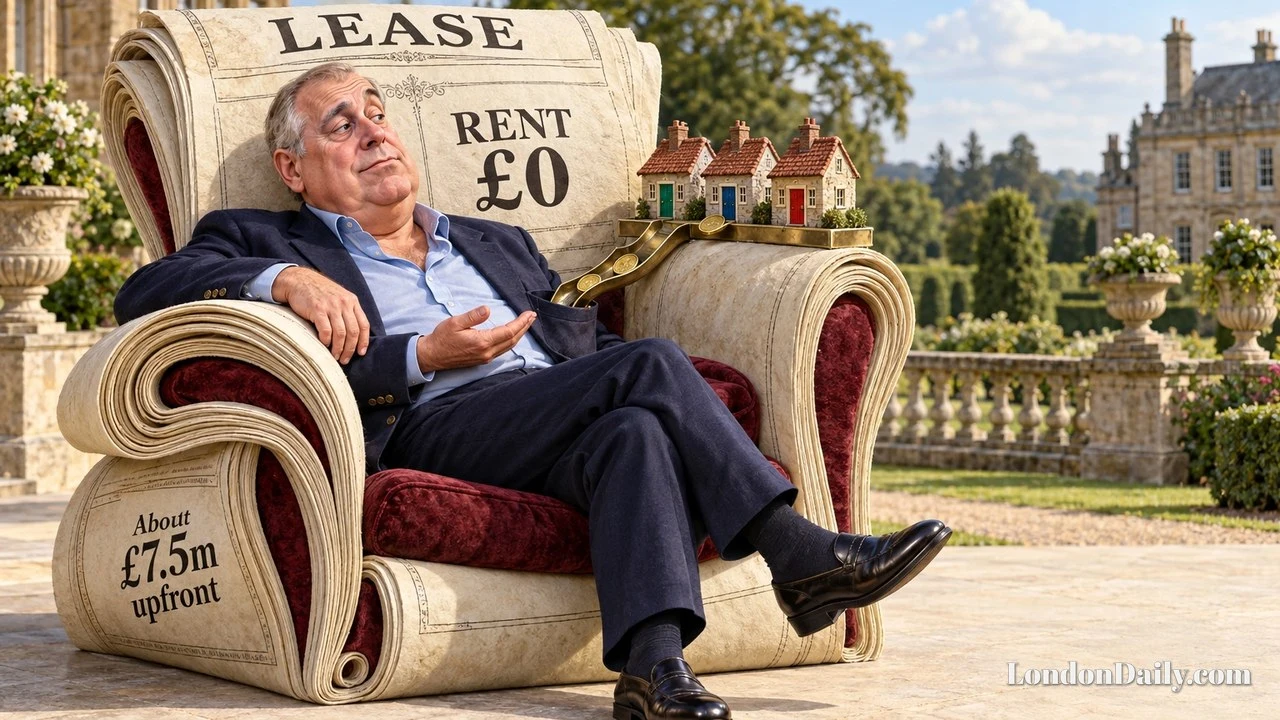
Andrew Mountbatten-Windsor received up to £2,000 a month from sub-letting three Royal Lodge cottages while paying no rent himself, the Public Accounts Committee has found. MPs now want future Crown Estate leases to prohibit sub-letting unless the landlord specifically agrees.
The income went to Mountbatten-Windsor rather than the Crown Estate, an independent property company whose profits go to the Treasury. But his lease permitted sub-letting: the committee’s findings concern the terms and oversight of the arrangement, not a breach of that agreement.
Mountbatten-Windsor took a 75-year lease in 2003 and paid about £7.5m towards renovations and other charges, meaning he did not have to pay rent. The cottages were thought to have been let to staff at below-market rates.
The Crown Estate told MPs it had no oversight of what he charged. Because the cottages were let intermittently, the committee could not establish his total receipts over more than 20 years.
Mountbatten-Windsor left Royal Lodge in Windsor in February following revelations about his connections to the US sex offender Jeffrey Epstein. He has consistently denied any wrongdoing in relation to Epstein and has been approached for comment.
His departure also left a repair liability. About £300,000 was due to him for surrendering the lease early, but a £1.8m bill for the building’s disrepair left £1.5m owed to the Crown Estate. King Charles paid it on his brother’s behalf.
The committee’s wider inquiry questioned whether rents for non-working royals in three properties reflected up-to-date valuations. Those occupants were believed to be Princess Beatrice, Princess Eugenie, and Prince and Princess Michael of Kent.
A National Audit Office report earlier this year found that Beatrice and Eugenie paid nothing themselves for accommodation at St James’s Palace and Kensington Palace respectively. The King pays their rent to the Royal Household from his private income. MPs recommended a more consistent approach to securing value for money.
They also criticised the concentration of the Crown Estate’s urban property portfolio in London and south-east England, calling for a wider regional spread. Against pressure on government budgets, they highlighted a 129% rise in administration costs since 2020–21. Chief executive Dan Labbad’s remuneration rose by 106% over that period; his 2025–26 package was worth £2.3m.
A Crown Estate spokeswoman said it regarded the report as an important part of its accountability to Parliament, was considering the findings and recommendations, and would respond in due course. The proposed restrictions would change future leases; they do not retrospectively alter what Mountbatten-Windsor’s agreement allowed.








Join the conversation