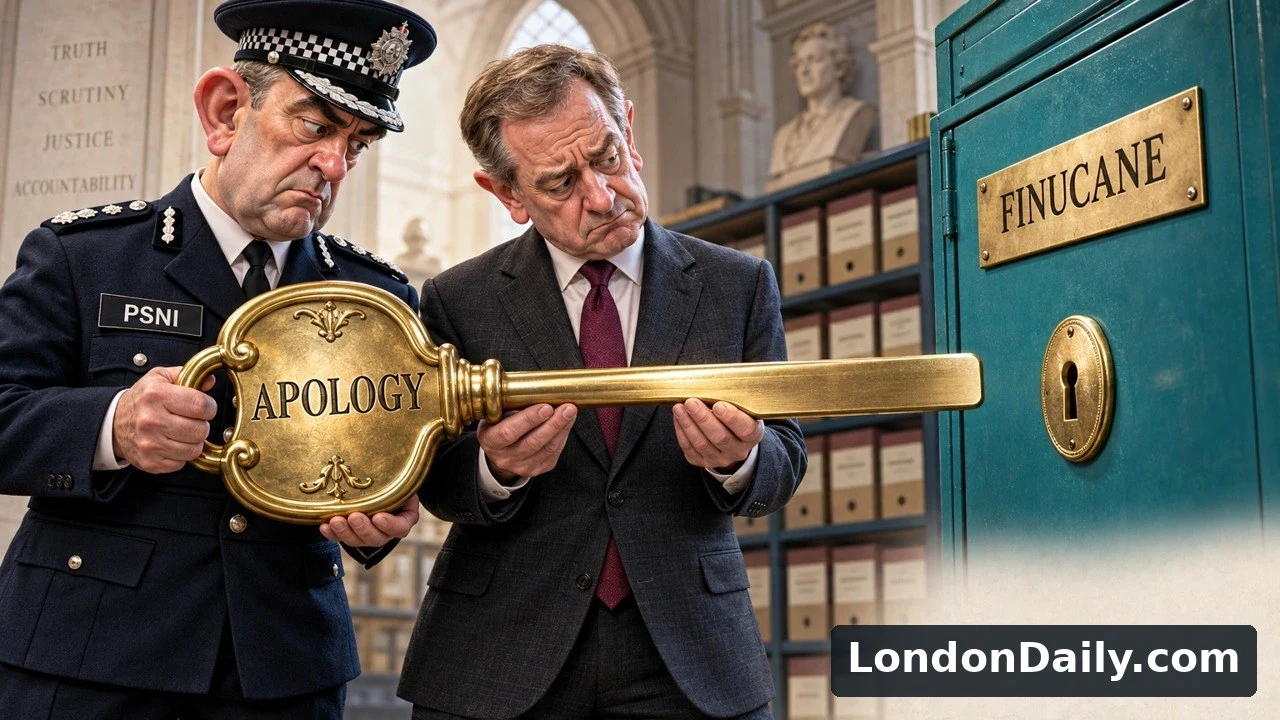
The Police Service of Northern Ireland has promised to pursue any new criminal investigative opportunities uncovered by the Pat Finucane public inquiry, acknowledging that its apology would be meaningless without helping his family obtain answers.
Martin Wolfe KC, representing the force, described the inquiry as perhaps the final opportunity to address an injustice that had never been adequately resolved. He said the PSNI had no wish to obstruct an investigation into the truth.
Mr Finucane, 39, was murdered by loyalist paramilitaries at his home in north Belfast on 12 February 1989, in front of his wife and children. His family campaigned for decades for a public inquiry into the extent of security force involvement.
Several examinations have found evidence of state collusion. Sir Desmond de Silva’s 2012 review found collusion but concluded there was no overarching state conspiracy in the murder. The distinction leaves the inquiry examining the extent and workings of state involvement, rather than whether collusion occurred at all.
At Wednesday’s hearing, Mr Wolfe renewed the apology first issued by the PSNI following that review, saying it reflected Chief Constable Jon Boutcher’s understanding and belief. He said Mr Boutcher recognised that the apology depended on the force playing its full part in securing the answers the family needed.
The inquiry, chaired by Sir Gary Hickinbottom at Bradford Court in Belfast, is hearing opening statements from core participants.
Peter Coll KC, representing the UK Government, accepted that the murder involved state collusion and said this was utterly wrong. The Government also stood by former prime minister David Cameron’s 2012 apology.
Mr Coll said the inquiry would examine how the army, Special Branch, MI5 and government interacted, how information passed between them and what oversight existed. That meant looking beyond formal procedures to practice, including the conduct of ministers and officials and the framework governing agents.
The Government favoured conducting as much of the inquiry in public as possible, he said, while protecting material that could not safely be disclosed. Sensitive information concerning agents should be accompanied by a public summary.
Mr Coll also endorsed de Silva’s warning against impugning the many RUC and military personnel who served with distinction, while stressing that this did not qualify the Government’s acceptance of wrongdoing.
The practical test now is how those commitments translate into disclosure, scrutiny and the pursuit of any further criminal leads.








Join the conversation