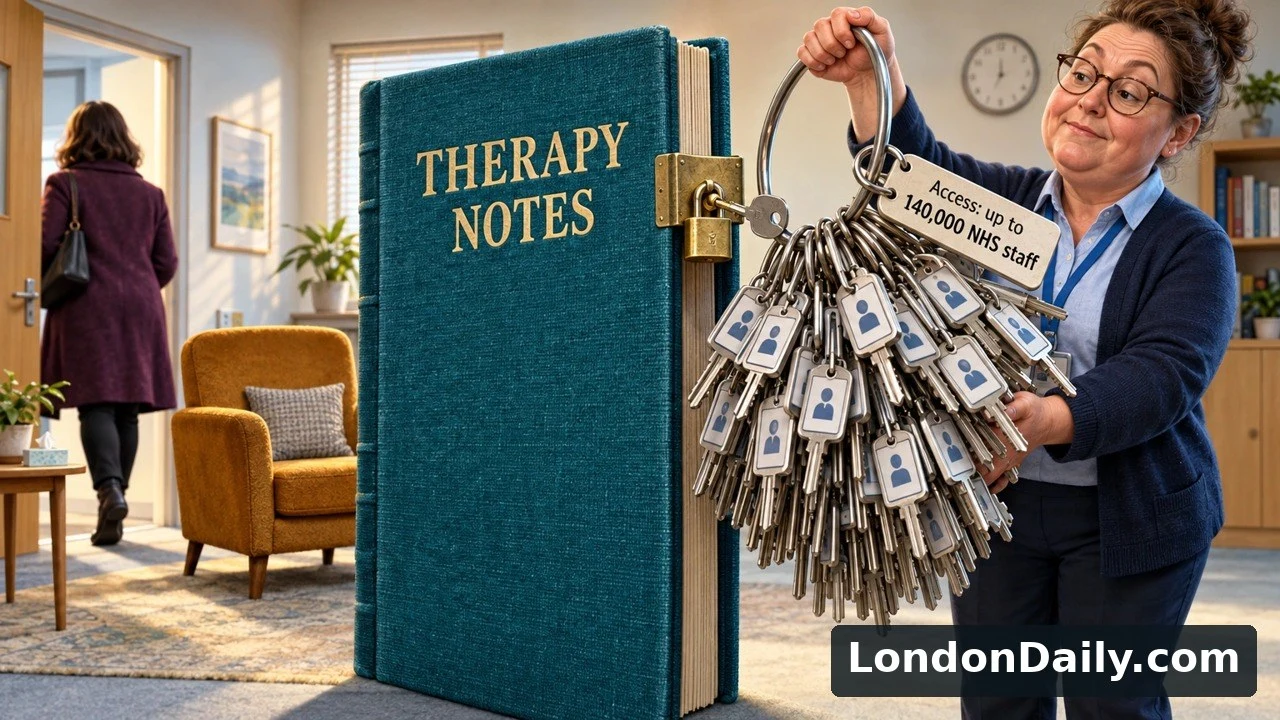
A patient discovered that her psychotherapy notes were accessible to more than 100,000 NHS staff through the London Care Record, prompting her to stop treatment for bipolar disorder and triggering a data protection investigation.
Rosanna, not her real name, spotted the notes on a screen during a GP appointment. She says they contained details of grief and trauma. Freedom of information inquiries revealed that staff outside South London and Maudsley NHS Trust (SLaM), where she received treatment, had accessed them.
The electronic record is accessible to up to 140,000 NHS staff. That does not mean all those workers viewed her notes.
“It’s like discovering that your personal diary has been photocopied and placed in a library,” she said. After pausing psychotherapy, she had no secondary mental health support while a parent was seriously ill and after they died. She urged other patients not to stop treatment, but to understand their data rights.
SLaM said “no intimate details” had been shared, while acknowledging that “key session content” was automatically uploaded. It also told Rosanna: “Very private material can be shared in the context of treatment.” Her September subject access request seeking to establish exactly what was recorded remained unanswered.
The Information Commissioner’s Office confirmed an investigation after former Labour minister Philip Hunt requested that the case be expedited. Concerns extend to whether other patients’ notes, including children’s, were shared without their knowledge or consent. Rosanna said SLaM’s sharing list included all events from its child and adolescent mental health services.
Responding to her MP, Bell Ribeiro-Addy, junior health minister James Frith said records relating to direct care were shared on the basis of implied consent. Rosanna argues that patients cannot object to sharing they have not been told about.
SLaM is reviewing its recording practices and communications. Its chief medical officer, Professor Derek Tracy, apologised for delays, saying guidance limits entries to significant changes or themes, risks and agreed actions. Clinicians can restrict information to local teams or mask parts of records, he said.
Andy Bell, chief executive of the Centre for Mental Health, said safeguarding can require disclosure, but unexpected information appearing on shared systems suggests something is not working properly. The distinction is between information needed for care and material that should remain within therapy.
Rosanna supports the single patient record proposed under the health bill, but wants transparency and an opt-out for therapy content. Whether that record will include intimate psychotherapy details remains unresolved.








Join the conversation