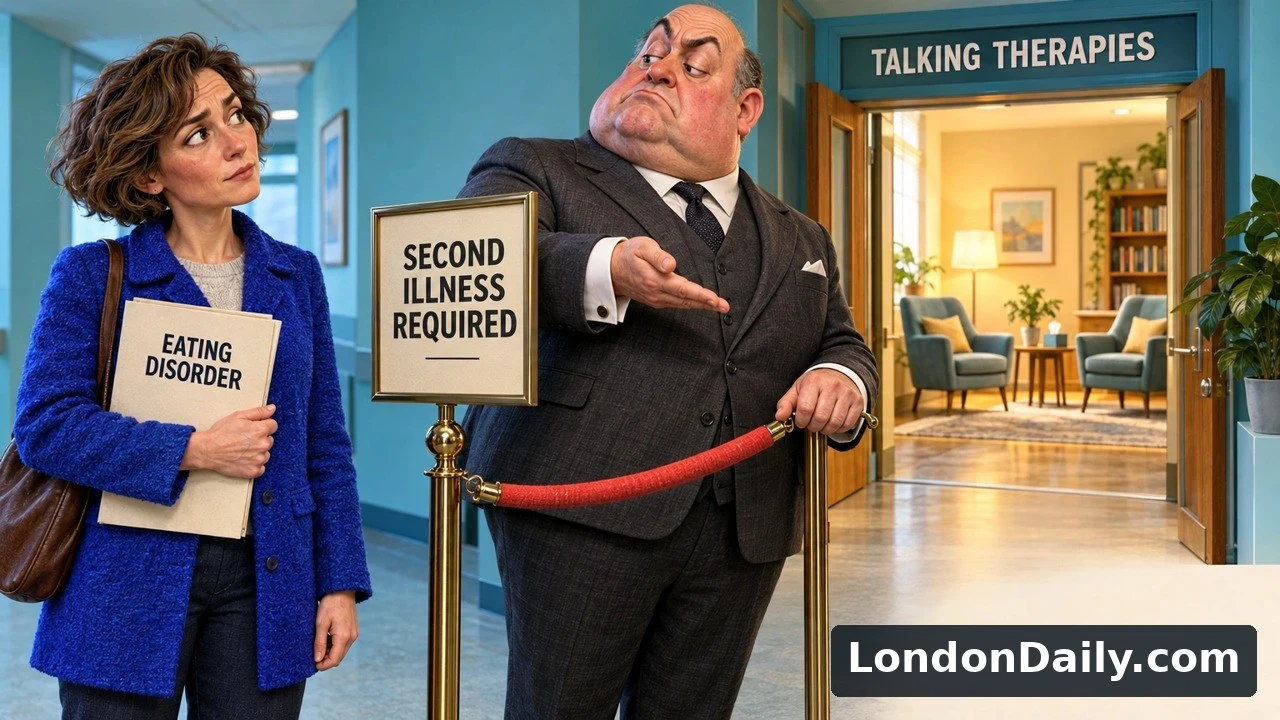
People with anorexia or bulimia cannot access NHS talking therapies unless they also have another physical or mental illness, the Royal College of Psychiatrists has warned, arguing that the restriction denies patients help before their conditions become more severe.
Patients whose primary diagnosis is an eating disorder are referred to specialist community services, partly because physical health risks can require different support. But the college’s report says those services are themselves difficult to access: limited capacity leaves providers managing crises rather than offering prevention and early intervention.
Dr Ashish Kumar, chairman of the college’s faculty of eating disorders, said long waiting lists were among the barriers to prompt care across England. “It is simply unacceptable that people with eating disorders are not able to access talking therapies unless they have another physical or mental illness, and this must change.”
The distinction matters. Referral to specialist care is intended to address these illnesses’ particular risks; the college’s concern is that insufficient capacity, combined with exclusion from talking therapies, leaves a gap in early treatment. It argues that expanding access could prevent thousands of people developing more severe, lasting illness and reduce avoidable ill health, deaths and long-term costs.
England’s latest health survey found that only 23% of adults with a probable eating disorder had received psychological treatment. By comparison, NHS talking therapies treated about 1.2 million adults with anxiety and depression across England in the past year.
The college says the proportion of adults screening positive for a probable eating disorder rose from 6.4% in 2007 to 9.1% in 2024. Among 17- to 19-year-olds, the proportion affected increased sixteenfold between 2017 and 2023 to 12.5%, or one in eight. Beat estimates that about 3.5 million people across the UK have an eating disorder, many of them children and young adults.
Premature death risk is five to six times the average for people with anorexia and twice the average for those with another eating disorder.
James Downs, a report co-author with lived experience, said rising prevalence should also be understood as a failure of prevention. Beat’s head of services, Kerri Fleming, urged the government and NHS England to fund services and recruit and train staff, stressing that early intervention offers the best chance of recovery.
The Department of Health and Social Care acknowledged the importance of early psychological treatment and said it would consider the recommendations with the college. It cited £16.1bn for wider mental health services this year and a forthcoming strategy promising earlier intervention, faster support and more care closer to home. That is not yet a specific commitment to widen talking-therapy eligibility.








Join the conversation