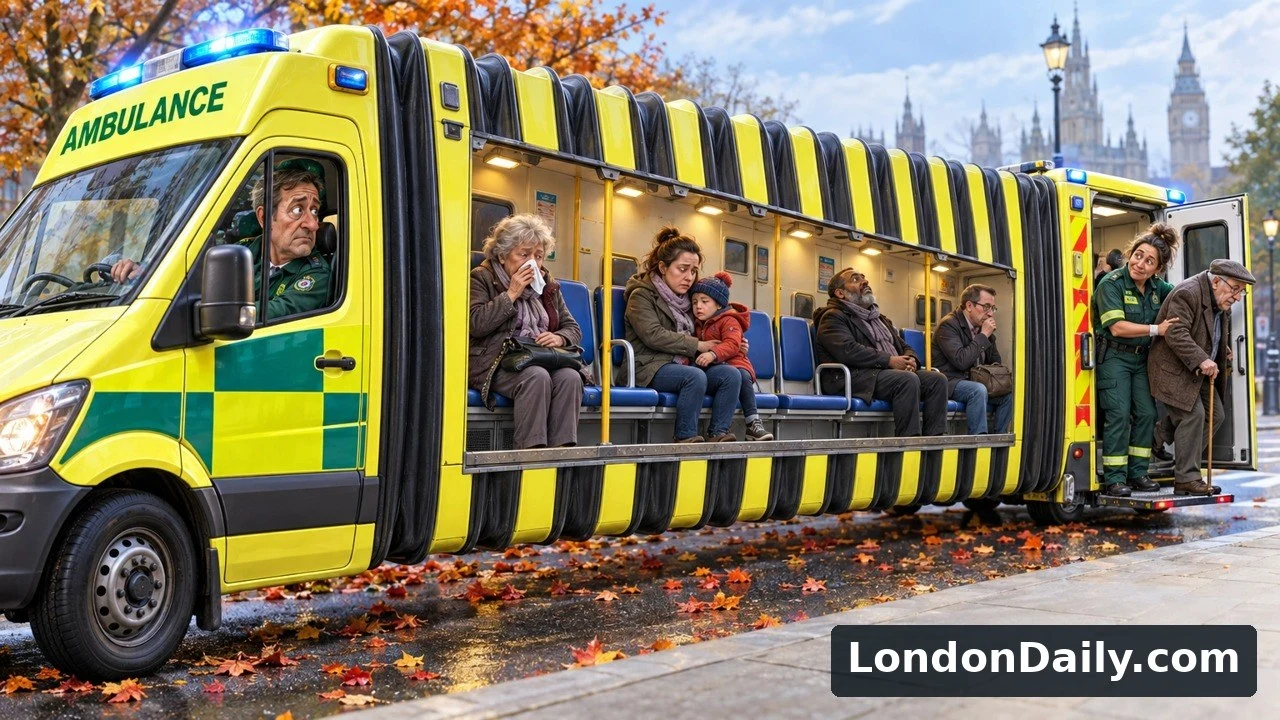
An unusually early surge in respiratory illness has forced the London Ambulance Service to declare a critical incident, with daily calls exceeding 7,000 for three consecutive days and life-threatening callouts rising by 10%.
Emergency measures began on Thursday after call handlers recorded 7,326 calls on Monday, 7,366 on Tuesday and 7,369 on Wednesday. That compares with 5,500 callouts on a usual busy day and represents roughly 500 more calls a day than the previous week.
Chief operating officer Craig Harman described an unprecedented increase in respiratory illness, with patients reporting such conditions up 30% on last year. The service largely attributes the pressure to colds and flu arriving earlier than usual and leaving patients particularly unwell, especially older people, young children and other vulnerable groups. Both infections can leave patients feeling unable to breathe.
The declaration allows non-essential activities to be suspended and clinically trained managers to move into patient-facing roles. Between 40 and 50 additional ambulances were made available from Thursday, contributing 500 extra ambulance crew hours.
Harman said pressure extended across London's urgent and emergency care system. He urged people to reserve ambulances and emergency departments for life-threatening emergencies, saying most ailments could be better addressed through NHS 111, a GP or a pharmacy.
Hospital handovers can also prevent crews returning to the road. Harman acknowledged delays but said the service worked with individual hospital trusts to minimise them, adding: “Whilst we do see hospital delays, we don’t see hospital delays like have been reported from around the country.”
The immediate surge follows a period when London had one of the lowest emergency respiratory admission rates among NHS England regions in the year ending 2025. Government data nevertheless suggests influenza, colds and respiratory syncytial virus are rising from baseline levels nationwide. As of 15 November, 11.4% of people tested for influenza were positive.
The ambulance service says the early increase offers an opportunity to arrange flu and Covid-19 vaccinations and obtain medicines before winter. NHS figures show around 331,000 fewer eligible people across the UK had received a flu vaccination than at the same point last year.
Yet directing patients elsewhere depends on accessible alternatives. Dr Naveed Asif, a GP at The London General Practice, said difficulty securing appointments could be exacerbating emergency demand. Although seasonal respiratory illness was expected, he said unscheduled care had been increasing year on year.
“Access to timely GP appointments has become more difficult over the last few years because of the pressure on and underfunding of primary care.”








Join the conversation