One Year On, UK’s Grand AI Infrastructure Plan Yields Progress Amid Strategic Challenges
Government’s AI Opportunities Action Plan has spurred computing expansion and ecosystem investment, but implementation gaps and compute capacity concerns remain
One year after the United Kingdom launched its ambitious AI Opportunities Action Plan, which committed to building world-class artificial intelligence infrastructure, the government and industry are assessing tangible progress alongside persistent challenges.
The strategy, unveiled at the start of 2025, set out a vision for AI growth that emphasised expanded compute power, reforms to planning and data infrastructure, and public-private engagement to secure the UK’s competitiveness in the global AI landscape.
Implementation has advanced in several core areas, but observers note that critical infrastructure gaps remain as demand for computing resources grows.
A central pillar of the plan has been the UK’s emerging AI compute ecosystem.
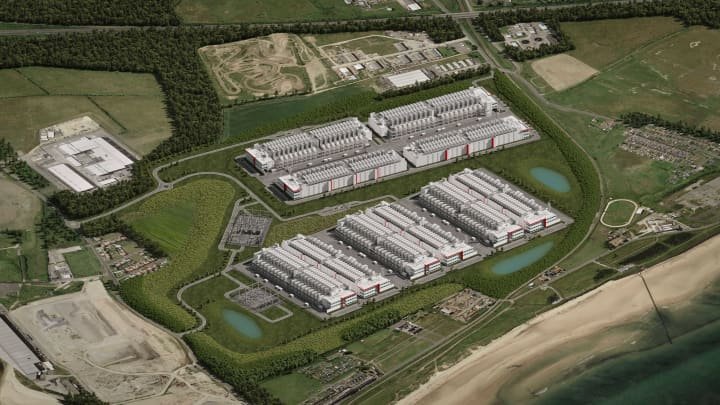
The government’s new Compute Roadmap lays out plans to extend sovereign computing capacity, launch national supercomputing centres and develop so-called AI Growth Zones designed to host data centres with high-performance capabilities.
Initial efforts include the operationalisation of Isambard-AI, a leadership-class supercomputer in Bristol, as well as commitments to scale compute power dramatically by the end of the decade.
These investments aim to ensure researchers, startups and public bodies have domestic access to the computational resources needed to train and deploy advanced models.
The Department for Science, Innovation and Technology has also championed the growth of reliable data infrastructure and broadened strategic partnerships.
In mid-2025 the government signed a memorandum with OpenAI to accelerate AI adoption in public services and foster regional development through infrastructure projects.
Industry engagement has been bolstered by multibillion-pound investment commitments from both government and private stakeholders in AI research facilities and data centre capacity.
Despite these advances, critical voices within the tech sector and policy community caution that the infrastructure build-out is still in its early stages, with compute capacity risks looming if planning reform and energy network upgrades do not keep pace with demand.
Analysts point to the need for robust supply-side reforms to accelerate data centre construction and ensure sufficient energy and planning frameworks to support growth.
They also note that AI Growth Zones, while promising, are only part of the broader infrastructure mix needed to sustain long-term innovation.
The publication of the UK AI Security Institute’s inaugural Frontier AI Trends Report in December highlighted both the rapid advance of frontier AI capabilities and the importance of resilient infrastructure underpinning safe and productive adoption.
As capabilities such as autonomous task completion and advanced domain-specific reasoning grow, the report emphasises the need for updated safeguards and continuous evaluation of infrastructure readiness.
Overall, one year into the UK’s AI infrastructure strategy, foundational steps have been taken to expand compute, promote ecosystem investment and align industry participation with national goals.
However, the coming months are likely to shape how effectively these plans translate into sustained capacity and competitive advantage for Britain’s AI ecosystem.
The strategy, unveiled at the start of 2025, set out a vision for AI growth that emphasised expanded compute power, reforms to planning and data infrastructure, and public-private engagement to secure the UK’s competitiveness in the global AI landscape.
Implementation has advanced in several core areas, but observers note that critical infrastructure gaps remain as demand for computing resources grows.
A central pillar of the plan has been the UK’s emerging AI compute ecosystem.
The government’s new Compute Roadmap lays out plans to extend sovereign computing capacity, launch national supercomputing centres and develop so-called AI Growth Zones designed to host data centres with high-performance capabilities.
Initial efforts include the operationalisation of Isambard-AI, a leadership-class supercomputer in Bristol, as well as commitments to scale compute power dramatically by the end of the decade.
These investments aim to ensure researchers, startups and public bodies have domestic access to the computational resources needed to train and deploy advanced models.
The Department for Science, Innovation and Technology has also championed the growth of reliable data infrastructure and broadened strategic partnerships.
In mid-2025 the government signed a memorandum with OpenAI to accelerate AI adoption in public services and foster regional development through infrastructure projects.
Industry engagement has been bolstered by multibillion-pound investment commitments from both government and private stakeholders in AI research facilities and data centre capacity.
Despite these advances, critical voices within the tech sector and policy community caution that the infrastructure build-out is still in its early stages, with compute capacity risks looming if planning reform and energy network upgrades do not keep pace with demand.
Analysts point to the need for robust supply-side reforms to accelerate data centre construction and ensure sufficient energy and planning frameworks to support growth.
They also note that AI Growth Zones, while promising, are only part of the broader infrastructure mix needed to sustain long-term innovation.
The publication of the UK AI Security Institute’s inaugural Frontier AI Trends Report in December highlighted both the rapid advance of frontier AI capabilities and the importance of resilient infrastructure underpinning safe and productive adoption.
As capabilities such as autonomous task completion and advanced domain-specific reasoning grow, the report emphasises the need for updated safeguards and continuous evaluation of infrastructure readiness.
Overall, one year into the UK’s AI infrastructure strategy, foundational steps have been taken to expand compute, promote ecosystem investment and align industry participation with national goals.
However, the coming months are likely to shape how effectively these plans translate into sustained capacity and competitive advantage for Britain’s AI ecosystem.