UK Government to Insure Bayeux Tapestry for Up to £800m Ahead of Historic British Museum Loan
Treasury backs potential damage and loss costs for the iconic medieval embroidery as it prepares to travel to London for the first time in nine centuries
The United Kingdom has agreed to provide government indemnity cover for the Bayeux Tapestry valued at an estimated £800 million as part of arrangements for its loan to the British Museum, marking a major step in a long-planned cultural exchange between London and Paris.
Under the Government Indemnity Scheme, the Treasury will assume responsibility for potential loss or damage to the nearly one-thousand-year-old embroidered linen during its transfer from Normandy and while it is displayed in London, avoiding the need for costly commercial insurance.
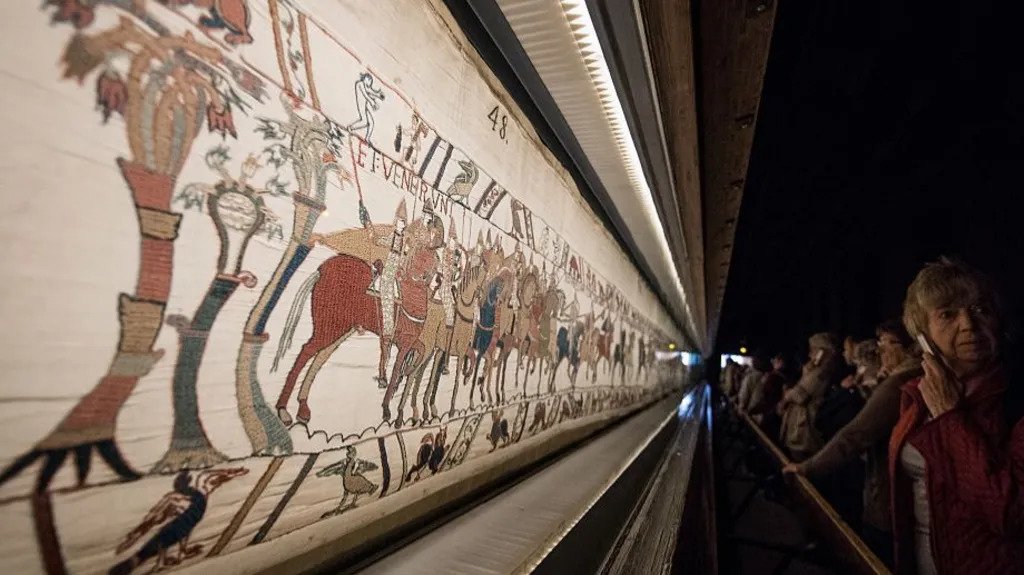
The seventy-metre tapestry, which depicts the Norman invasion of England in 1066 and the subsequent Battle of Hastings, is set to go on display at the British Museum from September 2026 until mid-2027 while the Bayeux Museum in France undergoes a two-year renovation.
It will be the first time the artefact has left France for exhibition since its creation and the first time it will be shown on British soil in more than nine centuries.
The loan is part of a reciprocal cultural arrangement agreed between UK Prime Minister Keir Starmer and French President Emmanuel Macron during the latter’s state visit to London in July 2025. Under the agreement, the British Museum will lend significant treasures including the Sutton Hoo artefacts and the Lewis Chessmen to museums in Normandy in return.
HM Treasury officials emphasise that the Government Indemnity Scheme has long facilitated the temporary exhibition of high-value works by replacing commercial insurance premiums that would otherwise be prohibitively expensive for public museums.
Treasury sources note that the scheme has previously saved British institutions millions of pounds and that the tapestry’s cover will similarly reduce costs.
The indemnity is provisional on a final valuation scheduled before the loan is formally confirmed.
The planned transportation of the tapestry has prompted debate among art historians and conservation experts, with some in France expressing concern about the fragility of the textile and the risks inherent in long-distance movement.
French authorities and loan organisers maintain that detailed studies and specialist handling plans support a safe transfer and exhibition, and preparations including test packaging and vibration monitoring have been part of the planning.
As autumn 2026 approaches, both governments are preparing for what is expected to be one of the most significant cultural exhibitions in recent history, symbolising centuries of shared heritage and ongoing cooperation between the United Kingdom and France.
Under the Government Indemnity Scheme, the Treasury will assume responsibility for potential loss or damage to the nearly one-thousand-year-old embroidered linen during its transfer from Normandy and while it is displayed in London, avoiding the need for costly commercial insurance.
The seventy-metre tapestry, which depicts the Norman invasion of England in 1066 and the subsequent Battle of Hastings, is set to go on display at the British Museum from September 2026 until mid-2027 while the Bayeux Museum in France undergoes a two-year renovation.
It will be the first time the artefact has left France for exhibition since its creation and the first time it will be shown on British soil in more than nine centuries.
The loan is part of a reciprocal cultural arrangement agreed between UK Prime Minister Keir Starmer and French President Emmanuel Macron during the latter’s state visit to London in July 2025. Under the agreement, the British Museum will lend significant treasures including the Sutton Hoo artefacts and the Lewis Chessmen to museums in Normandy in return.
HM Treasury officials emphasise that the Government Indemnity Scheme has long facilitated the temporary exhibition of high-value works by replacing commercial insurance premiums that would otherwise be prohibitively expensive for public museums.
Treasury sources note that the scheme has previously saved British institutions millions of pounds and that the tapestry’s cover will similarly reduce costs.
The indemnity is provisional on a final valuation scheduled before the loan is formally confirmed.
The planned transportation of the tapestry has prompted debate among art historians and conservation experts, with some in France expressing concern about the fragility of the textile and the risks inherent in long-distance movement.
French authorities and loan organisers maintain that detailed studies and specialist handling plans support a safe transfer and exhibition, and preparations including test packaging and vibration monitoring have been part of the planning.
As autumn 2026 approaches, both governments are preparing for what is expected to be one of the most significant cultural exhibitions in recent history, symbolising centuries of shared heritage and ongoing cooperation between the United Kingdom and France.