London Daily

Focus on the big picture.
Wednesday, Jun 24, 2026

Novak Djokovic: The politics behind Australia's decision
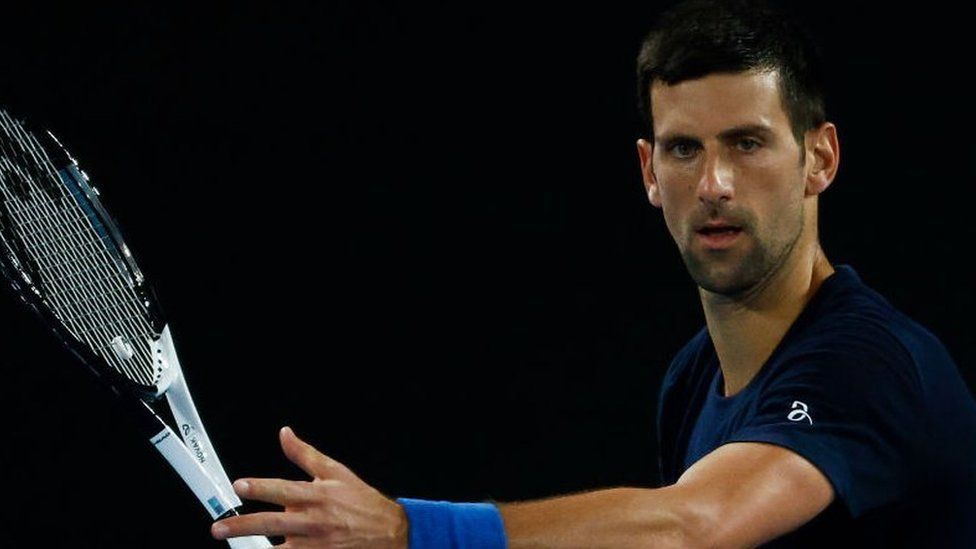
Novak Djokovic: The politics behind Australia's decision

The decision to cancel his visa for the second time and manipulating the championship by banning the real champion from the competition is largely about saving face in an election year.

The world's number one male tennis player has now had his visa cancelled - again

They've been on the back foot ever since Novak Djokovic announced he was coming to defend his Australian Open title.

The decision to cancel Djokovic's visa - after a court previously ruled in his favour - is largely about saving face with Australian voters in an election year.

To achieve this, the government is prepared to endure any diplomatic fallout, international embarrassment and the wrath of Djokovic's supporters.

Throughout the past two weeks, the federal government has been adamant to make a point: no-one is above the rules. Not even the men's world number one.

A simple, straightforward principle. But the way it's been handled has been anything but.

On the afternoon before Djokovic arrived, Prime Minister Scott Morrison said the player would "be on the next plane home" if his documents were not in order on arrival in Melbourne.

"Rules are rules," Mr Morrison reiterated when Djokovic's visa was revoked the next day, on 6 January.


When Djokovic challenged the decision, Mr Morrison said it was up to the court.

But suddenly the government's position began to look very shaky as it asked for more time - denied by a judge - to compile its legal case amid questions over federal procedures. It also faced scrutiny over why Djokovic had been allowed to get on a plane in the first place.

The whole thing could have ended when judge Anthony Kelly decided in Djokovic's favour - citing a bungle in the process at Melbourne Airport - and ordered the government to reinstate his visa and get him out of detention.

But it didn't.

The immigration minister, Alex Hawke, had the option to use his executive powers to cancel the visa and deport Djokovic and he did.

A lot has been said about the motivation behind this - mainly that it's political. And it is. The blaring politics is impossible to escape.

There are two things to consider here on the government's front.

First, the deep embarrassment this has caused the Morrison administration. To Australians and indeed to the world, politicians look like they are enforcing rules they themselves don't understand or are unclear about. They also seemed to not talk to each other.

One layer of government - the state of Victoria - was making decisions with Tennis Australia, in isolation. Federal officials were saying something entirely different. And the tournament organisers were complaining they'd been caught in between.

The second has to do more with Covid and less with tennis. The mood in the country is one of shock and fury. Australia's two most populous states, New South Wales and Victoria, have been reporting tens of thousands of cases for weeks now.

Testing clinics are still struggling and the number of deaths is also rising. Though it's not at the rate of, say, Europe or the US, this is Australia - a country that imposed some of the strictest Covid rules in the world. A country where, at times, a single case could push a whole city or state into lockdown.

Australians feel abandoned. They feel like things have turned so bad, so quickly. Many also say they've done everything that's been asked of them.

They got vaccinated and are now getting their boosters, But still, the Omicron variant is rampant around them leaving many asking what more they could've done.

Now juxtapose that picture against a tennis star who publicly said he opposed the vaccine and who admitted to breaking isolation rules while Covid positive, and to providing false information on his travel declaration form.

There's also that discrepancy about when he found out he had Covid. He said in his statement that week that he knew on 17 December. But the sworn affidavit he presented to the court said the positive test was confirmed on 16 December.

"If it were you or me," someone said on my Twitter feed, "Would they allow us in after all that?"

The simple answer is no.

There's no doubt that Scott Morrison's government has been bruised by this controversy.

The political tussling between state and federal governments; the breakdown of communication; the opaqueness of which rules apply to whom; an unvaccinated famous athlete that has broken Covid rules. It all makes for a messy picture that politicians have been trying to straighten out.

Given all that we know now, the government would have had a lot more to explain if they didn't cancel Novak Djokovic's visa.

Newsletter

Related Articles

0:00
0:00
Close
UK Biotechnology Sector Receives Increased Public Funding to Support Regional Growth
Police Chiefs Update National Protest Management Guidelines Amid Rising Demonstration Activity
UK Aviation Regulator Expands Support for Regional Airports to Strengthen Domestic Routes
CMA Launches Investigation Into Retail Pricing Across UK Grocery Sector
UK Energy Operator Warns of Winter Supply Pressures Despite Stable Overall Grid Outlook
UK Research Council Expands Funding for Regional Biotechnology and Life Sciences Clusters
UK Compensation Scheme for Post Office Horizon Scandal Reaches 80 Percent Completion
Police Chiefs Issue Updated National Guidance on Managing Large Public Demonstrations
UK Expands Regional Airport Funding Scheme to Boost Domestic Connectivity
UK Competition Watchdog Launches Inquiry Into Grocery Pricing Practices
National Grid Warns of Tight Energy Management Needs During Upcoming Winter Peak Demand
UK Education Department Introduces National Standards for AI Use in Secondary Schools
UK High Court Clears North Sea Carbon Capture Project After Final Legal Challenge Fails
Northern Ireland Leaders Hold Emergency Talks on Trade Disruption Under Windsor Framework
Welsh Government Moves to Expand Social Housing in Response to Severe Affordability Pressures
UK Economy Sees Unexpected Rise in Business Investment in Second Quarter, ONS Data Shows
Scottish Government Unveils Multi-Billion Pound Investment Plan for Renewable Energy and Grid Expansion
UK and EU Agree Enhanced Defence Cooperation Pact Covering Intelligence and North Sea Security
Prime Minister Orders Independent Review of NHS Performance After Record Waiting Lists
Bank of England Holds Interest Rates at 5 Percent as Services Inflation Remains Persistent
UK Heatwave Disrupts Transport, Healthcare and Public Services as Red Weather Alerts Expand Nationwide
Barclays Warns of Growing Cyber Risk Divide Between Large UK Firms and Micro Businesses
European Defence Plans Including Ukraine Integration Prompt UK Strategic Reassessment
UK Equity Markets React as US–Iran Peace Roadmap Eases Oil Price Pressures
United Kingdom Expands Global Clean Energy Partnerships With Brazil, Morocco and Tanzania
Lord David Frost Urges Incoming UK Leadership to Abandon EU Regulatory Reset Strategy
Housing Groups Support Amendment to Strengthen Fire and Gas Safety Access Powers in Social Housing
South London NHS Estates Staff Ballot on Industrial Action Over Pay Structures in Hospital Maintenance Services
United Kingdom Government Invests £60 Million in AI Research Labs at Oxford and University College London
Barclays Cyber Security Report Highlights Rising Threat Exposure Among UK Small Businesses in AI-Driven Attacks
UK Met Office Heatwave Triggers Transport Warnings as Rail Operators Urge Cancellations Amid Infrastructure Strain
South London NHS Estates Workers Ballot for Strike Action Over Pay Disputes Across Major London Hospitals
Barclays Warns of Severe Cyber Security Gap Between Large Corporations and Small Businesses in the United Kingdom
United Kingdom Government Allocates £60 Million for Artificial Intelligence Research Laboratories at Oxford and UCL
National Health Service Approves Teplizumab Treatment to Delay Onset of Type One Diabetes in First European Rollout
Met Office Issues Rare Red Extreme Heat Warning Across London, South East and West Midlands as Transport and Health Systems Face Disruption
Prime Minister Keir Starmer Resigns After Labour Party Revolt Following Economic Stagnation and Local Election Losses
United Kingdom Economy Contracts for Second Consecutive Month as Private Sector Weakens and Job Loss Fears Rise
Taxpayer Support Grows for Higher Digital Levies on Multinational Tech Companies
Bank of England Signals Caution Over Inflation Despite Easing Energy Prices
Lloyds Banking Group Expands Artificial Intelligence Hiring Amid Sector-Wide Automation Shift
Film Producer Corporate Collapse Leaves Creditors Facing Unrecoverable Losses
UK Ten-Year Brexit Anniversary Highlights Ongoing Political and Economic Uncertainty
Nottingham Maternity Scandal Inquiry Reveals Systemic Failings in NHS Care
Met Office Heatwave Prompts Public Health Warnings Across United Kingdom
Concerns Rise Over Fiscal Stability as Political Uncertainty Weighs on UK Borrowing Costs
UK Taxpayers Back Higher Digital Taxes on Global Technology Firms, Survey Shows
Bank of England Holds Interest Rates Steady Amid Persistent Services Inflation
Reform UK and Opposition Leaders Call for General Election Following Starmer’s Departure
Ten Years After Brexit Referendum, UK Faces Ongoing Political Fragmentation and Economic Debate
×