England’s NHS waiting list for routine hospital treatment has reached its highest level in nearly a year, with the longest waits increasing despite an improvement in the proportion starting treatment within 18 weeks.
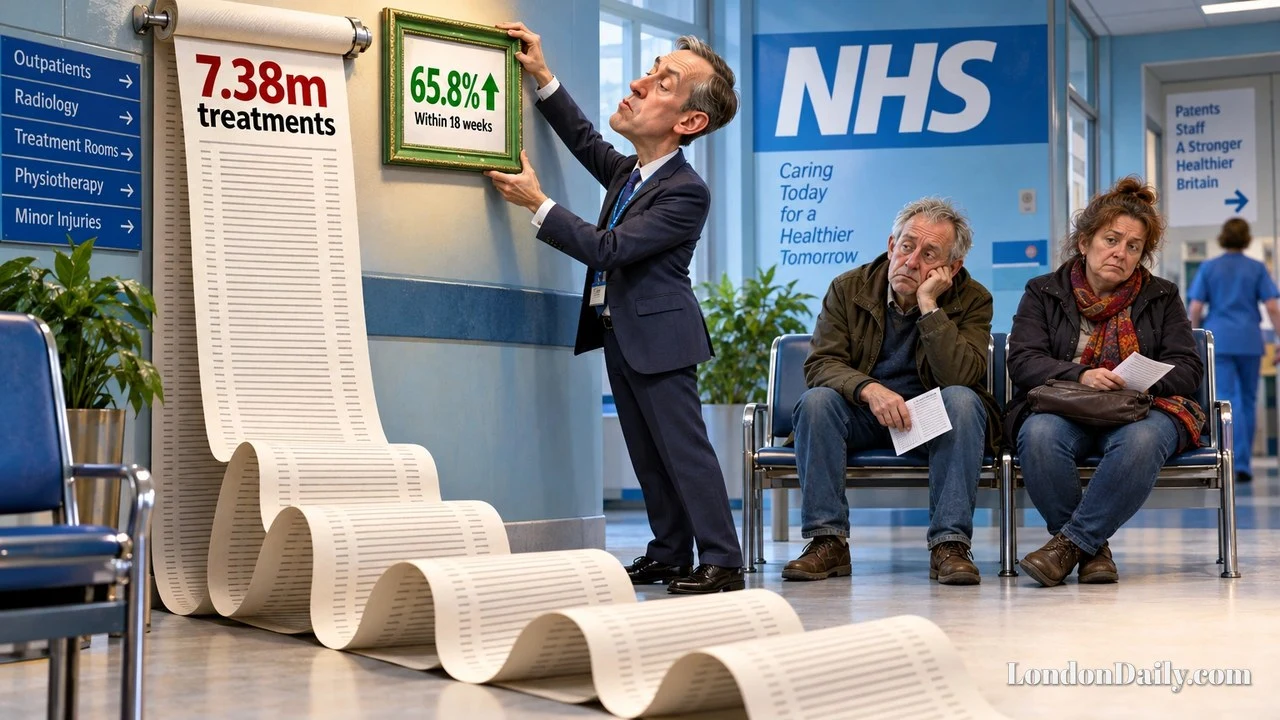
NHS England figures show an estimated 7.38 million outstanding treatments at the end of September, up from 7.37 million in August and the highest since October 2025’s 7.40 million. These relate to 6.24 million patients, broadly unchanged month on month. Both remain below September 2023’s records of 7.77 million treatments and 6.50 million patients.
The proportion beginning treatment within 18 weeks rose from 65.2% to 65.8%, exceeding the Government and NHS England’s 65% target for March this year. The next milestone is 70% by March 2027; the Government has pledged 92% by the end of Parliament in 2029.
Yet those waiting more than a year increased from 113,339 to 116,353. Waits exceeding 65 weeks rose from 10,782 to 12,825, and those beyond 18 months from 1,637 to 2,015. Year-long waits accounted for 1.6% of the list, up from 1.5%, against a target below 1% by March this year.
October brought an average of 3,558 patients receiving corridor care daily, the highest since recording began in May 2026, compared with September’s revised 3,310. Of these, 2,718 were in A&E and 840 elsewhere. The measure covers at least 45 minutes in settings that are not clinically appropriate and safe, assessed against criteria including oxygen, call bells, privacy, basic facilities and conditions for sleep.
A&E attendances reached a record 2.50 million. Within four hours, 74.0% were admitted, discharged or transferred, down from 74.4%. The March target was 78%; every trust has a target of 82% by March 2027.
Cancer performance also slipped in September. Within 28 days, 76.2% of urgent referrals received a diagnosis or had cancer ruled out, down from 78.6% and below the 80% target. First definitive treatment within 62 days of urgent referral or consultant upgrade fell from 71.9% to 70.7%; every trust has an 80% target for March 2027.
October ambulance responses averaged seven minutes 59 seconds for life-threatening incidents, unchanged and above the seven-minute standard. Emergency calls averaged 32 minutes 45 seconds, up from 31 minutes 18 seconds. The 2026/27 average stands at 29 minutes 53 seconds against a 25-minute target. Urgent calls averaged two hours seven minutes 32 seconds, up from one hour 57 minutes 44 seconds.








Join the conversation