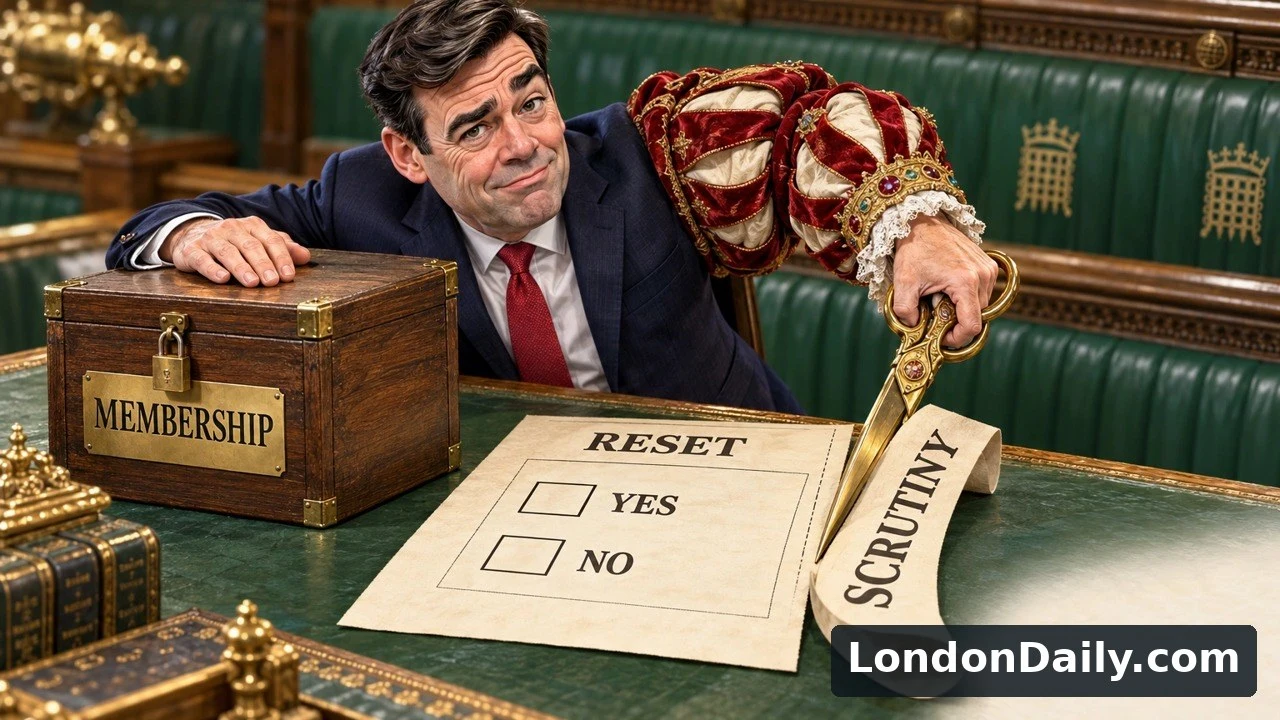
Prime Minister Andy Burnham has committed Britain to another referendum before any return to the European Union, rejecting a route favoured privately by some Labour MPs: seeking authority through a general election manifesto instead.
Speaking in the Commons on Monday, he confirmed for the first time that rejoining without a public vote would be “unthinkable”. He said he was “not proposing at this moment to rerun the referendum”, distinguishing his immediate reset agreement from possible membership.
Burnham will present longer-term options next month, including full membership. On Friday, he told EU officials he was ready to discuss rejoining over the next year through a “brainstorming process”.
The reset would align Britain with EU food and drink safety rules, link emissions trading standards and allow 100,000 EU citizens aged 18 to 31 to live, work and study in Britain for three years.
Britain is understood to face applying new EU laws without a say in making them. A senior EU official said consultation would occur only in an “emergency situation”; British officials would normally attend meetings about implementing laws already passed.
Burnham called the agreement a “landmark moment”. He argued Brexit had damaged growth, increased living and business costs and hindered exports. He also linked rising small-boat crossings to unfulfilled promises of immigration control. His assertion that almost three-quarters of the public wanted closer ties was not accompanied by polling details.
Conservative leader Kemi Badenoch called his negotiating approach “spectacularly foolish”, arguing that signalling desperation weakened Britain’s position. She said the deal would not reduce food or energy costs and described his claims about closer ties as “wholly ignorant”.
Reform UK leader Nigel Farage called the referendum commitment “sensible” and predicted a benefit for his party, formerly the Brexit Party. He claimed to be the most trusted opponent of rejoining.
Former business secretary Peter Kyle welcomed a referendum as “sound common sense and logic”. Labour MP Jon Trickett distinguished revising Boris Johnson’s deal from reversing Brexit, warning another referendum would be bitterly fought and divisive.
Burnham said his support for rejoining could change with European politics. Four of the EU’s five largest members face elections over the next year, potentially bringing Marine Le Pen to France’s presidency and leaders described as far-right to power in Spain and Italy.
The immediate parliamentary decision comes on Thursday. Ministers are expected to use “Henry VIII” clauses allowing legislation to be rewritten with minimal Commons scrutiny, usually through an unamendable yes-or-no vote. Conservative peer Lord Young of Acton, director of the Free Speech Union, called that “completely undemocratic”. The referendum pledge therefore leaves a separate question unresolved: how closely MPs can examine the reset itself.








Join the conversation