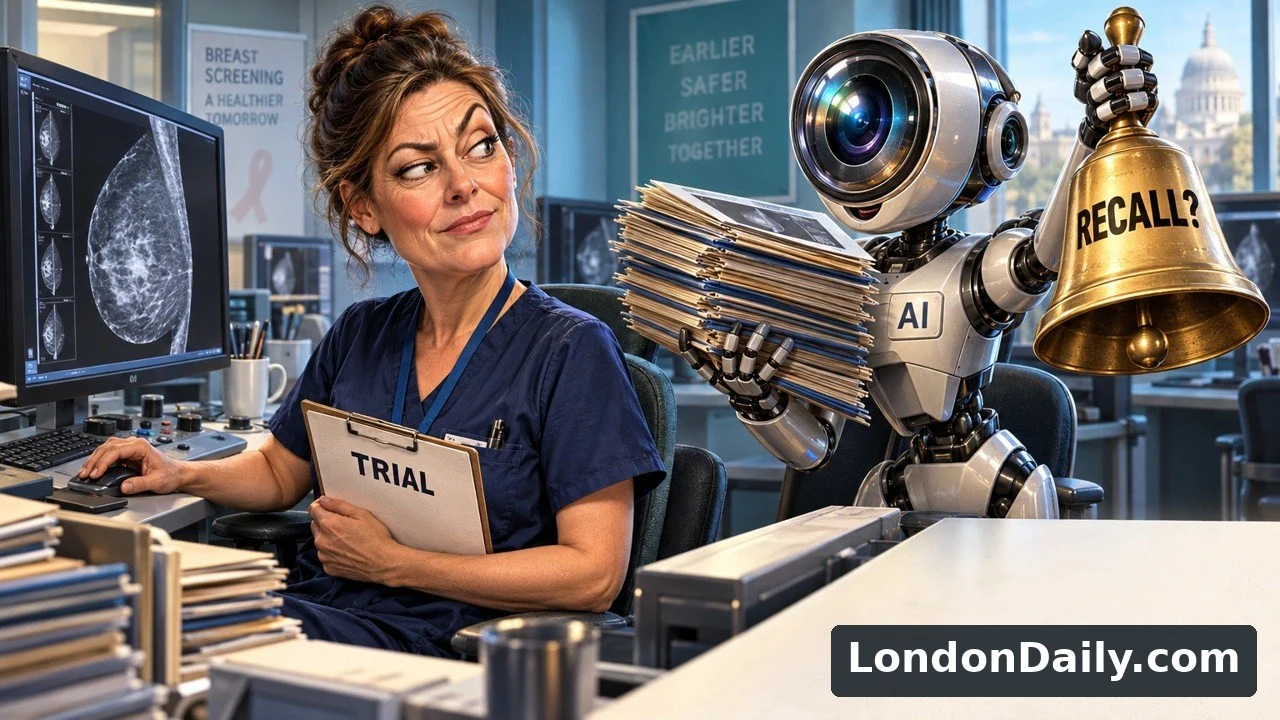
The NHS is testing whether artificial intelligence can replace one of the two radiologists who assess breast screening images, in a £10m trial involving 660,000 women across 30 British facilities.
Recruitment has begun at Cambridge University Hospitals for EDITH, or Early Detection using Information Technology in Health, the world’s largest AI breast cancer screening study. It will examine whether the technology can identify cancers earlier while easing pressure on specialists, without generating excessive false alarms.
Women aged 50 to 70 are offered mammograms every three years, with images normally checked by two radiologists. In one trial group, a radiologist and AI will each assess the scans.
Another group will have AI assess images first, classifying the likelihood of cancer as high or low. Low-likelihood images will receive one human expert’s review; high-likelihood images will be checked by two experts before a decision on recalling the woman for further tests. The NHS says every image will be examined by at least one expert. Women attending participating centres may be included but can opt out.
Professor Fiona Gilbert, of the University of Cambridge’s radiology department, said the technology appeared to identify “more subtle features that the radiologists can overlook”. Retrospective testing had found that AI could flag some cancers missed by human readers, she said, potentially identifying disease before women presented with cancer one, two or three years later.
Previous studies suggest AI could improve detection. But patient guidance from the University of Warwick, which leads the study, warns that it “may mean more women are recalled for additional testing than if AI is not used”. False positives could therefore expose more women to unnecessary investigations.
The potential workload benefit is substantial: about one in three radiologist posts nationally is vacant, contributing to delays in breast cancer diagnosis and treatment. Cambridge University Hospitals says fewer than 1 per cent of mammograms show signs of cancer, leaving specialists reviewing large numbers of negative images.
Visiting Addenbrooke’s Hospital in Cambridge for the launch, Yvette Cooper said AI had “huge potential”, but needed safeguards to ensure safe, effective use. She said successful technology could accelerate diagnosis and treatment, improving recovery prospects.
Breast cancer accounts for about 15 per cent of female cancer deaths across Organisation for Economic Co-operation and Development countries. UK mortality has fallen but remains above average: 27 deaths per 100,000 women in 2021, compared with an OECD average of 25 in 2023, figures drawn from different years.
The trial must establish whether earlier detection and reduced reading workloads translate into faster care, rather than being offset by additional follow-up tests.








Join the conversation