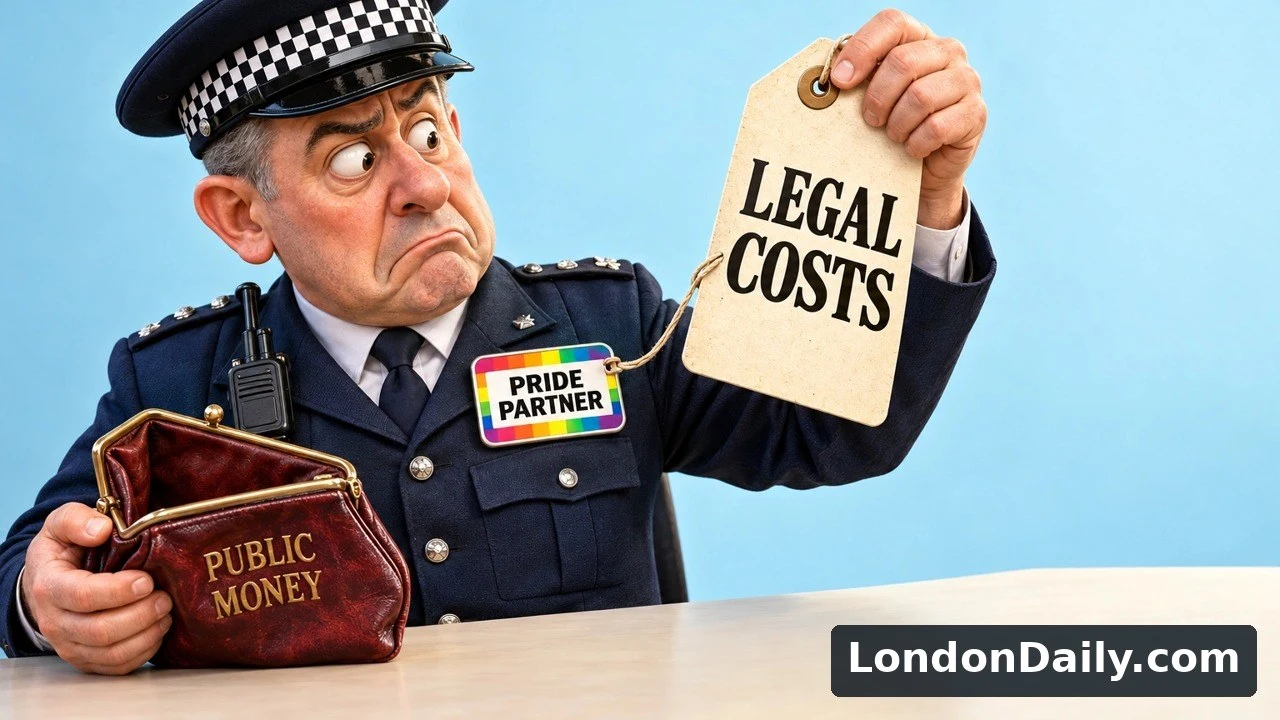
Wiltshire Police used public money to become a ‘Pride Partner’ at a Swindon event, then conceded a legal challenge after accepting that its involvement had created an unintended impression of partiality among gender-critical members of the public.
The force agreed to pay the claimant’s full legal costs shortly before a judicial review was due to be heard at the High Court in Bristol on Monday. The concession came before the hearing, rather than through a contested ruling against Wiltshire Police.
Its contribution to Swindon and Wiltshire Pride, the organising charity, secured a pitch at GWR Park and recognition as a sponsor and ‘Pride Partner’. Officers and staff ran a stall, flew flags and wore T-shirts at the event on 9 August last year. Some volunteers from the force’s LGBTQ+ Staff Support Network and some on-duty colleagues wore police clothing displaying Progress or Transgender flags.
Fair Cop’s challenge argued that supporting Pride compromised the appearance of neutrality when officers might have to handle disputes over transgender rights. Sarah Phillimore, a barrister and the organisation’s co-founder, said gender-critical people could doubt whether they would be policed without fear or favour.
She criticised the force for defending the case almost until the hearing, arguing that it had wasted public money and elevated some communities above others.
Wiltshire Police said its intention had been to support the community and celebrate diversity and inclusion. Chief Constable Catherine Roper accepted the unintended impression created by the activities, while defending engagement as essential to safety and confidence in policing.
“We must protect that engagement while remaining, and being seen to remain, politically and operationally impartial,” she said. That required listening to gender-critical people as well as communities with different viewpoints.
Roper said attendance at community events had more than doubled over the previous 12 months. The force had established an organisational learning process and reviewed its practices to protect visible impartiality without abandoning engagement.
The case follows last year’s challenge to Northumbria Police over officers’ participation in Newcastle’s 2024 Pride march. Mr Justice Linden found that their public support for transgender rights was likely to create an impression that they might not handle related disputes fairly. That decision was not binding on other forces.
Days before Wiltshire’s concession, Home Secretary Shabana Mahmood called for “clear, comprehensive guidance” on impartiality and urged police to “leave politics to the politicians”. She said examples of differential treatment had allowed others to promote what she called the false idea of two-tier policing.
The practical distinction is between engaging with communities and appearing to endorse a position in a contentious debate. Roper maintains that meaningful engagement and visible impartiality are compatible; the force’s revised approach must preserve both.








Join the conversation