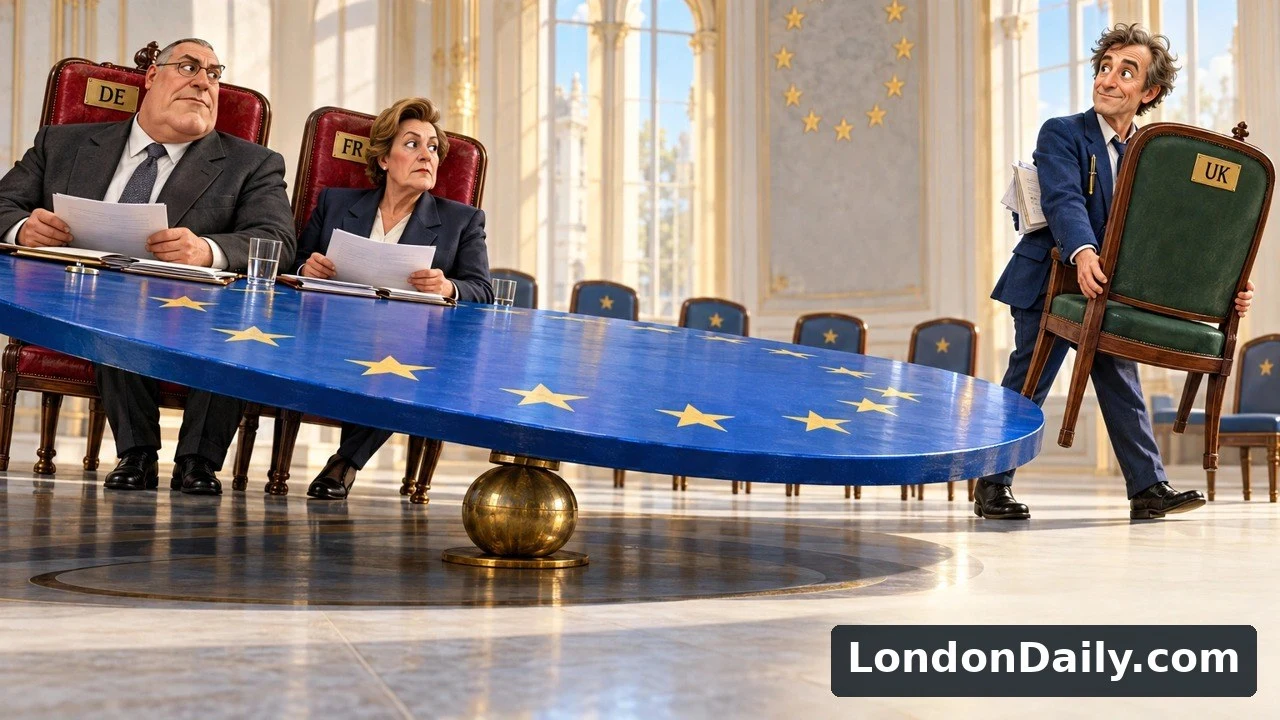
Klaus Brinkbäumer has called for Britain to rejoin the European Union, arguing that its return would strengthen the bloc internationally and make it less dominated by Germany and France.
The German writer and former executive editor at Der Spiegel presents British scepticism, often a source of friction during membership, as something Europe now lacks. His appeal combines a strategic case for British power with a cultural argument for its humour, debating traditions and willingness to challenge Brussels.
In a world dominated by the United States, China and Russia, he argues, the EU is weaker without Britain’s nuclear arsenal, United Nations Security Council seat, financial strength and cultural influence. He believes British membership would make the union more pluralistic, pragmatic, liberal and Atlanticist, as well as more rebellious.
Brinkbäumer describes a reversal of the expectation, voiced after the 2016 leave vote, that the EU would work more efficiently without British demands and threats. He now regards that troublesome presence as a useful counterweight rather than merely an impediment.
He says German diplomats he spoke to repeatedly expressed hope that Andy Burnham would succeed in taking Britain back into the EU. But their encouragement came with political caution: overt German advice to British voters, they feared, could help Nigel Farage.
An unnamed German cabinet member, whom Brinkbäumer describes as preparing for a Friday EU–UK summit at which Burnham would lead a negotiating delegation, said: “We would rather stay silent in Berlin. But if the Brits were back, I’d be delighted.” These private expressions of support do not amount to agreed accession terms.
The practical questions remain substantial. Brinkbäumer raises German concerns about renewed British demands for opt-outs and exceptions, while describing early talks on food, drink and youth mobility as having gone well. He identifies four possibilities outlined by Burnham: the status quo, a customs union, the single market and full re-entry. Freedom of movement, he suggests, would be central to deciding how much integration Britain wanted.
There is also the risk of another departure. During a discussion in Lübeck, London-based German writer Annette Dittert acknowledged that future stability could not be guaranteed, but argued that time together would still be preferable to separation.
Brinkbäumer’s invitation is therefore not to recover an unchanged arrangement. His case rests on negotiating a new one, with both Britain and the EU having changed.








Join the conversation