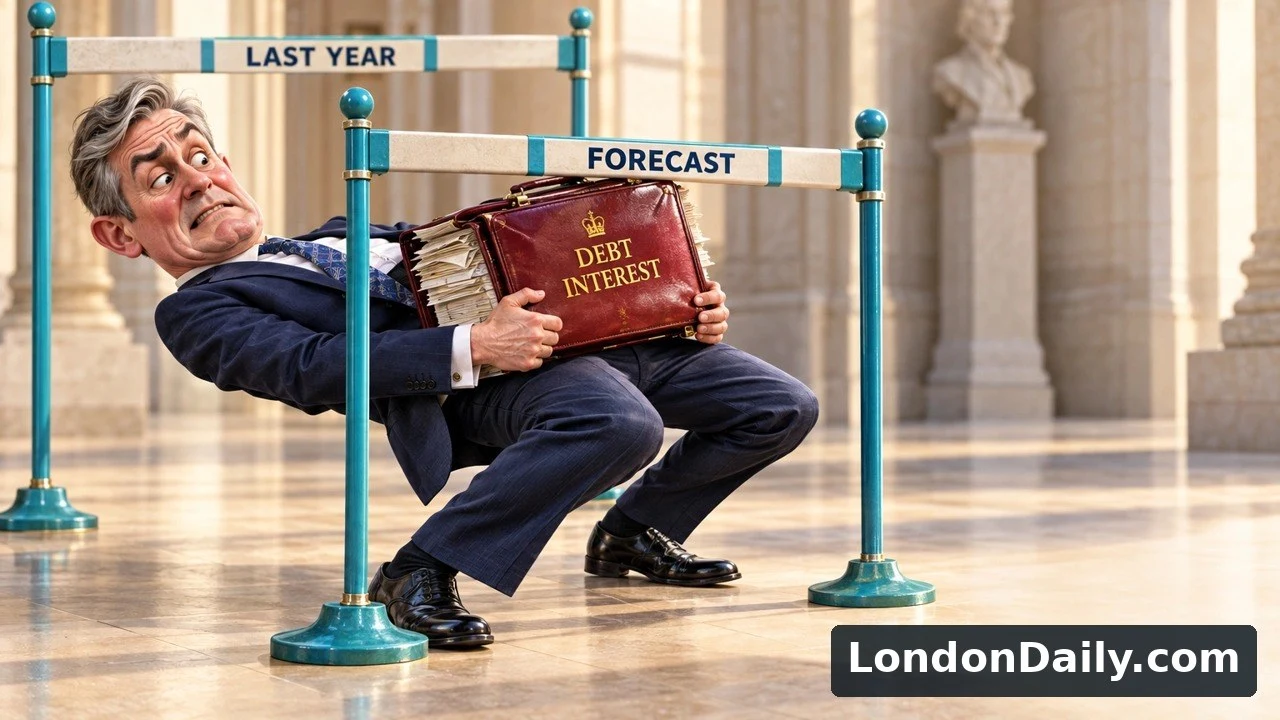
Britain borrowed £3.3bn more than forecast in the financial year to October as debt servicing costs reached their highest October level on record, despite a fall in borrowing compared with last year.
Borrowing totalled £111.3bn, exceeding the Office for Budget Responsibility’s forecast. Yet Office for National Statistics figures showed it was £7.3bn, or 6.1%, lower than in the same period a year earlier. The distinction matters: borrowing has fallen, but not as far as expected.
October alone brought a deterioration. Borrowing reached £17bn, up £800m, or 5.2%, on the same month last year. Debt servicing costs rose by just over a third to £11.2bn, the highest October figure since monthly records began in 1997.
National debt, which passed £3tn for the first time in September, climbed to a fresh high of £3.06tn, equivalent to 95.8% of gross domestic product. Government borrowing costs have risen sharply in recent months as the war in Iran fuels inflation and higher interest rates increase the debt bill.
The figures add pressure on Andy Burnham and Chancellor John Healey, who had already faced criticism that last month’s Budget did nothing for businesses or the economy.
Emma Reynolds, chief secretary to the Treasury, defended the government’s approach, saying fiscal discipline underpinned its decisions and describing Britain as resilient despite the conflict’s global impact.
“This year we’ve cut borrowing faster than any other G20 country,” she said. “Now we’re going to cut waste and bureaucracy by reprioritising spending and making public services more efficient with AI.”
Separate figures published on Friday showed retail sales rose by a better-than-expected 0.7% in October compared with September. Analysts attributed an important part of the supermarket increase to the government’s “Be Ready” campaign, launched in October to encourage households to stock up for a national emergency.
Jacqueline Windsor, head of retail at PwC UK, said shoppers had bought tins and other long-life provisions in response, helping grocers achieve their strongest monthly sales growth this year. That explanation gives the retail improvement a particular context: preparations for an emergency helped lift supermarket spending.








Join the conversation