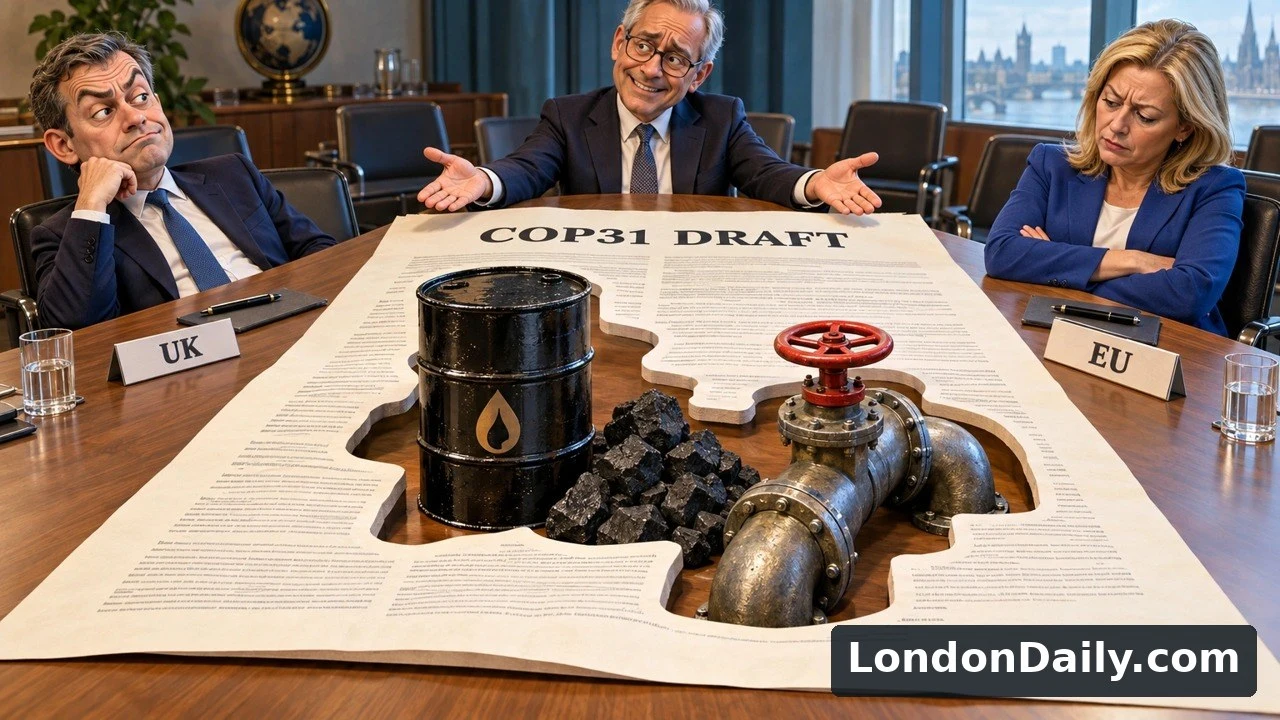
The UK and European Union rejected a Cop31 draft agreement that omitted fossil fuels and any call to move away from coal, oil and gas, as the Antalya climate summit ended without a final deal for the first time since 2009.
The two-week meeting ran more than 44 hours beyond its scheduled conclusion. Its breakdown exposed the difficulty of securing near-unanimous agreement among more than 190 nations when governments disagree over the direction of climate action.
Prime Minister Andy Burnham told the Commons: “This moment, after the summer the world saw, called for ambition.” He added: “Instead, we were presented with a deal taking backwards steps on climate and we could not support it.”
Britain joined other countries in objecting to the omission of fossil fuels, warning in an official statement that the draft “moves us backwards on the science when we must accelerate implementation”. The EU’s representative accused oil states of having “hijacked” the negotiations.
The dispute left ministers defending the international process while rejecting its proposed outcome. First Secretary of State Louise Haigh said earlier on Monday that the United Nations’ Cop forum was “the only one available” to achieve major international climate goals, despite describing it as “a very flawed process”. She said reform would be desirable “in an ideal world”, citing profound ideological differences between participating nations.
Energy Secretary Miatta Fahnbulleh said the summit had sought to confront the prospect of global warming overshooting 1.5C, arguing that greater urgency and ambition were needed. She expressed disappointment that efforts to build consensus had failed.
The talks followed western Europe’s warmest summer on record, surpassing 2003, according to scientists at the EU’s Copernicus Climate Change Service. Parts of England remained in drought throughout the autumn. Last week’s Environment Agency report recorded severe drought in parts of Cornwall, Devon, Dorset, Somerset, East Sussex and West Sussex, with England’s reservoir storage 21.5% below the seasonal average.
Burnham said his attendance and speech at Cop31 demonstrated Britain’s commitment to its 2050 target. He argued that clean, homegrown power could address climate change and living costs while strengthening energy independence and national security.
Britain will now consider how to use its G20 presidency next year to rebuild global climate leadership. The immediate diplomatic task remains securing support for the ambition that the Antalya draft failed to command.








Join the conversation