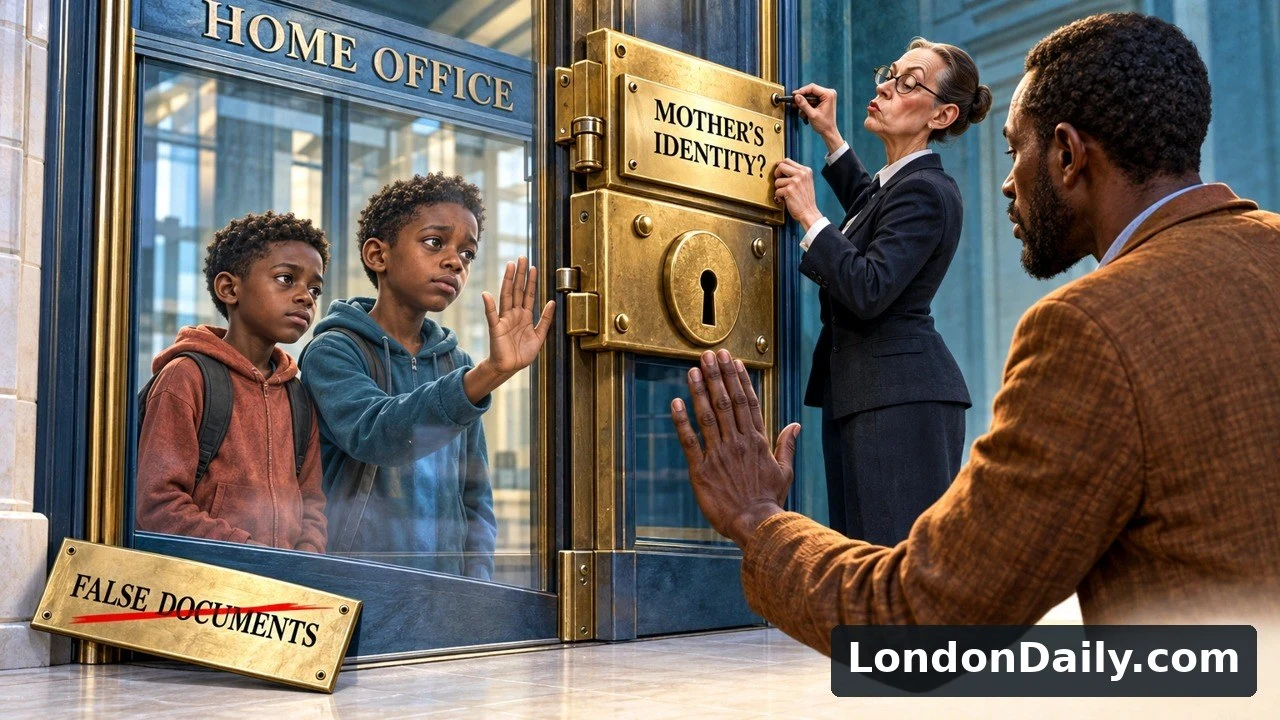
Two boys remain separated from their father in Britain after the Home Office withdrew its accusation that their birth certificates were false, then refused a further application over questions about their deceased mother’s identity.
The children, aged 11 and 12, are being cared for by a relative in Ghana. Their father, a Ghanaian cleaning manager in Corby, Northamptonshire, has launched a judicial review alleging a series of “irrational” decisions. The family has spent more than a year fighting to reunite.
The boys’ mother died of liver failure in 2019, when the family lived together in Ghana. Their father remarried two years later. He and his wife, a Ghanaian care worker, moved to Britain in December 2023 on skilled worker and dependant visas, intending to bring the boys as soon as possible. The children stayed with relatives and attended a boarding school in the Ashanti region.
The couple applied for the boys to join them in March 2025. Officials refused the application because each child had two birth certificates bearing different reference numbers, which they regarded as evidence of false documents. The couple were also warned that their own visas would be cancelled.
Their lawyers supplied DNA tests establishing paternity and testimony from Ghanaian authorities explaining the discrepancies. They successfully argued that Ghana commonly issues one certificate during a child’s first year and another thereafter. The Home Office conceded the point and reinstated the couple’s visas, but subsequently said the late mother’s identity had not been sufficiently established, rejecting a second application.
Resolving the original document dispute therefore restored the adults’ permission to remain without securing the children’s admission.
“They are vulnerable, they’re grieving their mother, and they are currently facing life without their father, too,” the father said. He accepted that civil servants must carry out checks but argued that applicants meeting the requirements and providing evidence should not be refused.
Amar Ali, director of the family’s solicitors, Reiss Edwards, said the Home Office had agreed to decide the case by 1 December. A subsequent standard email warned of delays of 12 months or more.
Ali described the system as unfair to legitimate applicants and said the department had ultimately paid the family’s legal costs, at taxpayers’ expense. He argued that families faced prolonged separation without an easy route to challenge decisions unless they obtained legal support.
The Home Office declined to comment. The dispute over the mother’s identity remains unresolved, with no settled timetable for the boys to join their father.








Join the conversation