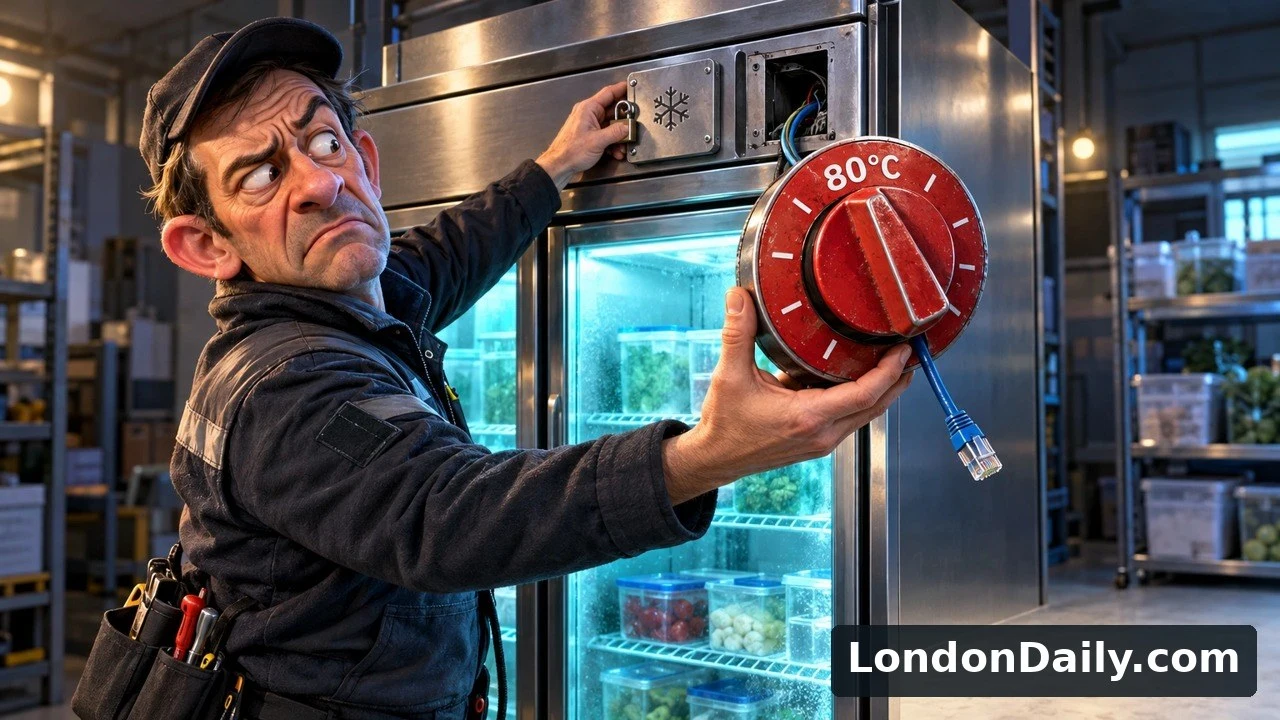
Tens of thousands of commercial refrigeration units across Britain have been secured in a confidential operation after hackers exploited weaknesses in European systems to raise temperatures as high as 80C, spoiling large quantities of food.
Technical teams spent weeks fixing software flaws and weak passwords affecting fridges and freezers at supermarkets, restaurants and petrol stations. The work was kept secret to prevent attackers exploiting the vulnerabilities before repairs were complete. Researchers advised supermarkets to disconnect affected equipment from the internet while fixes were made.
Ken Munroe, founder of PenTest Partners, which helped tackle the threat, said password weaknesses had provided an entry point in Europe and that researchers had found a similar, related problem in controls widely used in Britain. He said UK supermarkets now faced a “hugely reduced risk”.
The consequences extend beyond disrupted computer systems: remote access allowed attackers to alter refrigeration temperatures and destroy stock. A handful of British food suppliers have reported temperatures being raised to dangerous levels. France’s blood bank was also hacked.
European targets included Ikea and hundreds of French grocery shops. At the end of October, dozens of shops in Belgium, Sweden, Ireland, Luxembourg and Estonia were targeted, with food losses of at least €100,000 (£88,000). One Swedish shop manager said his fridges reached 55C.
Danish manufacturer Danfoss, whose equipment was affected in France, said most affected units were either legacy systems or newer machines running outdated software. It also supplies Tesco and Sainsbury’s; that supplier relationship does not establish that either chain suffered an attack.
Responsibility remains disputed. Some researchers suggested the attacks bore Russian hallmarks. Two pro-Russian groups, NoName057(16) and Z-Pentest, claimed responsibility on Telegram, but other experts questioned those claims, pointing to the groups’ usual involvement in more opportunistic attacks. The Kremlin called suggestions of Russian-backed involvement “absurd”.
Britain’s cyber security chiefs alerted retailers after European officials described the attacks as a threat to food security. The National Cyber Security Centre is understood to be examining other food and retail technologies, while security agencies were believed to be contacting smaller businesses whose fridges might remain exposed.
Munroe also warned about water, sewage and power systems, some 40 to 60 years old, potentially vulnerable to modern hacking. That is a warning about wider exposure, not evidence that those systems suffered the same attacks. For refrigeration, the remaining task is to reach businesses whose equipment has not yet been secured.








Join the conversation