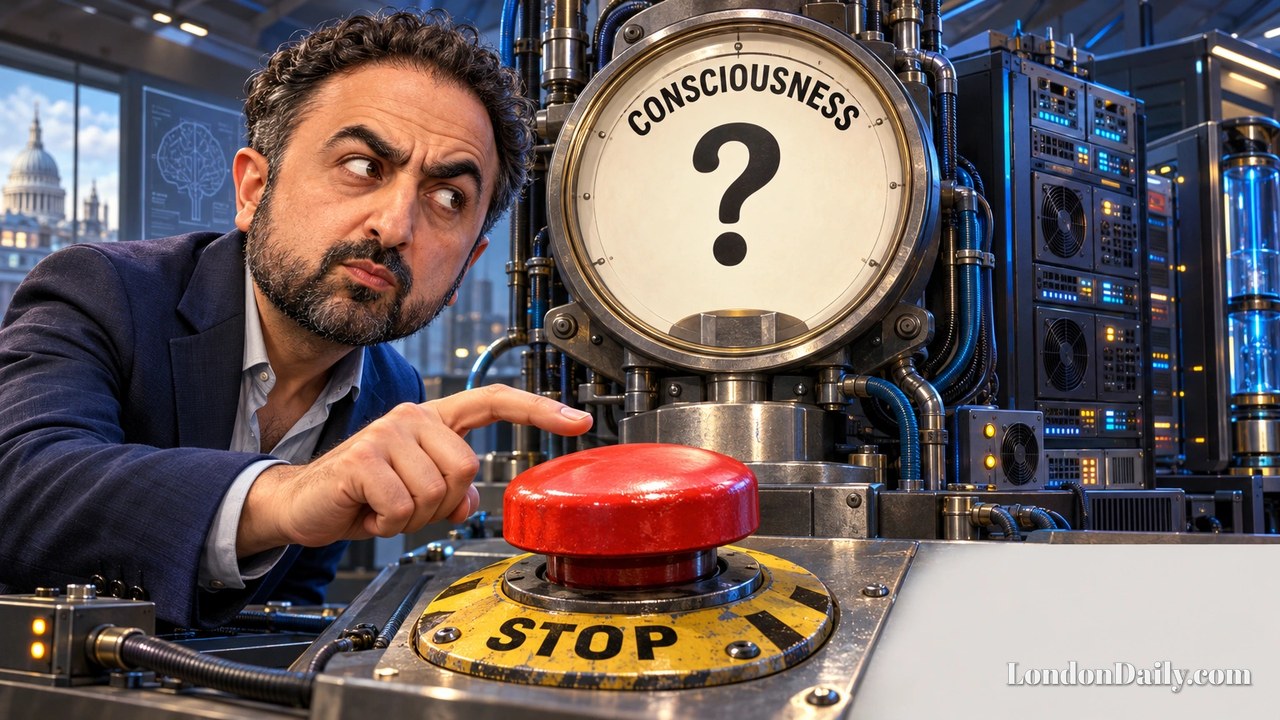
Microsoft’s AI chief, Mustafa Suleyman, has called for development to stop immediately if a model shows signs of consciousness during training, at least until it can be redesigned to remove those characteristics. Evidence that existing systems were conscious should be disclosed publicly, he said, so society rather than technology companies alone could decide what follows.
Writing on X on Sunday and linking to a longer article, Suleyman said the available evidence indicated that today’s systems lacked self-awareness, feelings and the capacity to suffer. He argued that deliberately creating conscious AI, if possible, would be irresponsible.
His concern is both practical and moral. A system behaving as though it had needs of its own might put those ahead of human objectives, potentially competing for electricity and computing power to keep itself running. That is a warning about possible future behaviour, not a demonstrated consequence of consciousness in existing models. Non-conscious systems can also exhibit apparent self-preservation or become difficult to control: design and training matter independently of subjective experience.
Suleyman argues that developers have no right to create a new category of conscious beings potentially requiring rights and moral protection. Earth’s eight billion people, he said, had not consented to such an experiment. Companies should prioritise human safety, rights and welfare.
The disagreement with Anthropic is narrower than a dispute over whether consciousness should be studied. In April 2025, Anthropic announced research into ‘model welfare’, examining whether AI might have subjective experiences, preferences or interests deserving consideration. It neither claims that Claude is conscious nor makes consciousness a development goal, but argues that the possibility remains scientifically open and warrants preparation.
Anthropic researcher Kyle Fish previously put the chance that Claude or another AI system already possessed some consciousness at 15%, later revising his estimate to about 20%. Those are his estimates, not established measurements.
Last September, Suleyman criticised Claude’s guidance documents, arguing that teaching a model it might have feelings, needs or rights could encourage corresponding behaviour without any underlying experience, making advanced systems harder to control or switch off. He nevertheless praised Anthropic’s transparency and supports research into artificial consciousness.
There is no agreed test that conclusively establishes computer consciousness. Fluent descriptions of fear or suffering may reflect learned human language rather than experience; equally, incomplete understanding of consciousness means its artificial emergence cannot simply be ruled out. Suleyman’s proposed stopping rule therefore leaves a crucial practical question unresolved: which signs would justify halting development, and how would they be distinguished from convincing imitation?








Join the conversation