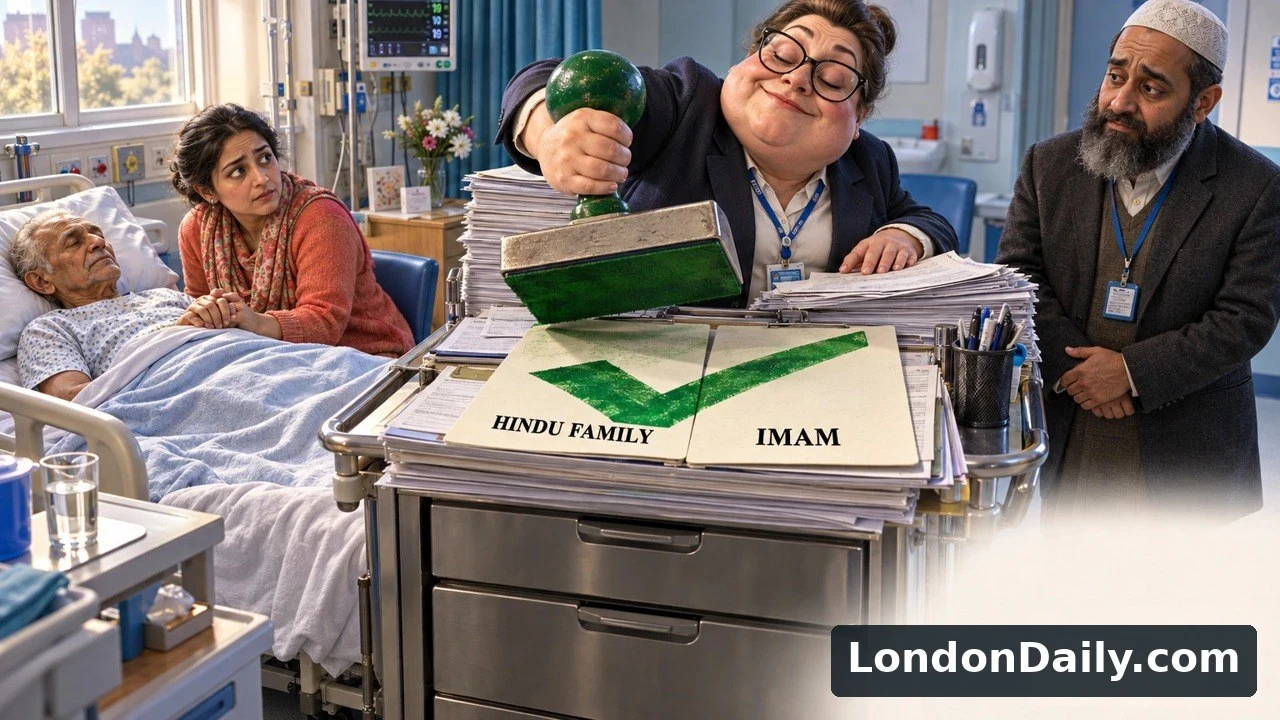
A hospital sent an imam to a dying man’s bedside despite his family being Hindu, his daughter told researchers examining how minority ethnic communities experience end-of-life care and bereavement support.
The study, published earlier this year by King’s College London and the University of Sheffield, found that people from minority ethnic backgrounds often struggled to obtain support appropriate to their culture and religion.
Co-author Sabrina Bajwah said participants described both direct racism and structural inequalities: providing identical services could leave different needs unmet. The distinction matters because equal access to a service does not necessarily mean that service offers appropriate help.
Separate research published last year by the NHS Race and Health Observatory found what it described as an “alarming” lack of trust among some ethnic minority groups. Just over half of its participants said they had experienced discrimination from healthcare providers. That finding concerns those surveyed, rather than establishing a rate across all minority ethnic communities.
For Pravin Navekar, from Leicester, recognition of his wife Gita’s beliefs was sometimes missing during her hospital care. He said Christmas brought activities and attention, while Diwali could pass without acknowledgement.
“It's about recognising a person as a whole person, rather than somebody in a bed who needs care.”
Gita experienced chronic back and leg pain from 2010. After repeated GP visits over two years brought pain relief but no further investigations, the couple paid for a private consultation. A subsequent CT scan identified a rare pelvic cancer, synovial sarcoma. She died in April 2021.
Bereavement support can also depend on community connections. Marwa Soliman was pregnant with her third child and newly arrived in Nottingham from Egypt when her father died in Egypt in 2013. She described feeling alone and afraid.
Six years later, she founded Heya, meaning “she” in Arabic, for Muslim, Arabic-speaking women. It has grown from 50 members to more than 700, offering condolences, shared Quran readings and visits. After three further close family deaths, including her mother’s, Soliman said food, calls and company transformed her experience. She wants more research, clearer referral routes and funding for groups facing shortages.
The Department of Health and Social Care, which commissioned the study, said ethnicity should never obstruct bereavement support and that it would consider the findings in future policymaking.
Sheffield co-author Catriona Mayland urged services to build partnerships with existing community groups rather than replace them. The practical challenge is connecting those networks to formal care without overlooking the support they already provide.








Join the conversation