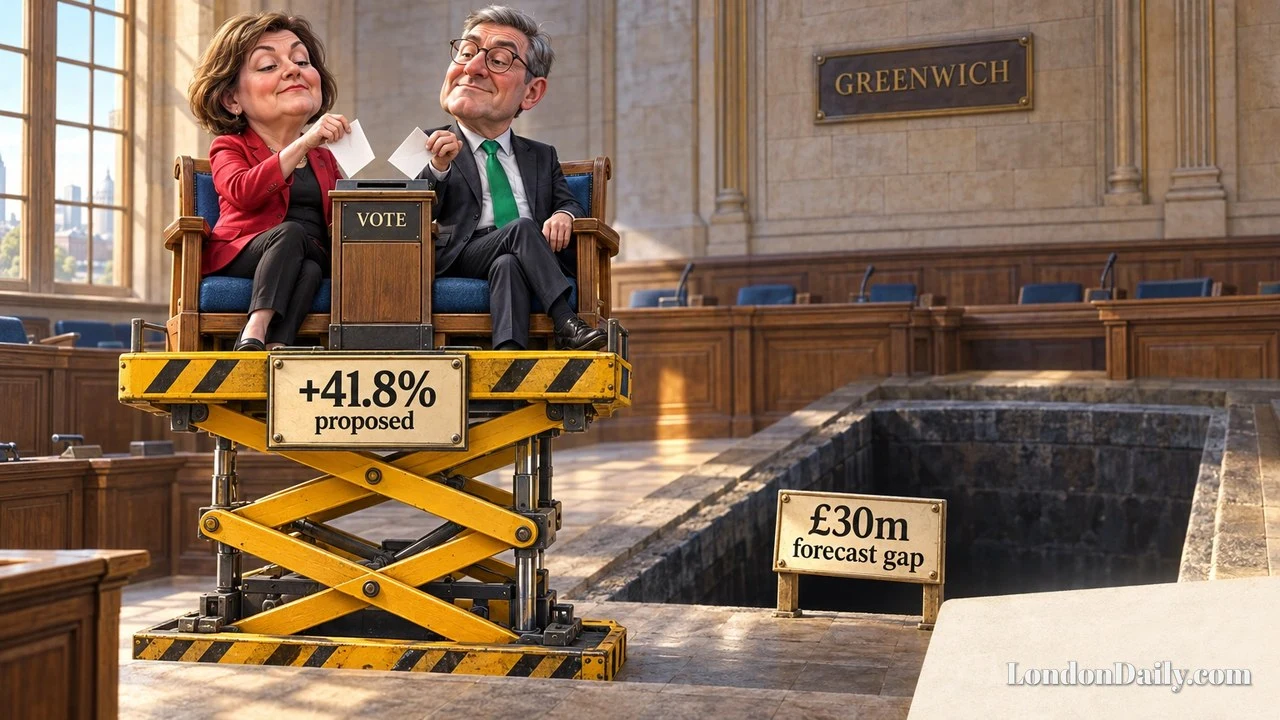
Greenwich councillors are to vote on increasing their basic annual allowance by almost 42 per cent while the south London borough faces a forecast £30 million budget gap. The wider package, including higher payments for senior roles, could cost the authority up to £800,000 a year.
The Labour administration and opposition Greens support the proposals, arguing that inadequate allowances can put public office beyond the reach of people who cannot afford the financial sacrifice. Conservatives say the increases are unjustifiable given the council’s financial pressures.
All 55 councillors receive the basic allowance, which would rise from £11,906 to £16,882, an increase of 41.8 per cent. The change would bring Greenwich closer to recommendations from the London Councils Independent Remuneration Panel. Its review concluded that councillors’ work had become increasingly demanding and that relatively low payments could discourage candidates from less affluent backgrounds.
Council leader Anthony Okereke acknowledged that the proposal would be unpopular but defended it in a blog post. He said some councillors were struggling financially and should not have to “get into debt” to represent their communities.
“We should want the best looking out for our neighbourhoods. We should want to attract talent,” he wrote.
Okereke’s own total annual allowance would rise from £68,506 to £82,562. Cabinet members and opposition leaders would also receive substantial increases. Green leader Tamasin Rhymes would receive 57.7 per cent more, while deputy Green leader Stewart Christie’s annual remuneration would almost double following the reinstatement of a special responsibility allowance.
Christie said councillors ideally should not decide their own pay. Nevertheless, he argued that higher allowances could remove barriers to standing for election, make the council more representative and enable cabinet members to devote more time to their duties.
Conservative group leader Charlie Davis said the council’s own report identified a £30 million shortfall next year. “This is a reckless use of council taxpayers’ money and shows how this administration has got its priorities completely wrong,” he said.
The disagreement concerns both affordability and access to elected office: supporters see allowances as a means of widening participation, while opponents challenge the spending priority. Labour and the Greens hold 48 of the council’s 55 seats, so approval is expected when the proposals reach full council, though the vote has yet to take place.








Join the conversation