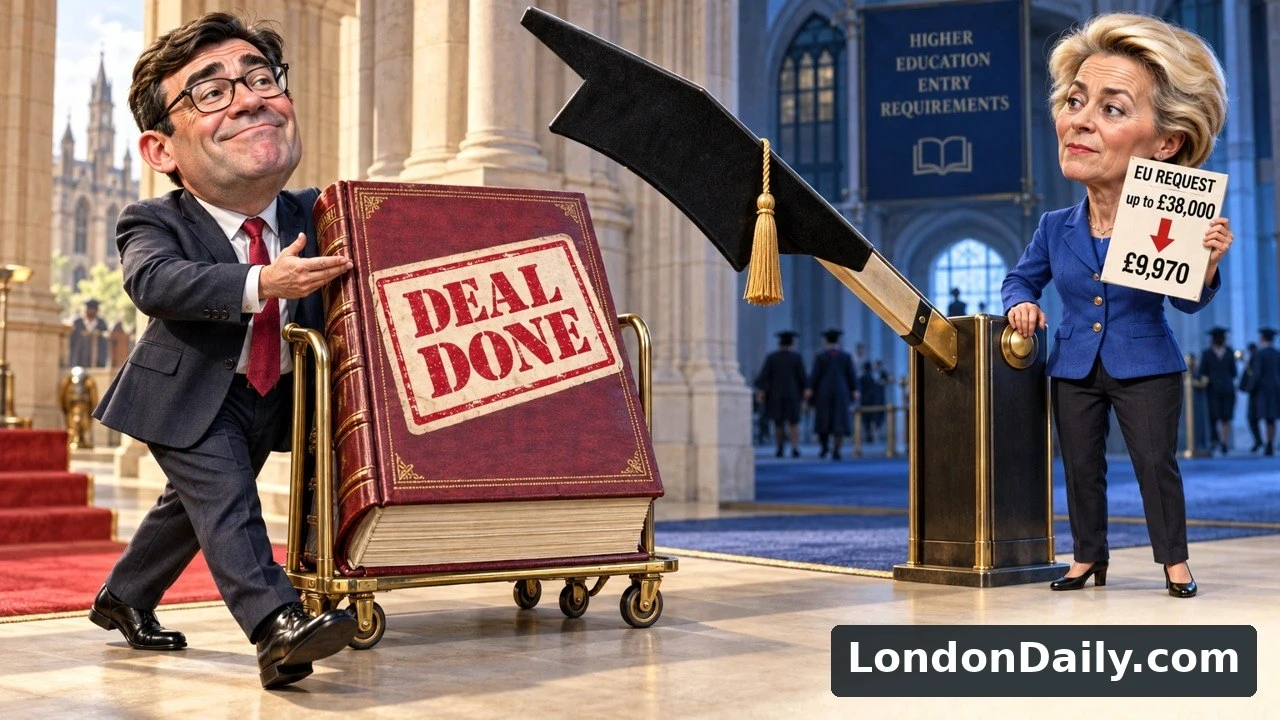
EU demands to cut university fees for students from member states threaten to hold up implementation of Prime Minister Andy Burnham’s Brussels agreement, despite Britain’s insistence that negotiations are complete and start dates agreed.
The dispute concerns reducing annual tuition charges from up to £38,000 to the £9,970 paid by domestic undergraduates. Britain has resisted because of the financial impact on universities. A six-month deadline has been set for fees talks, with other agreements potentially delayed until a settlement is reached.
An EU official said the agreements must “come into force in a balanced way”. The British government offered a different account: “The deal is done – negotiations have concluded.” A spokesman said implementation dates would appear in a forthcoming joint statement, legal processes would follow and talks would continue in some areas.
The distinction matters: agreement on the package does not settle whether unresolved fees negotiations could obstruct its introduction.
Burnham is in Brussels for talks with European Commission president Ursula von der Leyen and European Council president Antonio Costa. Chancellor John Healey joined him for a meeting with business leaders.
The package covers food and agricultural exports, emissions trading and a youth mobility scheme that could allow 100,000 young Europeans to work temporarily in Britain. Burnham cited Treasury analysis estimating a boost of up to 0.5% of gross domestic product, calling it “The single biggest growth intervention in this Parliament.”
The government estimates that removing certificates and border checks on food and agricultural trade could add up to £5.1 billion annually to the economy. Officials claim linking emissions trading systems could add £3.8 billion a year while protecting British exporters from EU carbon taxes. These are projected benefits, not realised gains.
The agricultural agreement would align Britain with EU sanitary and phytosanitary rules covering goods such as food and plants from March 2028. Reform UK leader Nigel Farage acknowledged easier exporting but argued that surrendering regulatory control amounted to rejoining part of the single market. He accused Burnham of “betrayal”.
Shadow environment secretary Victoria Atkins argued that farmers would face rules Britain could neither vote on nor veto, benefiting subsidised foreign competitors at taxpayers’ expense. Burnham’s case is that closer co-operation would cut costs, restrain supermarket prices and create opportunities.
Expected commitments also cover irregular migration, supply-chain security and a digital partnership. Burnham called a possible Channel action plan a “really big deal”.
He plans discussions with Brussels followed by a national conversation, with options outlined later this year, potentially including full EU membership. Major changes would wait until after a general election: he remains committed to the 2024 Labour manifesto’s exclusions of the customs union, single market and free movement.








Join the conversation