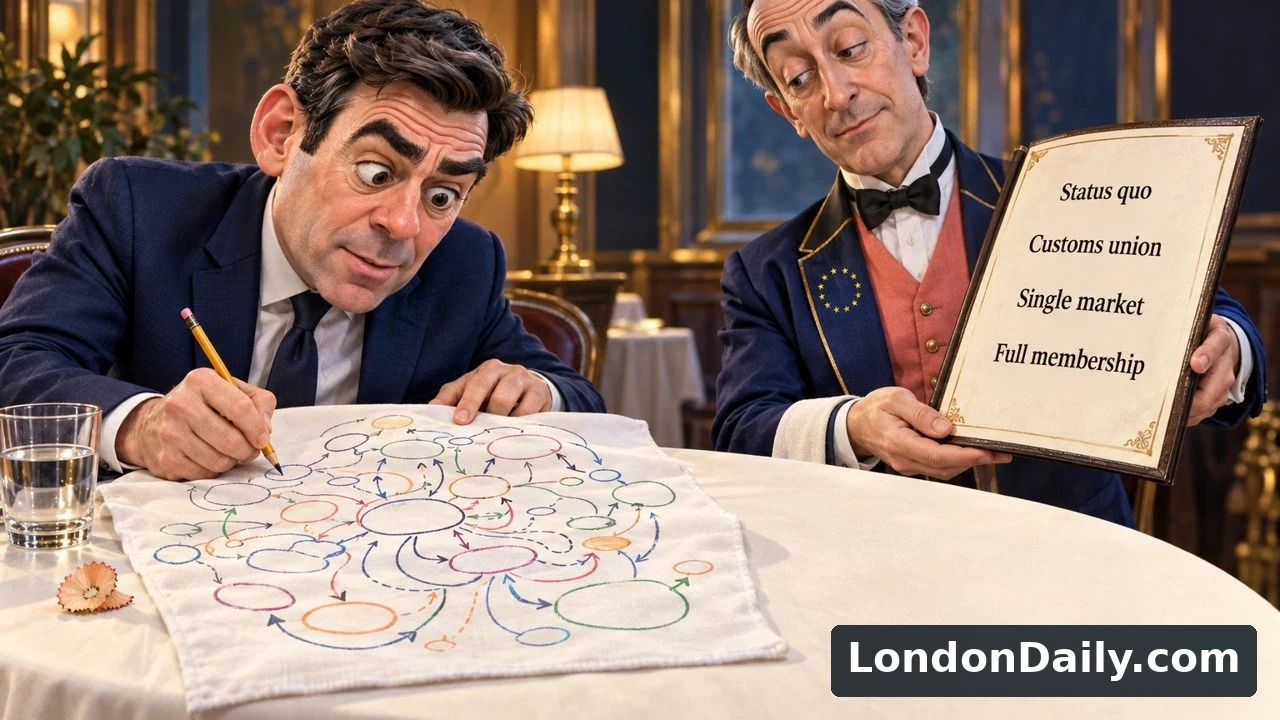
Andy Burnham wants to explore the future of Britain’s relationship with the European Union, but EU sources regard his proposed ‘brainstorm’ as ordinary diplomacy rather than a structured process towards rejoining.
The distinction matters because Burnham has publicly argued that incremental agreements can take the UK only so far. EU sources, meanwhile, see a limited set of established choices rather than a new negotiating framework.
“I don't think there are many options. And they are clear. The status quo. The customs union. The single market. And full membership,” one EU figure said.
Both Burnham and EU sources expect the discussions to take place through existing contacts, without additional meetings or bespoke talks designed to reach a conclusion. As one EU source put it: “We don't need a template. It will be part of the regular discussion.”
The immediate business is more concrete. On Thursday, the government is due to publish its European Partnerships Bill, the legislation needed to implement the latest summit agreements in the UK. Their legal text is also expected later this week, allowing closer scrutiny of the obligations involved.
One potentially consequential provision concerns reversal. If Britain abandons the food export changes within the next 10 years, Brussels is expected to charge London for reinstalling checkpoints that the agreement will make unnecessary. The published wording will therefore matter to future governments as well as the present one.
Other negotiations remain open. The EU wants a tuition-fee agreement within six months under which EU students would pay no more at UK universities than British students, with reciprocal treatment for UK students elsewhere in Europe. Both sides believe agreement is within reach.
Senior Whitehall figures are also encouraged by EU willingness to include Britain in its ‘Made in Europe’ plan to protect European industry from China. Cooperation on the EU’s common electricity market remains under discussion.
These negotiations offer specific possibilities for students, industry and energy cooperation. They do not, by themselves, resolve Burnham’s broader contention: whether a succession of limited agreements can deliver the relationship Britain needs.








Join the conversation