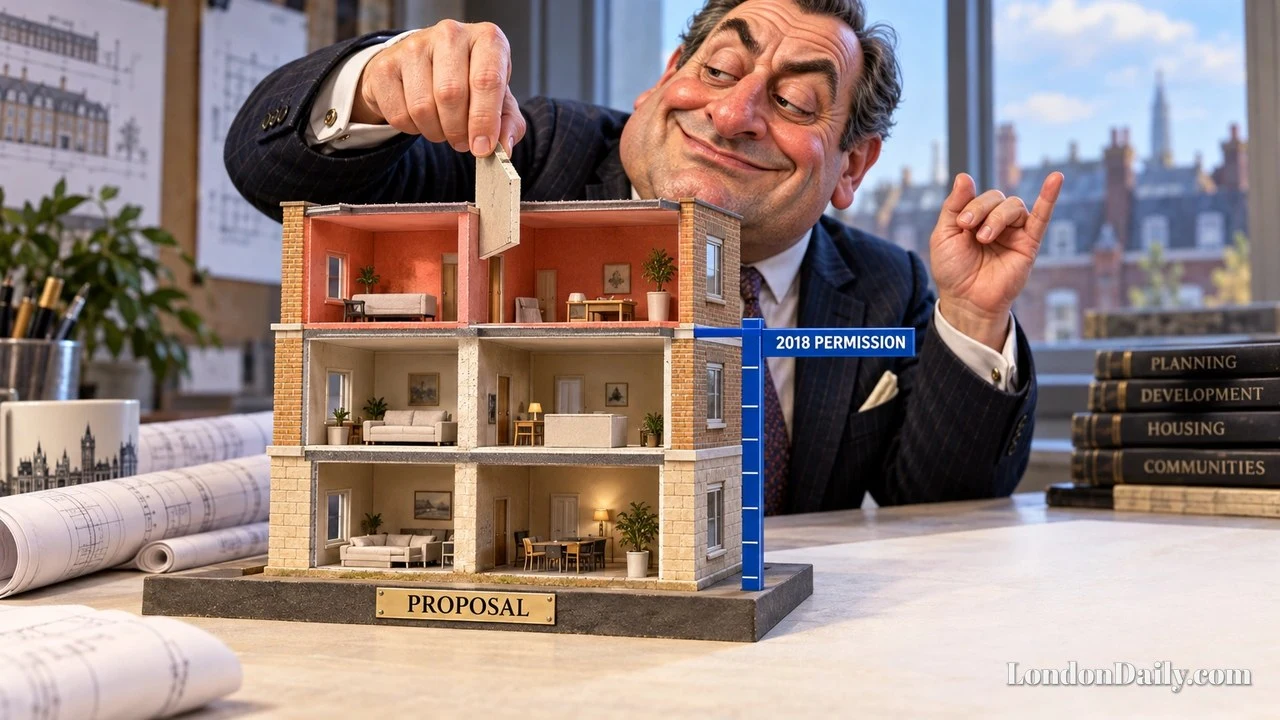
A developer who built three storeys and four homes despite having permission for only two storeys and two maisonettes has submitted a fresh application to keep the larger block in Forest Gate, east London.
Surbjit Aulak wants to retain the building behind 316 Romford Road by keeping its two lower-floor flats and combining two top-floor studios into a one-bedroom flat. His application statement claims planning officers advised him before submission that the new design would be acceptable.
The proposal follows a demolition order, an appeal and the rejection of an earlier conversion scheme. At issue is whether the building can be altered to provide acceptable accommodation while retaining more development than was originally approved.
Newham Council granted permission in 2018 for a two-storey building containing two maisonettes. Aulak instead constructed a three-storey block with a two-bedroom flat on each of the ground and first floors, plus two studios on the top floor.
In 2022, the council issued an enforcement notice ordering demolition. It criticised the building’s poor design and described it as “low-quality housing”.
The notice said: “The undersized accommodation does not provide for an adequate or healthy living environment for existing and future occupants.”
Aulak appealed. A government planning inspector subsequently ruled that demolition was not required, provided the building was altered to bring it into line with the original planning permission. That offered a route to retaining a modified building, rather than approval for what had been built.
In 2024, Aulak sought permission to convert the block into one two-bedroom flat and one four-bedroom maisonette. The council refused that application on similar grounds.
His latest proposal would leave three homes across the existing three storeys. The supporting statement was published online late last month. Aulak’s claim of favourable advice from officers remains distinct from a planning decision: the new application seeks approval for a revised arrangement, with the council’s previous objections concerning both design and living conditions still central to the case.








Join the conversation