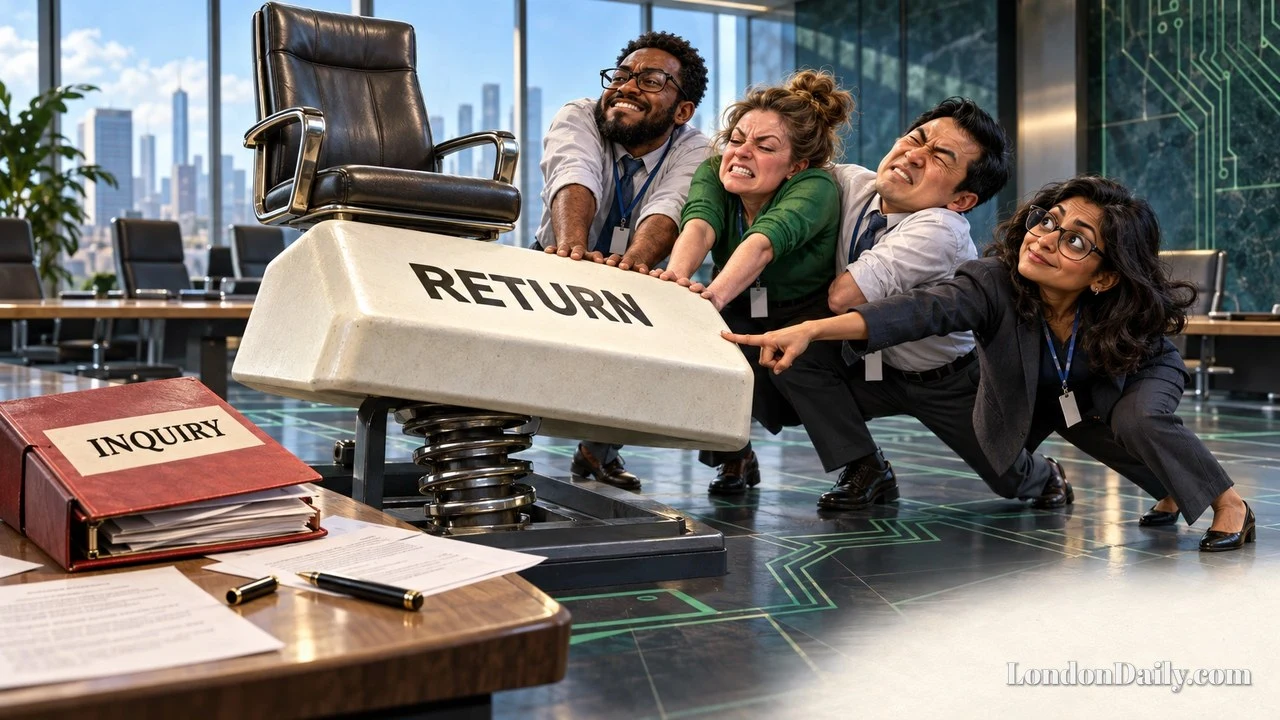
Nvidia employees are demanding Jensen Huang’s return less than a day after the dramatic resignation of the company’s founder and chief executive of 33 years.
As the chip giant struggles to recover from the affairs scandal and suspicions of Chinese espionage that have rocked its leadership, an extraordinary internal campaign is calling for Huang’s reinstatement despite the scandal that prompted his departure.
According to a new report in Wired, an employee posted an appeal to the board on Nvidia’s internal system, asking directors to consider staff views before deciding Huang’s future. The appeal has already attracted more than 1,600 responses, most from employees who want the company’s longstanding leader back.
Reports surrounding his departure have also described how Donald Trump urged Huang to “fight”, their close relationship and the role of “saviour” Huang had adopted. Other coverage has concerned a third affair and Chinese shares held by the woman described as a “spy”.
Some employees are demanding a second chance for Huang, while others question why he had to leave before the internal investigation into his conduct was complete.
“If you believe in the company’s vision, bring back the boss,” one employee wrote anonymously.
Another argued that even admired executives make mistakes: “We are all human and we can all make mistakes. Jensen has done so many good things, and he deserves a second chance.”
‘Nvidia is Nvidia because of Jensen’
The campaign began before Huang’s formal resignation announcement yesterday, Thursday, when a veteran Nvidia engineer posted an appeal to the board through the company’s internal suggestions system. The engineer demanded that directors take employees’ views into account before deciding Huang’s future.
The appeal asked the board to share the investigation’s findings with staff and allow them to express their views on whether Huang should remain chief executive. Instead, the resignation announcement came when the investigation had only just begun, leaving many employees stunned and without clear answers.
One employee went further, emailing the entire workforce to demand transparency over the circumstances of Huang’s departure and declare support for him.
“I stand with Jensen,” the employee wrote. “I support Jensen not because I think he is beyond making mistakes, but because I do not believe the right thing to do is turn our backs on someone whose leadership has meant so much to us.”
Support for Huang has also spread beyond the company’s internal systems. In the hours after his resignation was announced, around 24 Nvidia employees posted messages on LinkedIn expressing confidence in the founder and his leadership.
An employee who asked to remain anonymous told the magazine that many feared Nvidia would struggle to maintain its position without the man who had led it for more than three decades.
“Nvidia is Nvidia because of Jensen,” the employee said.
From affairs to a trillion-dollar crisis
The employee campaign comes at the end of one of the most turbulent weeks in Nvidia’s history.
The scandal began with the disclosure of a relationship between Huang, 63, and Chinese businesswoman Alice Huang, who, according to reports in the American media, was suspected of having links to Beijing’s intelligence services.
Those suspicions quickly turned a personal scandal into a crisis with security and political implications. Nvidia, whose chips sit at the heart of the global artificial intelligence race, is one of the United States’ most strategically important companies. Any concern that sensitive information may have leaked to China causes alarm within the US administration.
Last Sunday, Huang sent employees a letter of apology in which he admitted being unfaithful to his wife, Lori, to whom he has been married for more than four decades.
In the days that followed, however, reports emerged of further alleged relationships, including an affair with Kimberly Powell, a senior executive who reports directly to him, and another relationship with an employee whose name has not been disclosed.
Yesterday, the company announced Huang’s immediate resignation as chief executive, president and board member. It brought to an end an uninterrupted tenure that began with Nvidia’s founding in 1993 and made Huang one of the executives most closely identified with the company he created.
The financial cost of the scandal has also been enormous. According to Wired, Nvidia has lost around $1 trillion in market value since the suspicions began to emerge.
Meanwhile, US government authorities and the FBI have opened investigations, and fears have grown that export restrictions on advanced artificial intelligence chips could be tightened.
Can employees bring Huang back?
Long-serving chief financial officer Colette Kress is temporarily taking Huang’s place, while Harvey Jones has been appointed chairman of the board.
But the question of who will replace Huang permanently is far from straightforward. For 33 years, he was much more than a chief executive: he shaped Nvidia’s corporate culture, led its bet on the graphics processors that became the foundation of the AI revolution, and served as the company’s public face with investors, governments and customers.
That bond helps explain the strength of support for him. To some employees, Huang is not simply a chief executive caught up in a scandal, but the man who built the company almost from nothing and turned it into one of the most important businesses in the world. In their view, those achievements justify at least another chance, even after the mistakes he has admitted.
Employee loyalty, however, does not give staff the authority to override the board’s decisions, particularly when the issues include suspicions concerning US national security and allegations of relationships with employees subordinate to Huang.
Nor does his status as the company’s founder absolve Nvidia of the need to investigate the allegations and act on its findings.
For now, Nvidia and its new chairman have not responded to Wired’s request for comment on the employee campaign. There is no indication that the company is considering reinstating Huang.
One employee trying to rally support for him put it particularly starkly: “If America fails the man who helped build its future, this world does not deserve Jensen Huang.”








Join the conversation