London Daily

Focus on the big picture.
Friday, May 29, 2026

What Trump’s Twitter ban, US Capitol and Hong Kong Legco sieges have in common

What Trump’s Twitter ban, US Capitol and Hong Kong Legco sieges have in common

Statements that lack nuance by people who should know better matter because they crowd out valuable discussion on important issues, such as genuine concerns over ‘big tech’ or flaws in US and Hong Kong democracy.

How stupid do our leaders think we are? Pretty stupid, if recent events are any indication. As an American abroad, the past week has provided a deluge of jaw-dropping news to wake up to – the invasion of Capitol Hill, social media platforms banning US President Donald Trump and so on. The events themselves have been widely discussed, but one aspect overlooked repeatedly is the contempt on display for the news-consuming public.

Otherwise intelligent, capable people have made transparently cynical arguments aimed at advancing their political interests and hoodwinking the rest of us. This cheap talk is overwhelming public discourse, and it falls to us to do something about it.

Take for example Missouri Senator Josh Hawley. After his cheering on the invasion of the Capitol, Simon & Schuster cancelled his upcoming book The Tyranny of Big Tech. He responded by calling the decision “Orwellian” and “a direct assault on the First Amendment”.

A moment’s investigation reveals just how ridiculous this claim is. For those unfamiliar, the First Amendment reads as follows: “Congress shall make no law respecting an establishment of religion, or prohibiting the free exercise thereof; or abridging the freedom of speech, or of the press; or the right of the people peaceably to assemble, and to petition the Government for a redress of grievances.”
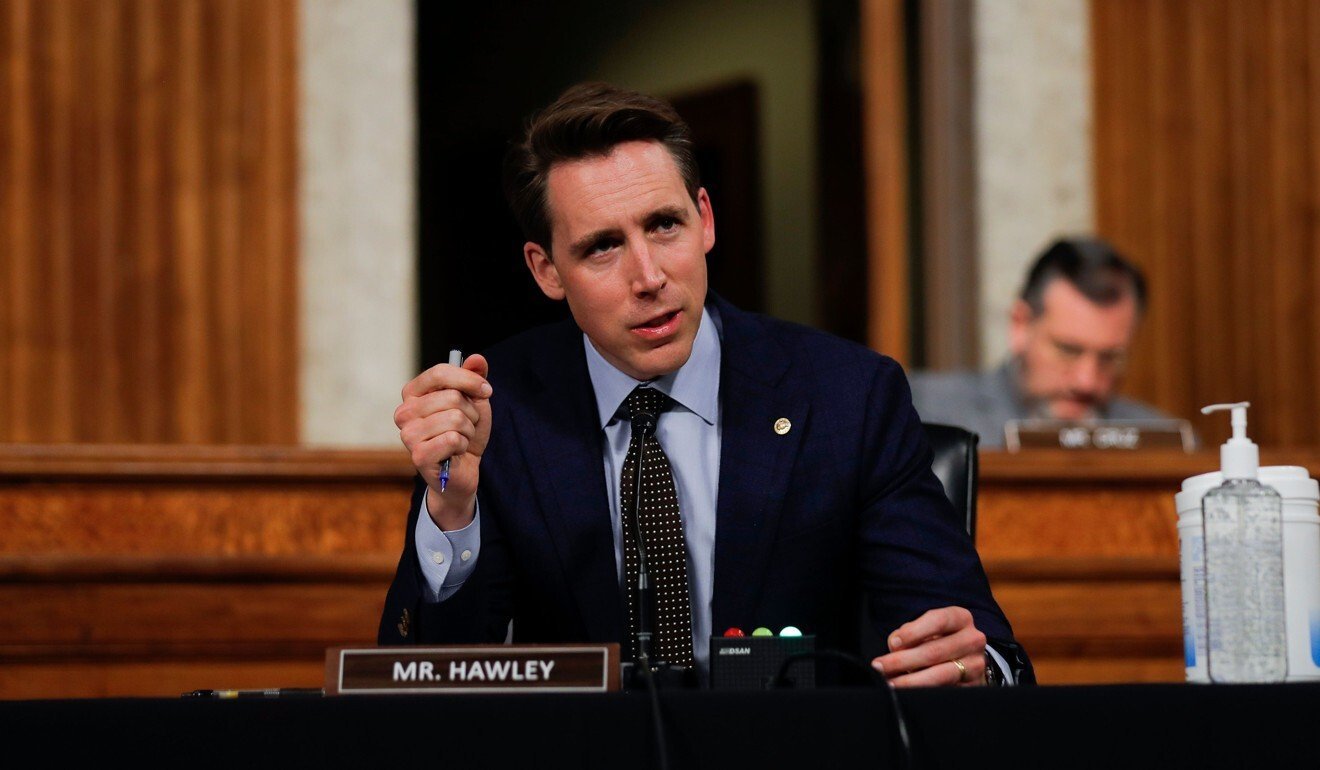

US Senator Josh Hawley speaks during a Senate Judiciary Committee hearing on Capitol Hill in Washington on May 12, 2020.


Hawley graduated from Stanford University and Yale Law School before serving as a law clerk for US Supreme Court Chief Justice John Roberts. He knows the First Amendment only enjoins Congress, not private businesses. Why make such easily debunked arguments? Because he thinks enough of the public will buy it to let him avoid any consequences.

Republican reaction to Trump’s removal from several social media platforms was similarly frothy. Former UN Ambassador Nikki Haley, The Federalist magazine and others denounced the decision with cries of totalitarian, Chinese-style censorship.

Again, consider the argument for a moment. Picture Weibo or WeChat removing Chinese President Xi Jinping. Ridiculous, right? Almost as ridiculous as ostensibly pro-business, small-government conservatives who rage against “socialism” suggesting social media platforms be nationalised to preserve free speech.

Cheap talk is hardly limited to the far side of the Pacific. Chinese state media, government outlets and pro-Beijing commentators wasted little time revelling in the events at the Capitol, gleefully juxtaposing images from Washington with those of Hong Kong pro-democracy protesters storming the Legislative Council building.

Even Singapore Law and Home Affairs Minister K Shanmugam joined in, though he lacked the courage of his mainland counterparts and merely closed his post with the leading question, “What explains the different perspectives?”

Such posts thrive on social media but omit essential context. The Hong Kong protesters acted in defence of democracy – universal suffrage for the legislature and chief executive was one of their five demands. The pro-Trump invaders acted in defiance of democracy, demanding the will of US voters be subverted over evidence-free claims of election fraud. Equating the two elides over their diametrically opposed goals.

It seems unlikely that Singaporean ministers, Chinese officials and an array of well-educated pundits are all unaware of this context. Instead, they ignore it and advance their political agendas with arguments that fall apart with a moment’s research. More cheap talk meant to obscure reality.

The prevalence of cheap talk by people who should know better matters because it crowds out valuable talk on important issues. There are genuine concerns
over the influence of “big tech” and social media platforms, and there are flaws in US and Hong Kong democracy that need addressing.

Instead of having those substantive discussions, though, bad-faith actors flood the zone with superficial point-scoring and shameless dissembling.

What can we do about this? It’s tempting to give in to despair and dismiss all politicians and talking heads as beyond hope, but that doesn’t give them any incentive to change. We have to expect more of them and ourselves.
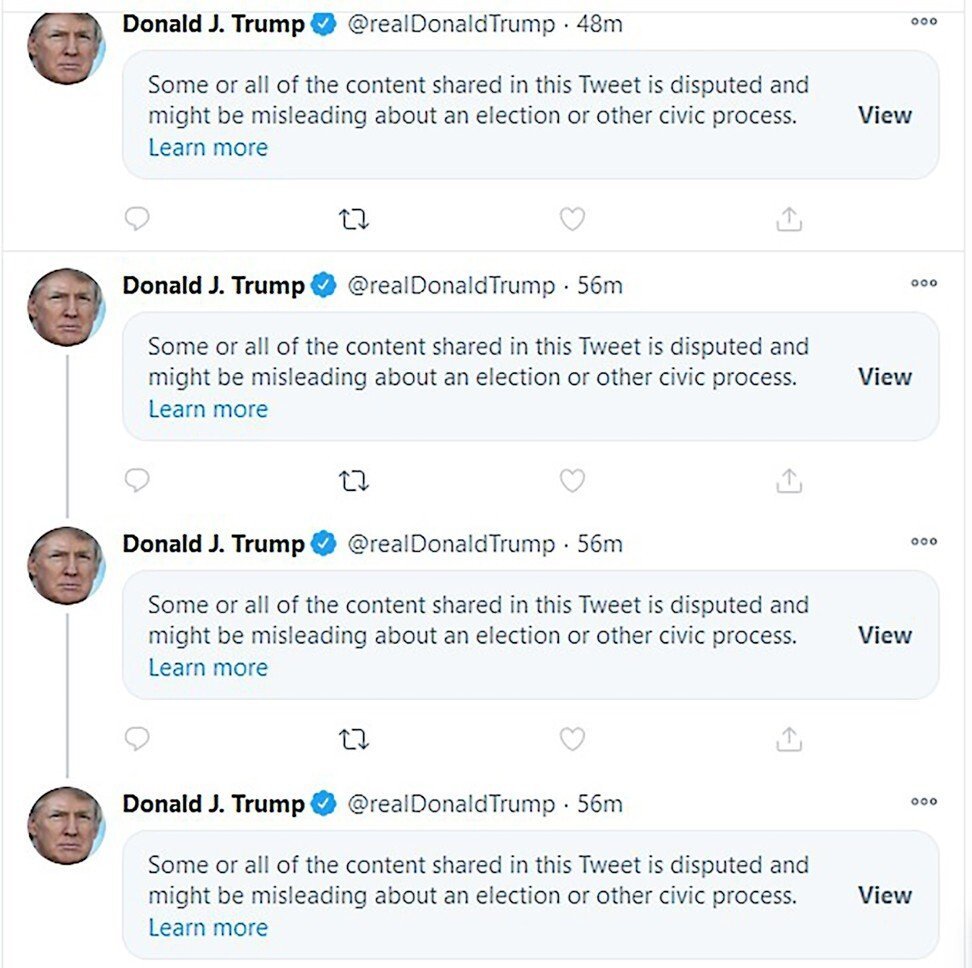


Hawley, his fellow Republicans and Shanmugam are elected officials and thus directly answerable to the public. We can make our displeasure known and withhold our support if their behaviour continues.

Those who are not elected are still likely to be online. Social media remains a two-way street, and rather than rolling our eyes at paper-thin arguments, we can make it clear we expect more from those who can do better.

We all have plenty to deal with already with the pandemic and its effects on our lives. With just a moment’s extra thought and a targeted message or two, though, we can do our part to push back against cheap talk and improve public discourse.

Newsletter

Related Articles

0:00
0:00
Close
Japanese Technology Firm Fujitsu Launches Advanced Artificial Intelligence Tool for Corporate Disclosures
South Africa Officially Launches Nationwide Campaign for Highly Contested Local Government Elections
United Kingdom Commits Additional Funding for Unexploded Ordnance Clearance in Laos
Singapore Announces Stringent New Greenhouse Gas Regulations for Commercial Cooling Systems
Cambodia and Thailand Hold High-Level Border Security Talks at United Nations Headquarters
Myanmar Military Government and China Sign Major Agreement to Upgrade Media and Cultural Cooperation
Knife Attack at Swiss Train Station Leaves Three Injured in Suspected Act of Domestic Terrorism
Transnational Extortion Gang Threatens Canadian Police With Army of One Thousand Armed Operatives
Australia Imposes Forty-Two-Day Quarantine on Cruise Ship Passengers Following Deadly Hantavirus Outbreak
International Monetary Fund Unlocks Seven Hundred Million United States Dollars for Sri Lanka Following Economic Reforms
Australia Launches Record One Point Four Billion Dollar Lawsuit Against Chemical Giant 3M Over Contamination
China and Canada Foreign Ministers Meet in Ottawa in Effort to Stabilize Strained Diplomatic Ties
Indonesia Demands Urgent United Nations Security Council Reform Amid Escalating Global Conflicts
Extreme Weather Patterns Trigger Severe Drought in Madagascar and Destructive Flooding in East Africa
Indian State of Karnataka Faces Political Upheaval as Chief Minister Siddaramaiah Abruptly Resigns
Philippines and Japan Reaffirm Defense Ties as Crucial for Indo-Pacific Regional Stability
Norway Joins French Nuclear Deterrence Initiative in Major Shift for European Security Architecture
Global Critical Mineral Alliances Expand as Western Nations Move to Counter Chinese Supply Dominance
United States Imposes Fifty Percent Tariffs on Mexican Steel and Aluminum Ahead of Trade Pact Review
European Union and China Head Toward Major Trade Conflict Over Clean Technology Exports
United States Economic Growth Severely Downgraded to One Point Six Percent as Stagflation Fears Mount
World Health Organization Warns Central African Ebola Epidemic is Outpacing Containment Efforts
United States Treasury Department Conditions Sanctions Relief on Reopening of the Strait of Hormuz
Iranian Air Defenses Intercept and Destroy United States Military Drone Over Bushehr Province
Iranian Armed Forces Launch Ballistic Missiles Toward Unspecified Targets Prompting Regional Condemnation
United Nations Secretary-General Warns Global Order Facing Highest Level of Conflict Since 1945
Israel Issues Sweeping Evacuation Orders in Southern Lebanon Amid Intensified Hezbollah Conflict
Russia Announces Systemic Military Strikes Targeting Ukrainian Defense and Energy Infrastructure
United States and Iranian Negotiators Reach Draft Agreement to Extend Ceasefire and Resume Nuclear Talks
United Nations Security Council Deeply Divided Over United States Capture of Venezuelan President
US and Iran Exchange Direct Military Strikes Amid Fragile Gulf Ceasefire
World Health Organization Warns of Catastrophic Ebola Outbreak in DR Congo
Russia Threatens New Wave of Strikes on Ukrainian Infrastructure and Embassies
Scientists Warn Atlantic Ocean Currents Could Collapse Faster Than Projected
Anthropic Reaches $900 Billion Valuation in Historic AI Funding Round
Washington Imposes Crippling Sanctions on Iranian Maritime Authority
Japan and the Philippines Initiate Strategic Intelligence-Sharing Pact
Microsoft Deploys Autonomous Computer-Using AI Agents to Global Markets
Anthropic Secures $45 Billion Compute Infrastructure Agreement With SpaceX
U.S. Director of National Intelligence Resigns Amid Administration Shakeup
Micron Technology Crosses Trillion-Dollar Valuation Amid Unprecedented Hardware Demand
Canada and Germany Finalize Historic Long-Term LNG Export Agreement
China Expands International Travel Restrictions on Domestic AI Researchers
Japan Approves Sweeping Overhaul of National Intelligence Apparatus
Global Airlines Scramble Logistics as Middle East Airspace Remains Fractured
Japan's Naphtha Imports Plunge 47 Percent Amid Strait of Hormuz Closure
Global Crude Prices Retreat Below $96 as Gulf Tensions Momentarily Ease
Generative AI Outperforms Human Baselines in Landmark Global Creativity Study
NASA Partners With Private Aerospace to Unveil Permanent Lunar Base Architecture
South Korean Equity Markets Surge on Next-Generation Memory Chip Frenzy
×